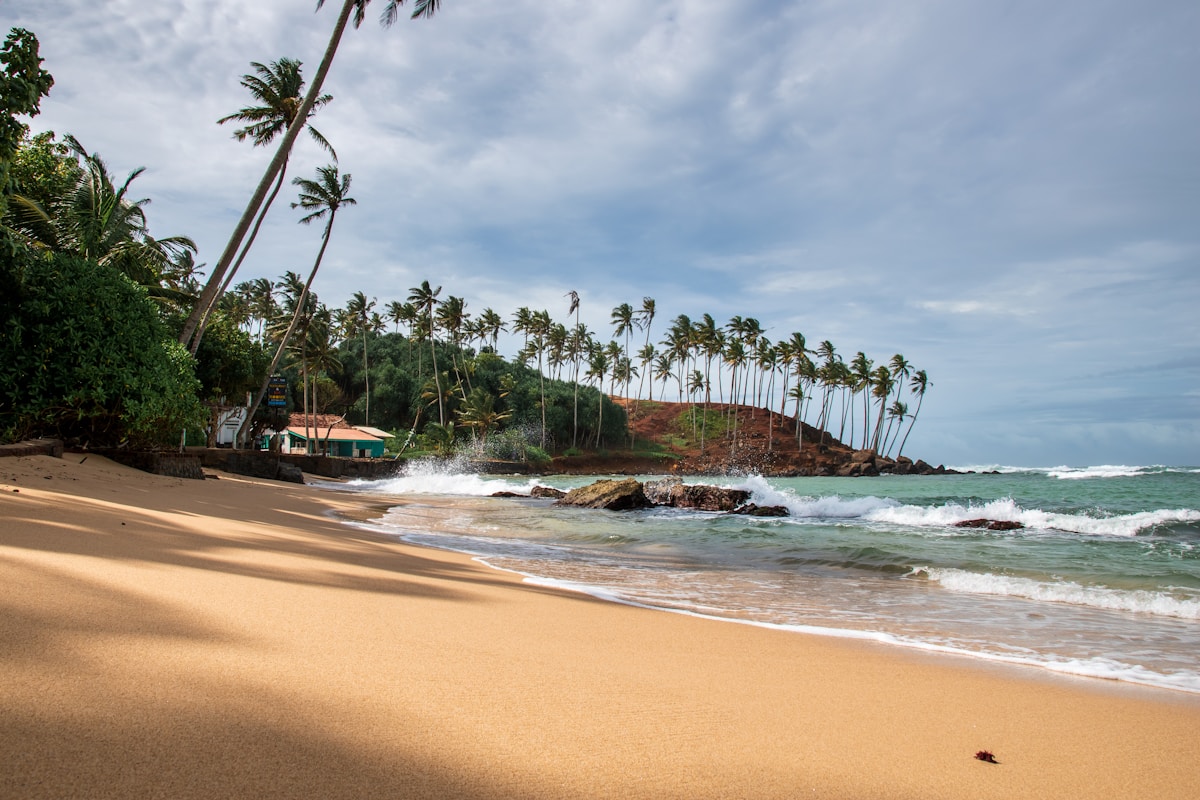
July is one of the most culturally rewarding months to visit Sri Lanka. The Kandy Esala Perahera - the island’s grandest festival - falls in July or August, the east coast is at its dry-season peak, and the Cultural Triangle sites are fully accessible. The west and south coasts are in their monsoon season, but that works in your favour: prices drop and the east side of the island offers excellent conditions.
Southwest Monsoon Holds the West, East Coast Dry and at Its Best
The southwest monsoon is in full effect from May through September, bringing rain and rough seas to Colombo, Galle, Mirissa, and the entire western and southern coastline. Expect overcast skies, afternoon downpours, and high humidity (80–85%) on this side of the island. Beaches along the south coast are often not swimmable due to strong currents.
The east coast - Trincomalee, Passikudah, and Arugam Bay - is dry and sunny. Daytime temperatures sit around 30–33°C with low rainfall. This is the peak of the east coast season, and conditions are ideal for both beach time and surfing.
The Hill Country (Ella, Nuwara Eliya, Haputale) receives rain from both monsoon systems and can be wet in July. Mornings are often clear, with cloud and drizzle building through the afternoon. Temperatures range from 14–22°C. The Kandy-to-Ella train journey is still worthwhile - mist rolling across the tea plantations has its own appeal.
Kandy Esala Perahera, Kataragama Fire-Walking, and the Colombo Vel
Esala Perahera in Kandy is the centrepiece of July. This ten-day Buddhist festival culminates in a grand procession around the full moon of Esala (the Sinhala calendar month that falls in July or August). Dozens of caparisoned elephants, Kandyan dancers, fire-breathers, and drummers parade through Kandy’s streets carrying the Sacred Tooth Relic casket. The final night procession draws tens of thousands of spectators. Accommodation in Kandy sells out weeks ahead - book early and expect elevated rates.
The Kataragama Festival runs concurrently in the far south, drawing Hindu and Buddhist pilgrims to the Kataragama temple complex. Devotees perform fire-walking and kavadi (body piercing) rituals. It is intense and not for the faint-hearted, but culturally significant.
The Vel Festival takes place in Colombo, honouring the Hindu deity Skanda. A chariot procession moves through the city streets, accompanied by music and offerings. July’s full moon Poya day - Esala Poya - is also a public holiday, and temples across the island hold ceremonies.
Arugam Bay at Peak: Main Point and Pottuvil Delivering Consistent Swells
July is the peak of Arugam Bay’s surf season. Consistent swells from the south produce clean, point-break waves at Main Point, Pottuvil Point, and Whiskey Point. The water temperature is 27–28°C - board shorts only. The surf community is at its most active, with competitions, camps, and a backpacker atmosphere along the main strip. Book guesthouses ahead, as July and August are the busiest months on the east coast. Book Sri Lanka tours for July early - Perahera week in Kandy and peak east coast season mean popular guided activities fill up fast.
The south coast (Hikkaduwa, Weligama, Mirissa) is out of season for surfing - strong onshore winds and monsoon swells make conditions dangerous. Wait until November for the south coast breaks to return.
Yala Reopens for Dry-Season Leopard Sightings; Whale Watching Off-Season
Yala National Park reopens fully around July after the seasonal closure period. Leopard sightings are at their best from February through July, when reduced water sources concentrate animals around remaining pools. July sits at the tail end of this window - sightings are still good, but less reliable than in March or April. Udawalawe National Park is open year-round and offers consistent elephant sightings regardless of monsoon conditions.
Whale watching at Mirissa is off-season. The blue whale and sperm whale migration runs November through April. Do not book whale watching trips in July - boats generally do not operate.
Wet Hill Country: Rain and Mist on the Tea Terraces, Fewer Crowds
The tea plantations around Nuwara Eliya and Haputale are green and lush in July. Factories operate year-round, and visits are possible. The rain means fewer tourists in the hills, which can be an advantage. Bring layers - nights in Nuwara Eliya drop to 10–14°C - and waterproof gear for the afternoon showers.
Kandy Perahera Spike, East Coast at Its Priciest, West Coast Rock-Bottom
July is shoulder season for pricing on most of the island. West and south coast hotels drop rates significantly - sometimes 30–50% below December–March peak prices. The east coast is the exception: Arugam Bay and Trincomalee are at their busiest and most expensive in July and August. Kandy rates spike during Esala Perahera week.
Overall, July offers good value if you plan around the east coast and Cultural Triangle, avoiding the wet western seaboard.
Kandy Perahera: Practicalities and Costs
The Esala Perahera runs for ten nights, culminating in the Randoli Perahera on the night of the full moon. Viewing options range from free standing positions along the parade route (arrive 2–3 hours early for a good spot) to paid reserved gallery seats at $20–50 per person, bookable through most Kandy guesthouses and tour operators. The final night draws the largest crowds - earlier nights offer a similar experience with fewer people.
Kandy accommodation fills completely during Perahera week. Rooms that normally cost $40–70 double in price or more. Book at least 6–8 weeks ahead. Properties within walking distance of the Temple of the Tooth command a premium - Earl’s Regency (a heritage hotel on the hillside, from $120) and The Kandy House (a boutique villa from $250) are both consistently popular. Budget guesthouses in the Anniwatte area above town offer simpler rooms from $25–35 with valley views.
Getting to Kandy from Colombo takes 3 hours by train (Colombo Fort to Kandy station, LKR 300–500 for second class). Trains during Perahera week run crowded - book reserved seats online via the Sri Lanka Railways website at least a week in advance.
Getting to the east coast from Kandy: bus from Kandy to Trincomalee via Habarana takes 4–5 hours and costs around LKR 350–500. A private taxi runs around $60–75. For Arugam Bay from Kandy, a full-day journey of 7–8 hours via Batticaloa is common; the break at Batticaloa for lunch and the lagoon views are part of the experience.
Arugam Bay in July commands peak-season prices: $40–80 for mid-range guesthouses, with popular spots near Main Point filling fast on weekends. Early-week arrivals or late-evening bookings sometimes secure better rates. Surf lessons from Main Point instructors run $20–25 per hour.
Where to Focus in July
A strong July itinerary runs Colombo (one night) to Kandy (Esala Perahera if dates align), then across to Sigiriya and the Cultural Triangle, before heading east to Trincomalee or Arugam Bay. Skip the south coast beaches - save Galle and Mirissa for a dry-season visit.
See the best time to visit Sri Lanka for a full seasonal comparison.
Plan Your Trip
If the Esala Perahera falls in July (check dates - it follows the lunar calendar), book Kandy accommodation 6–8 weeks ahead and expect elevated rates; the procession of caparisoned elephants and Kandyan dancers through the city streets is one of the great spectacles in Asia. After Kandy, move to Sigiriya and the Cultural Triangle, then east to Arugam Bay for the peak of the surf season at Main Point - mid-week arrival and early booking get the best guesthouse rates. Trincomalee is an alternative for those who want east coast beaches without surfing. Ella and Haputale are accessible from the train, though the hills can be wet and misty. Skip Galle and Mirissa - south coast is in monsoon until November.
Flights to Sri Lanka, travel insurance, and an eSIM. Book hotels on Booking.com - Kandy during Perahera week and Arugam Bay in July require advance booking.