Pettah is where Colombo trades. The district sits just east of the Fort, a dense grid of lanes in Colombo 11 where whole blocks specialise in one product, and where the noise, smell and crush of people are far closer to the Sri Lanka most residents live in than anything on Galle Face. It is one of the most useful half-days in the city, and it needs no ticket. This guide covers what to see, what to eat, what to watch for and when to go.
For the wider picture of the capital, see our things to do in Colombo page and the Colombo city guide.
Getting to Pettah
Pettah is a 10-15 minute walk from the Fort area and about 2km from Galle Face. Fort railway station and the Bastian Mawatha bus stand sit on its edge, which makes it the natural stop if you arrive by train from Kandy or the south. From Colombo 3 or 7, a PickMe or Uber ride is the easiest option (roughly LKR 700-1,200 as of 2026, depending on traffic). Our Colombo getting around guide covers apps and tuk-tuk pricing.
Traffic into Pettah is slow after 10am. Ask your driver to drop you at the Fort railway station side and walk in, which saves the worst gridlock.
Manning Market
Manning Market is the fruit and vegetable market at Manning Place, the part of Pettah most people mean when they say “Pettah Market”. Much of the bulk wholesale trade has moved out to the Peliyagoda area in recent years, but the Pettah market still runs as a retail and small-trader hub: pyramids of limes, bunches of drumstick, mounds of red onions, bananas of several varieties, king coconuts and tropical fruit you will not see in a supermarket.
Go early. By late morning the best produce is gone and the lanes are blocked by porters pulling handcarts, so keep to the side and step aside when you hear “ado, ado”. Prices are by weight and generally fair; there is little haggling on fruit and vegetables. If you want mangosteen, rambutan or wood apple in season, this is a good place to try them.
Main Street, Sea Street and the specialist lanes
Main Street is the spine of Pettah, a loud strip of textile merchants, shoe shops, toys and electronics. Side lanes have their own trades. Sea Street is the long-established gold and jewellery street, with many small Tamil and Muslim jewellers working from narrow shopfronts. Second Cross Street and nearby lanes are known for spices, dried goods and wholesale groceries, with sacks of cinnamon quills, cardamom, pepper and dried chilli.
Pettah is cheaper than the malls for textiles, souvenirs and household items, but it is not a polished shopping experience. Prices on tourist-type goods are negotiable (start at about half the first quote and settle somewhere between), while fixed-price shops will say so. For gems and jewellery we recommend you do not buy on impulse; if you want to, compare several shops and ask for a written receipt.
Red Mosque (Jami Ul-Alfar)
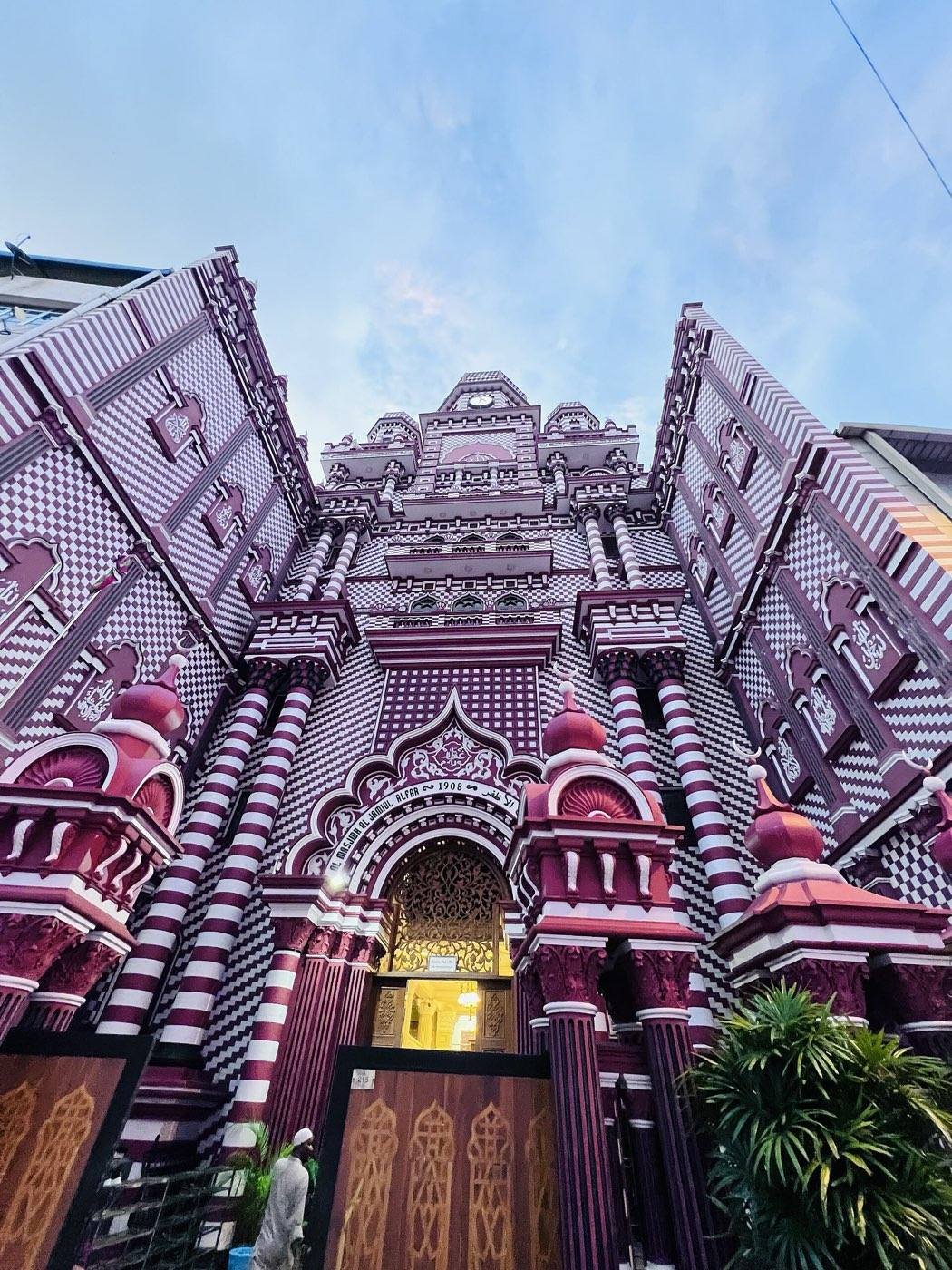
The candy-striped Jami Ul-Alfar Mosque is the most photographed building in Pettah. Built in 1908-09 in an Indo-Saracenic style, its red and white brickwork looks like layered peppermint stripes, topped by a clock tower and domes. It is an active mosque for the local Muslim community, not a monument.
Visitors are generally welcome outside prayer times, with modest dress and shoes removed. Women should cover their hair. Friday midday is the busiest period, so avoid it. Ask permission before photographing worshippers; the exterior is fine from the street at any time. Treat staff guidance as final, and keep voices low in prayer areas.
Old Town Hall, Dutch Hospital and nearby sights
Pettah and Fort run into each other, so it is easy to pair the market with other heritage stops:
- Old Town Hall: a large early 20th-century municipal building at the Pettah end of Main Street, one of the few architectural landmarks in the district. The Colombo Municipal Council’s own site is the source for current opening arrangements: colombo.mc.gov.lk{target=“_blank”}.
- Dutch Hospital Shopping Precinct: a 17th-century Dutch colonial building in the Fort, about 15 minutes’ walk away, now home to restaurants and cafes. It is a calm place to rest after the market, and Ministry of Crab is the best-known name there.
- Khan Clock Tower and Dutch Period Museum: both within Pettah, and a short walk from the market lanes.
- Wolvendaal Church: an 18th-century Dutch Reformed church just north of the main bazaar streets.
For a longer temple stop in the same morning, add Gangaramaya Temple beside Beira Lake.
Street food in Pettah
Pettah is one of the best places in Colombo to eat cheaply, because you are eating where the city’s workers eat. Expect:
- Rice and curry kadevs: from about LKR 300-600 for a plate with vegetables, dhal and a protein, served from late morning until sold out.
- Short eats: vegetable rotti, fish cutlets, egg rolls and patties from glass-fronted counters, usually LKR 80-200 each.
- Hoppers and string hoppers at small stalls near the bus stand.
- Fresh juice, king coconut and wood apple juice from pavement vendors.
- Biryani and kottu at Muslim-run restaurants on the lanes off Main Street.
Choose busy stalls with high turnover, avoid raw salads and ice if your stomach is sensitive, and carry small notes. Vegetarians should ask about Maldive fish (dried tuna) in sambols and curries: “Maldive mas thiyanawada?” A guided Colombo food tour is a low-stress way to eat in Pettah, and our Colombo food tour guide compares the operators. For sit-down dining after the market, see best restaurants in Colombo.
Scams and safety
Pettah is generally safe, but crowded markets attract opportunists. Watch for:
- “Closed today” tuk-tuk drivers: a common line near Fort station is that the market, mosque or temple is closed, followed by an offer to take you somewhere else (usually a gem or souvenir shop paying commission). Ignore it and check yourself.
- Gem and “export” shop offers: a friendly stranger who “knows a great place to sell gems for profit” is running a long-standing con. Decline.
- Pickpockets and bag slashing in packed lanes. Use a crossbody bag worn in front, and carry only what you need.
- Unmetered tuk-tuks: agree the fare first, or use PickMe or Uber.
- Unrequested guides: a polite “no, thank you” and walking on is enough.
Our Sri Lanka safety guide covers general precautions.
Best hours and what to wear
Aim for weekday mornings, roughly 8:30am to 11:30am. Most shops open around 9am, run to roughly 5-6pm and close or run on reduced hours on Sundays and poya days, so check the calendar. Wear light clothes with covered shoulders and knees (useful for the mosque), closed shoes you do not mind getting dirty, sun protection and a small bottle of water. During the monsoon months (May to September in the southwest), carry a light rain jacket.
Visiting with a guide
Pettah rewards a guide because the layout is confusing and the stories behind the trades are not visible from the street. A Colombo walking tour usually combines Pettah, the Fort and Gangaramaya in a single morning. Prices change and tours sell out in peak months (December to March), so book ahead; check the current options on the Colombo tours page. If you would rather base yourself near Fort, browse hotels in Colombo.
For official visitor information on Colombo and Sri Lanka, see the national tourism site at srilanka.travel{target=“_blank”}.
Planning Your Sri Lanka Trip?
- Book tours & activities in Colombo
- Find hotels in Colombo
- Travel insurance for Sri Lanka
- Get a Sri Lanka eSIM