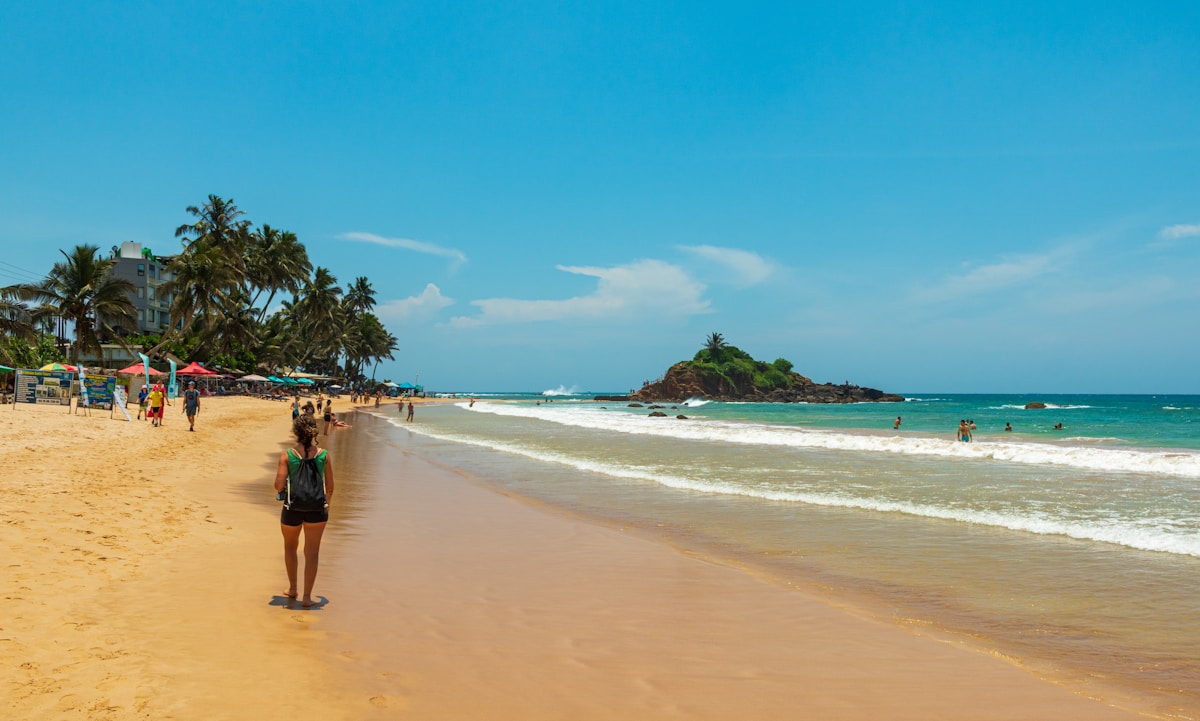
August continues the pattern set in July: the east coast is dry and sunny, the southwest monsoon keeps the west and south coasts wet, and the Cultural Triangle sits in a comfortable middle ground. Two major festivals - the Esala Perahera (if it falls in August) and the Nallur Festival in Jaffna - make this one of the best months for experiencing Sri Lankan culture beyond the beaches.
Monsoon Persists on the West, East Coast Dry for Its Busiest Month
The southwest monsoon persists through August. Colombo, Galle, Mirissa, and the entire southern coastline receive regular rain, with afternoon downpours and overcast mornings. Humidity on the west coast reaches 80–85%. Swimming conditions along the south coast remain poor due to strong currents.
The east coast - Arugam Bay, Trincomalee, and Passikudah - stays dry and warm. Daytime temperatures hover around 30–33°C with strong sunshine. This is the second of the two peak east coast months, and conditions are excellent for beach days, diving at Pigeon Island (Trincomalee), and surfing.
The Hill Country receives scattered rain from both monsoon systems. Mornings in Ella and Nuwara Eliya are often clear, with cloud building by midday. Temperatures range from 14–22°C. The tea estates are green and productive, and the famous train journey remains one of Sri Lanka’s highlights regardless of the odd shower.
Kandy Esala Perahera (Often August), Nallur Festival, and Nikini Poya
If the Esala Perahera falls in August (the exact date follows the lunar calendar), Kandy becomes the focal point of the entire island. The ten-day festival culminates in a torchlit procession of elephants, Kandyan dancers, and drummers carrying the Sacred Tooth Relic casket through the streets. Kandy accommodation is extremely tight during Perahera week - book months ahead.
The Nallur Festival in Jaffna is a 25-day Hindu celebration at the Nallur Kandaswamy Kovil, typically running from late July into August. Devotees perform kavadi (ritual body piercing), fire-walking, and chariot processions. The festival draws Tamil pilgrims from across Sri Lanka and southern India. Jaffna itself is still undervisited by international tourists - the festival is an opportunity to explore the north when the city is at its most alive.
August’s full moon Poya day - Nikini Poya - marks the beginning of the first Buddhist council after the Buddha’s passing. Temples hold observances, and it is a public holiday.
Arugam Bay High Season: Competitions, Surf Camps, and Crowded Breaks
Arugam Bay remains in peak form. August delivers consistent point-break swells at Main Point, Pottuvil Point, Whiskey Point, and Elephant Rock. Water temperature is 27–28°C. The town is at its busiest - expect a lively backpacker scene and crowded line-ups at Main Point during peak hours. Early morning sessions (before 8am) are the least crowded.
The south coast surf spots (Hikkaduwa, Weligama, Mirissa) remain closed for the season due to the southwest monsoon. They reopen in November.
Minneriya Elephant Gathering: 100+ Elephants Congregate in August Afternoons
Yala National Park is open in August, though leopard sighting probability decreases compared to the February–July window as water becomes more available and animals disperse across a wider area. Udawalawe National Park provides reliable elephant sightings year-round and is less affected by seasonal variation.
Whale watching at Mirissa is off-season - the blue whale migration runs November through April. Do not book whale watching trips in August.
Pigeon Island, off Trincomalee, offers some of Sri Lanka’s best snorkelling in August. The water is calm and clear, with reef sharks, turtles, and coral gardens visible in shallow water.
Lush but Rainy Hill Country: Off-Peak Ella with Good Guesthouse Availability
The Hill Country tea estates continue harvesting through August. Factory visits are possible at estates around Haputale, Ella, and Nuwara Eliya. The rain keeps the plantations at their greenest, and fewer tourists visit the hills during the southwest monsoon months, making this a quieter time to explore. Pack a rain jacket and warm layers for evenings - Nuwara Eliya drops to 10–14°C after dark.
East Coast Peak Rates, Kandy Spikes for Perahera, West Coast Still Cheap
August is shoulder season for most of the island. West and south coast hotels offer significant discounts - often 30–50% below December–March peak rates. The east coast (Arugam Bay, Trincomalee) and Kandy (during Perahera) are the exceptions, with elevated prices and limited availability. The Cultural Triangle remains affordable and uncrowded.
European summer holidays bring a modest uptick in international visitors compared to June, but August is still far quieter than the December–March peak.
August Practicalities: Costs and Getting Around
The Minneriya National Park elephant gathering requires a park jeep: hire costs approximately LKR 8,000–10,000 for a 3-hour afternoon safari, with the entrance permit adding around $15 per person for foreigners. The gathering typically peaks between 3:00–6:00pm as elephants move from forest to the tank shore to graze. Habarana (18km from the park) is the best base - guesthouses run $25–50 per night, and jeep hire is easily arranged from any hotel.
Jaffna is accessible by overnight train from Colombo (Colombo Fort to Jaffna in 7–8 hours, LKR 400–700 for second class reserved). Day trains also run. The Nallur Kandaswamy Kovil is a 10-minute tuk-tuk ride from Jaffna centre. Entry to the kovil is free, but modest dress is required and shoes must be removed. The kavadi processions during Nallur festival take place in the late afternoon - visit the temple complex from 4:00pm onward. Jaffna guesthouses run $25–60 per night; The Tilko Jaffna City Hotel offers comfortable mid-range rooms at around $60–80 and is centrally located.
Passikudah on the east coast is 100km south of Trincomalee and offers some of Sri Lanka’s calmest swimming - a wide, shallow bay with reef protection. It’s more resort-oriented than Arugam Bay. Rooms at the larger resorts such as Amaya Beach Passikudah (both all-inclusive) run $150–250 in August; smaller guesthouses along the beach road offer $30–60 alternatives.
For Arugam Bay in August: expect to pay $45–80 for mid-range options and book at least 3–4 weeks ahead for the best guesthouses. The Hideaway in Arugam Bay is a popular mid-range option with a pool. Early-morning surfers at Main Point typically find less crowded lineups than afternoon sessions - 6:00–8:00am is the sweet spot.
Where to Focus in August
The strongest August route combines Kandy (for Perahera if dates align), the Cultural Triangle (Sigiriya, Polonnaruwa, Dambulla), and the east coast (Trincomalee for beaches and diving, Arugam Bay for surf). If you have three weeks, add Jaffna for the Nallur Festival and a look at the Tamil north. Book Sri Lanka tours for August in advance - Perahera week and peak east coast season mean popular guided activities book out.
See the best time to visit Sri Lanka for a full seasonal comparison.
Plan Your Trip
August is the month to visit Jaffna - the Nallur Festival at Nallur Kandaswamy Kovil runs for 25 days with kavadi processions and fire-walking, and the city is still undervisited by international tourists. If the Esala Perahera falls in August, add Kandy to your itinerary months ahead. For the Minneriya elephant gathering, base yourself in Habarana and book a 3pm afternoon safari - the peak gathering of 100+ elephants happens as the tank water level drops in late August. Arugam Bay surf is at its most consistent this month; book 3–4 weeks ahead for the best guesthouses on Main Point. Pigeon Island off Trincomalee offers excellent snorkelling in August’s clear, calm water. Ella and Nuwara Eliya are accessible but bring a rain jacket for the hills.
Flights to Sri Lanka, travel insurance (recommended for long east coast trips), and an eSIM. Find accommodation on Booking.com - Arugam Bay and Kandy book out in August.