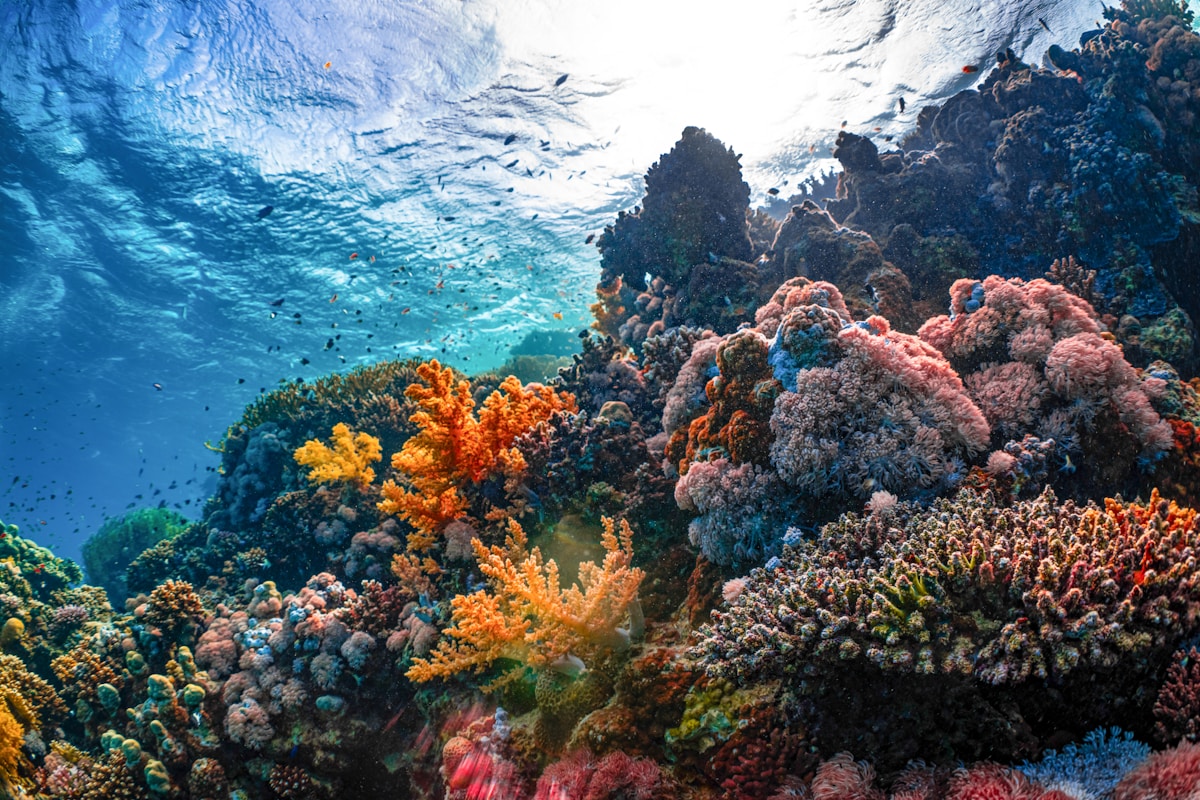
Sri Lanka’s diving is underrated. The island sits between the Bay of Bengal and the Indian Ocean, and its waters hold wreck sites, healthy hard coral reefs, reef walls, and an east coast corridor that produces whale shark encounters from April onwards. The infrastructure is not as established as Thailand or the Maldives, but costs are lower, crowds are thinner, and the range of sites is broader than most visitors expect.
Diving here requires understanding the two monsoon systems. The southwest monsoon (May–October) delivers rain to the west and south coast but calms the east coast. The northeast monsoon (November–April) has the inverse effect. Sri Lanka is one of a few countries in the world where you can dive year-round by changing coast.
West and South Coast Sites
Hikkaduwa Marine Sanctuary
Hikkaduwa is the most accessible dive and snorkel destination on the south coast, and the most visited. The Hikkaduwa Coral Sanctuary - a protected reef 100 metres offshore - has live coral, hawksbill turtles, and reef fish. Glass-bottom boat trips are popular, but the reef is best experienced by snorkel or on a guided dive.
Visibility at Hikkaduwa averages 5–15m - lower than the east coast, affected by run-off and boat traffic. The reef has recovered significantly since the 2004 tsunami, though some sections are still fragile.
Dive operators in Hikkaduwa:
- Poseidon Diving Station - established dive centre on the main beach road, offers PADI courses and fun dives. A single dive with equipment runs approximately USD 35–45.
- Sub Wing Scuba - smaller operation, good for introductory dives and multi-dive packages.
Best season: December to April.
Unawatuna
Unawatuna, 6km east of Galle, has several dive sites within 15 minutes by boat. The most popular is the Wreck of the Rangoon - a 19th-century British steamship lying in 15m of water, encrusted with coral and home to lionfish, eels, and barracuda. The wreck is intact enough to be interesting but shallow enough for Open Water divers.
The Cathedral Reef near the bay entrance is a 30-metre drop-off with gorgonian fans, reef sharks, and occasional pelagic species. The reef is best dived in the morning before afternoon surge picks up.
Dive operators:
- Unawatuna Diving Centre - the main operator, based at the main beach. PADI courses from approximately USD 280. Single fun dive approximately USD 40 with equipment.
Best season: November to April. For organised diving day trips from the Galle area covering Unawatuna wrecks and reef sites, see guided dive tours from Galle.
Mirissa (Whale Watching and Seasonal Diving)
Mirissa is primarily known for blue whale watching (November to April, peak January to March) rather than reef diving. However, several dive centres operate from Mirissa offering day trips to offshore sites when conditions allow.
The whale watching season occasionally produces encounters with whale sharks offshore - these are surface events rather than dives, but dive operators sometimes combine the excursion with a wreck or reef dive nearby.
East Coast Sites
Trincomalee
Trincomalee on the northeast coast is Sri Lanka’s most serious dive destination. The natural deep-water harbour and the surrounding reef system offer conditions comparable to much better-known dive destinations in Southeast Asia.
Pigeon Island Marine National Park: Located 2km offshore from Nilaveli, 16km north of Trincomalee town, this small island and surrounding reef is one of the best hard coral diving sites in Sri Lanka. The reef starts shallow (2–3m) and drops to 25m on the outer edge. Hard coral cover is extensive and includes table corals, brain corals, and staghorn formations. Reef fish are abundant: parrotfish, sergeant majors, butterflyfish, and angelfish. Blacktip reef sharks visit the outer drop-off regularly.
Entry to Pigeon Island Marine National Park costs approximately LKR 3,700 for foreign visitors as of 2026, plus a boat transfer from Nilaveli beach.
Swami Rock and Lighthouse Reef: The reef below Swami Rock - the promontory where the Dutch Fort sits - drops to 20m with reasonable coral cover and a resident population of moray eels, pufferfish, and snappers. The lighthouse reef to the south is a longer dive in cleaner water.
Wreck diving: Trincomalee harbour was the site of significant naval activity during both World War II and the Sri Lankan civil war. Several wrecks lie in the harbour area, including British and Japanese naval vessels from 1942. Depths range from 18 to 40m. These dives require Advanced Open Water certification or equivalent.
Dive operators in Trincomalee:
- Trinco Blu by Cinnamon - resort-based dive centre at Nilaveli Beach Hotel, offering PADI courses and guided dives. Single dive approximately USD 45–55 with equipment.
- Dive Lanka - independent operator, specialising in Pigeon Island and wreck dives. A two-dive day package including Pigeon Island transfer runs approximately USD 80–100.
- Nilaveli Diving - smaller operation based at Nilaveli, offers competitive rates for multi-day dive packages. Budget approximately USD 30–40 per dive.
You can also book guided diving day trips from Trincomalee that include boat transfer, equipment, and a guide to the Pigeon Island reef.
Best season: May to September (dry season on the east coast).
Arugam Bay
Arugam Bay on the southeast coast is primarily a surf destination, but several dive operators run trips during the April–October dive window. The sites north of Arugam Bay include reef drops and occasional encounters with reef sharks and rays.
PADI Courses in Sri Lanka
Open Water (beginner certification)
A PADI Open Water course teaches you to dive to 18 metres independently and covers the theory, confined water skills, and four open-water dives. Duration: 3 to 4 days.
Approximate costs by location:
- Hikkaduwa: USD 250–300
- Unawatuna: USD 270–320
- Trincomalee: USD 280–350
Advanced Open Water
Required for wreck diving in Trincomalee and recommended for diving below 18m. Duration: 2 to 3 days, 5 adventure dives. Approximate cost: USD 200–280.
Discover Scuba Diving
A PADI Discover Scuba session - the introductory experience for uncertified divers - is available at most dive centres. It covers basic skills in a pool or shallow water, then a supervised 12-metre open-water dive. Half a day, approximately USD 60–80.
General Planning
Equipment: Most dive centres in Sri Lanka provide all necessary equipment (BCD, regulator, tank, wetsuit) as part of the dive price. Bring your own mask and fins if you are particular about fit. A 3mm wetsuit is adequate - water temperature ranges from 27–30°C on both coasts.
Visibility: East coast sites (Trincomalee, Pigeon Island) regularly hit 20–30m in peak season. West and south coast sites average 8–15m. After heavy rain, river run-off can drop visibility significantly in both areas.
Whale sharks: Spotted intermittently off the east coast between May and October, and off the south coast between November and March. Encounters are not guaranteed - treat them as a bonus, not a plan.
Dive fitness: Standard medical contraindications apply. Any heart condition, lung condition, recent surgery, or significant respiratory issue requires medical clearance. Operators will ask you to complete a medical questionnaire before any dive activity.
Plan Your Trip
- Visit Arugam Bay
- Visit Hikkaduwa
- Visit Mirissa
- Visit Trincomalee
- Visit Unawatuna
- Hotels in Hikkaduwa - the most established dive base on the south coast, with multiple PADI centres and accommodation within walking distance of the main reef