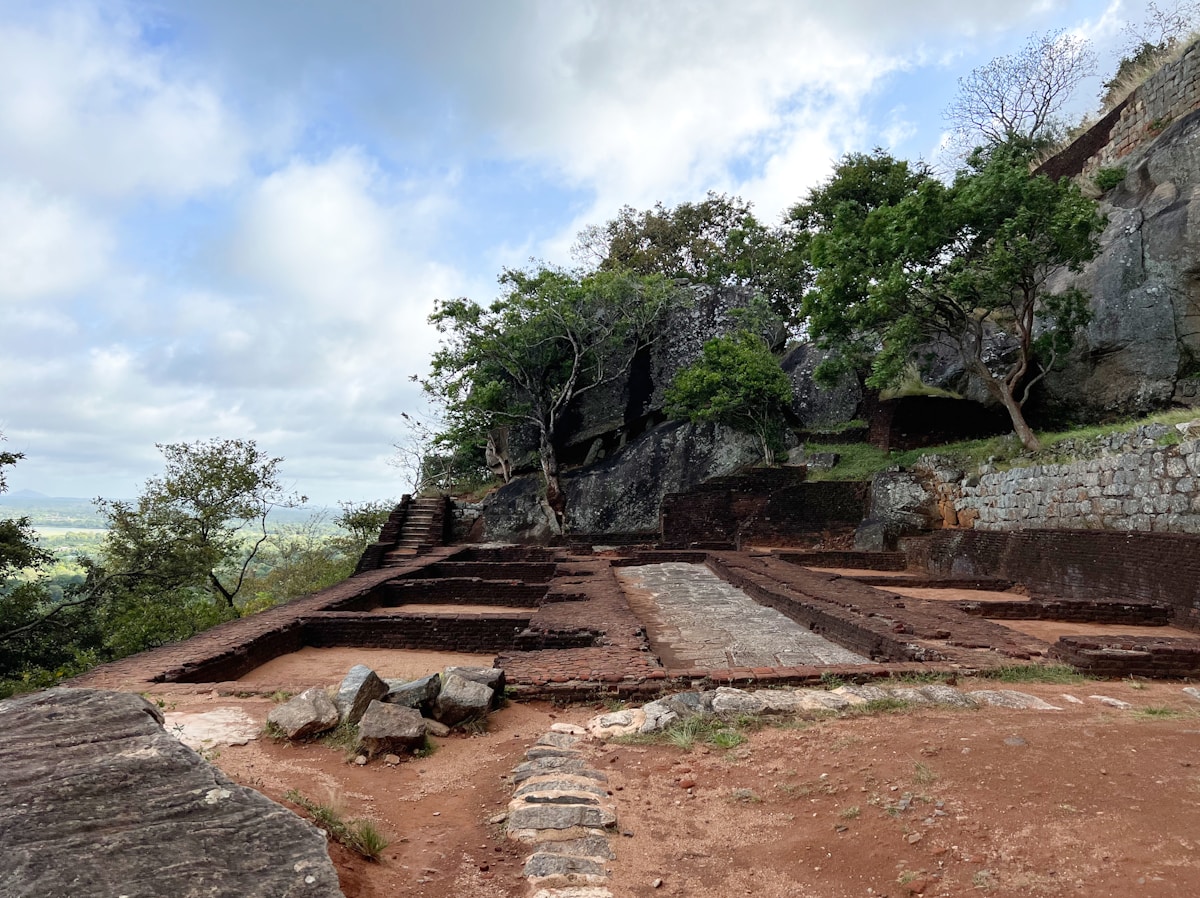
Sigiriya is a 180-metre granite monolith rising from the jungle floor of the Matale District, topped with the ruins of a 5th-century palace. King Kasyapa (477–495 CE) built his citadel here - whether as a military fortress or a pleasure palace remains debated. What isn’t debated is that the climb, the views, and the ancient paintings make it the single most striking site in Sri Lanka.
The entry fee for foreigners is USD $30 - one of the most expensive admission charges on the island. It’s worth it.
The Ascent
The climb takes 30–45 minutes at a steady pace, though the stairs are steep and narrow in sections. The total elevation gain is around 180 metres over a horizontal distance of about 600 metres.
The Water Gardens: The climb begins at ground level through an elaborate series of symmetrical gardens with fountains, pools, and channels. These hydraulic systems - some of the earliest landscaped gardens in the world - still function during the wet season, with the fountains operating on natural pressure alone.
Boulder Garden and Cave Shelters: The path rises through a boulder-strewn landscape, passing cave shelters with ancient frescoes and inscriptions. The boulders themselves were used as foundations for monastery buildings.
The Sigiriya Frescoes: At roughly the halfway point, a spiral staircase climbs to a sheltered gallery in the rock face. Here, 21 painted women - bare-chested, ornamented with jewellery, carrying flowers and trays - look out from the rock. Originally there were around 500 figures; 21 survive. Their identity is debated: royal consorts, celestial beings, or the goddess Tara. The paintings are dated to the 5th century and remain vivid. Photography is restricted in the gallery itself.
The Mirror Wall: Beyond the frescoes, a polished white plaster wall runs along the path. It was once reflective enough to show the king his image. Over the centuries, visitors scratched verses into it - the oldest graffiti in Sri Lanka, some dating to the 8th century. The inscriptions are now behind a protective rail.
The Lion Paws: The final approach narrows dramatically at the Lion Platform, where two enormous carved stone paws flank the entrance. The original lion’s head above them has long since collapsed - only the paws remain of the monumental lion figure that formed the final gateway.
The Summit: The plateau at the top covers approximately 1.6 hectares. The brick foundation of the palace, cisterns, throne platforms, and swimming pool remain, along with panoramic views across the jungle in every direction on a clear day.
Fitness Level Required
Moderate. The climb involves steep stair sections, some narrow passages, and exposure to height at the Lion Paws and summit. People of reasonable fitness complete it without difficulty. Avoid flip-flops - proper shoes with grip are needed on the summit platform. The section between the Lion Paws is very steep and uses a metal cage stairway; if you have a serious fear of heights, this section can be challenging.
Children: manageable from around age 8–9 with supervision, though the crowd pressure on the narrow sections can be intense during busy periods.
Best Time to Visit
Timing: The site opens at 7am. Arrive as early as possible - tour groups from Colombo and Kandy typically arrive from 9am and the main staircases get very crowded. Early morning is also cooler and often has better light.
Season: Sigiriya is accessible year-round. December–April is dry and hot. May–September brings some rain but is less crowded. The rock is slippery when wet - check the forecast.
Pidurangala: The Better View
Pidurangala Rock, 1.5km north of Sigiriya, is a popular alternative or addition. The 30-minute hike passes a reclining Buddha carved into the rock face, followed by scrambling over large boulders to a summit that looks directly at Sigiriya. The view of Sigiriya rising above the jungle is the best available.
Entry: approximately LKR 300 donation. Far cheaper than Sigiriya itself. Many photographers come here for sunrise with Sigiriya as the subject.
Practical Details
- Entry: USD $30 (foreigners); buy at the main ticket office before the water gardens
- Opening hours: 7am–5:30pm daily
- Time needed: 2–3 hours including the water gardens and summit
- What to bring: water (at least 1.5 litres), sunscreen, hat, good shoes
- Photography: permitted on the summit; restricted at the fresco gallery
- Getting there: no direct public bus from Colombo; most visitors come by hired vehicle from Kandy (90 min), Dambulla (20 min), or on guided Sigiriya tours that include return transport from a nearby base
Plan Your Trip
Sigiriya sits at the heart of the Cultural Triangle. Dambulla is only 20km away - its cave temples make a natural half-day before or after the rock climb. Polonnaruwa, Sri Lanka’s medieval capital, is about 90 minutes east and pairs well as a two-day circuit. Anuradhapura, the oldest ancient city, is 65km north. For a deeper dive into the Cultural Triangle circuit, see Ancient Ruins of the Cultural Triangle and Minneriya elephant gathering - both are within 30km of Sigiriya and easily combined in the same area base. The full Sigiriya travel guide has accommodation, day-trip options, and transport details.
Related Guides
- Sigiriya travel guide - where to stay, logistics, and what else to do in the area
- Minneriya elephant gathering - 30km away; pair with Sigiriya in the same day
- Cultural Triangle ancient ruins guide - full circuit including Anuradhapura, Polonnaruwa, and Dambulla
- Sigiriya vs Polonnaruwa - choosing between the two main Cultural Triangle sites
- 10-day Cultural Triangle itinerary - how to sequence Sigiriya with the other UNESCO sites
- Sri Lanka photography guide - Sigiriya is one of the island’s best photography subjects