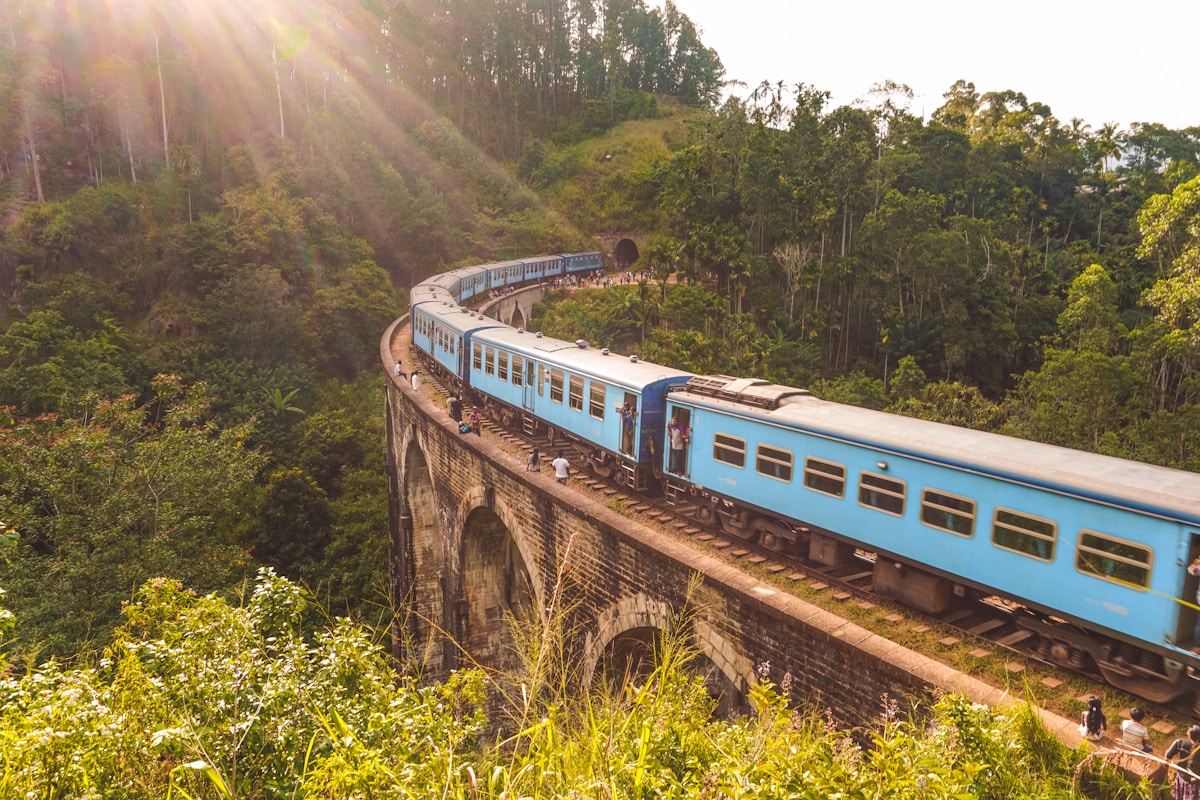
Sri Lanka is compact - the island is 435km from north to south - but the road and rail networks move slowly enough that journey times are longer than the distances suggest. Planning transport in advance, particularly for the Kandy–Ella train, makes a significant difference to the experience.
Train
Sri Lanka’s rail network covers the main tourist circuits and several scenic routes that are genuinely enjoyable in themselves. Trains are slow by global standards, but the Kandy–Ella route through the Hill Country is legitimately one of the great train journeys in Asia.
Key routes and approximate journey times:
- Colombo Fort → Kandy: 2.5–3 hours, frequent departures
- Kandy → Ella (via Nuwara Eliya, Haputale): 6–8 hours, one daily observation car express; numerous slower services
- Colombo Fort → Galle: 2.5 hours, scenic coastal route
- Colombo Fort → Jaffna: 6.5 hours on the Yal Devi express
- Colombo Fort → Trincomalee: 8–9 hours
- Colombo Fort → Batticaloa: 8–9 hours
Classes:
- First class (Observation Car / AC): air-conditioned, large windows, reserved seats. Limited to certain trains and routes. The Colombo–Ella observation car sells out weeks ahead in peak season.
- Second class: fan-ventilated, reserved seating available on most routes. The best value for most travellers.
- Third class: unreserved, often standing, crowded on busy routes. Fine for short trips; difficult for six-hour journeys.
Prices: Very cheap by any measure. Colombo to Ella in second class costs approximately LKR 800 ($2.50). First class costs two to three times more and is still inexpensive by international standards.
Booking: Buy tickets at the station (arrive 30–60 minutes ahead for reserved seats) or through ExpoRail (online booking for main routes). Advance booking is strongly recommended for the Kandy–Ella observation car and for travel in December–January peak season.
Bus
Buses cover the entire island and reach places the rail network does not. They are faster than trains on many routes (particularly where road quality is good) but less comfortable on long journeys.
Types:
- Private intercity express: fastest, air-conditioned on some routes, operates on major corridors. Colombo to Galle or Kandy by expressway bus takes under two hours.
- Government CTB buses: slower, stop frequently, cheaper. Good for local connections.
- Night buses: Long-distance overnight services operate on main routes (Colombo–Jaffna, Colombo–Arugam Bay). Practical for saving a day’s travel, though sleep quality is variable.
Prices: LKR 100–800 for most inter-city journeys. Night buses on longer routes run LKR 1,000–2,000.
Main bus terminals: Colombo has two - the Pettah Central Bus Station (government buses) and the Bastian Mawatha terminal (private intercity). They are adjacent to each other near Pettah train station.
For intercity journeys, compare bus and train options with Omio - useful for seeing route options and prices across services in a single search.
Tuk-Tuk
Three-wheeled auto-rickshaws (tuk-tuks) are the default short-to-medium-distance transport across Sri Lanka. They are everywhere, they are flexible, and they are inexpensive.
PickMe app: Sri Lanka’s ride-hailing app (equivalent to Uber for tuk-tuks). Available in most towns and cities. Metered fares, no negotiation required, driver rating system. Download it before you arrive.
Without PickMe: Negotiate the fare before getting in. Sri Lankan tuk-tuk drivers in tourist areas will quote elevated prices for obvious newcomers. A rough guide: LKR 50–100 per kilometre for negotiated fares; PickMe metered fares are typically cheaper.
Day hire: Hiring a tuk-tuk and driver for a full day costs LKR 3,000–5,000 ($10–16) and is one of the most flexible ways to explore a region, particularly outside town centres where no scheduled transport exists.
Private Vehicle with Driver
The most comfortable option for groups, families, or anyone doing a multi-stop circuit. A driver with a car handles navigation, knows the roads, can recommend local spots, and takes the stress out of long days.
Full-day rate: $50–80 including fuel. Drivers typically have local knowledge and can double as informal guides.
Arranging: Through your guesthouse or hotel (most reliable), through booking platforms, or via apps like PickMe (for airport transfers and point-to-point). You can also compare transfer quotes from local operators via GetTransfer - the bid model means operators compete on price, which is useful for longer point-to-point journeys or airport runs. For airport arrivals, Welcome Pickups offers fixed-price transfers from Bandaranaike with a driver meeting you in arrivals. Rates vary - negotiate clearly what is included (fuel, entrance fees are typically separate).
Search hotels in Sri Lanka on Booking.com
Rental Car and Motorbike
Rental car: Available in Colombo from international and local operators. You need an international driving permit. Sri Lanka drives on the left. Road conditions range from good expressways to heavily potholed rural routes. Traffic is chaotic in Colombo; manageable elsewhere. If you are comfortable driving in South or Southeast Asian conditions, self-drive is feasible. If not, a car with driver is safer and not significantly more expensive.
Motorbike: Popular in Ella, Arugam Bay, and other tourist towns. Small 125cc bikes rent for LKR 1,500–2,500 per day. Helmets are legally required and should always be worn. Roads in Ella are steep and winding - test the bike before committing to a day’s hire. Petrol is available at stations island-wide (approximately LKR 330–380 per litre for 92 octane as of early 2026).
Domestic Flights
Cinnamon Air and FitsAir operate scheduled domestic services from Colombo Ratmalana Airport (RML) to:
- Jaffna (Palaly Airport) - approximately 45 minutes
- Trincomalee (China Bay) - approximately 35 minutes
- Batticaloa - approximately 45 minutes
- Sigiriya - approximately 20 minutes
- Koggala (near Galle) - approximately 20 minutes
Prices vary considerably depending on booking timing. A Colombo–Jaffna flight can cost $60–150 one way. Booking direct with the airlines is recommended. Domestic flights make sense primarily for the north, where road and rail journey times from Colombo are six to nine hours.