Sri Lanka packs an unusual amount of wildlife into an island smaller than Ireland, and most of it lives inside protected areas. This page is the directory: nine parks, what each one is actually good for, when to go, and how they fit together on a route. If you are choosing between the four headline safari parks, our safari comparison is the decision page. If you want to know which parks even exist and which are worth your limited days, start here.
Sri Lanka National Parks at a Glance
| Park | Region | Best for | Best months | Time needed |
|---|---|---|---|---|
| Yala | Southeast | Leopards | Feb-Jul (dry season) | Half day |
| Udawalawe | South | Elephants, families | Year-round | Half day |
| Wilpattu | Northwest | Wilderness, low crowds | Feb-Oct | Half to full day |
| Minneriya | North Central | Elephant gathering | Jul-Oct | Half day |
| Horton Plains | Hill country | Hiking, World’s End | Jan-Mar | 3-4 hours |
| Sinharaja | Southwest | Rainforest, endemic birds | Jan-Apr | Full day |
| Bundala | Southeast coast | Waterbirds, flamingos | Oct-Mar | Half day |
| Kumana | East | Nesting birds, quiet safari | Apr-Jul | Half day |
| Gal Oya | East | Boat safari, swimming elephants | Dry months | Half day |
The Big Four Safari Parks
Yala National Park
Yala is the most famous park in the country, and Block 1 holds one of the densest leopard populations on earth. It also has elephants, sloth bears, crocodiles and a long bird list. The trade-off is crowds: on a good leopard morning a dozen jeeps can converge on one sighting. Go for the first slot at dawn, pick a guide with a good reputation rather than the cheapest, and consider the quieter outer blocks. Full details are in our Yala safari guide, and you can browse Yala safari tours with jeep and entry bundled. Base yourself in Tissamaharama; our Tissamaharama accommodation guide covers the options.
Udawalawe National Park
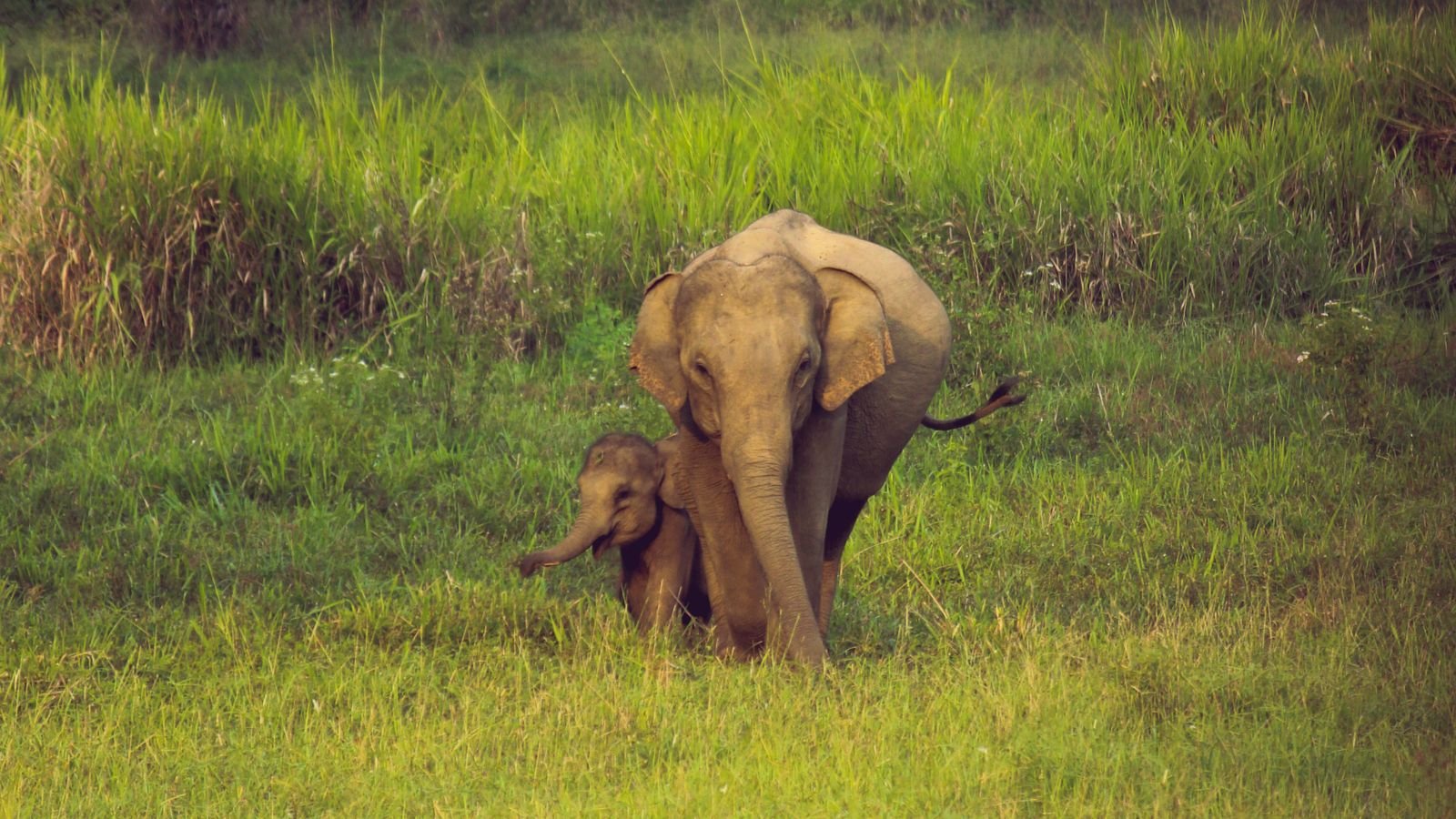
Udawalawe is where we send first-timers and families. Open grassland around a reservoir means elephants are easy to spot at any time of year, often in family herds with calves. Leopards are present but rarely seen, so go for elephants and you will rarely be disappointed. The Elephant Transit Home next to the park rehabilitates orphaned calves and is worth a short visit. It sits on the road between the hill country and the south coast, which makes it simple to slot in. Read the Udawalawe guide or book Udawalawe safari tours.
Wilpattu National Park
Wilpattu is the largest national park in Sri Lanka, known for its natural lakes called villus set in dry-zone forest. It sees far fewer jeeps than Yala, so sightings feel earned rather than staged. Leopards and sloth bears live here, but the forest is thick and they are harder to find. It suits travellers already in or near Anuradhapura or Mannar. See our Wilpattu safari guide.
Minneriya National Park
Minneriya is a seasonal park. As the Minneriya Tank shrinks in the dry months, wild elephants gather on the exposed lakebed to graze, with the peak usually in August and September. Outside that window it is a pleasant but unremarkable park. It lies close to Sigiriya and Polonnaruwa, so it pairs easily with the Cultural Triangle. In the later part of the dry season, elephants often shift towards nearby Kaudulla, so ask your driver which of the two is busier on the day. Details are in our Minneriya gathering guide.
The Parks Most Itineraries Skip
Horton Plains National Park
Horton Plains is the odd one out: no jeep, no big cats, just a high cloud-forest plateau reached by road from Nuwara Eliya or Haputale. The classic circular walk of roughly nine kilometres takes in Baker’s Falls, Small World’s End and World’s End, a cliff with a drop of several hundred metres. Start at dawn, because mist usually rolls in by mid-morning and hides the view. You may spot sambar deer along the trail. The plateau forms part of the Central Highlands UNESCO World Heritage Site{target=“_blank”}. Bring a rain layer and warm clothing; it is cold at that altitude. Our Horton Plains guide and things to do at Horton Plains have trail detail, and you can book Horton Plains tours that include early-morning transport from the hill towns.
Sinharaja Forest Reserve
Strictly a forest reserve rather than a national park, Sinharaja is Sri Lanka’s last large tract of primary lowland rainforest and a UNESCO World Heritage Site{target=“_blank”}. It is a walking destination: expect leeches, humidity, and a high proportion of the island’s endemic birds, butterflies and amphibians. Hire a local guide at the entrance, since the trails are not signed for independent walking. The drier months of January to April are the easiest. See the Sinharaja guide.
Bundala National Park
Bundala is a coastal wetland on the southeast coast, a Ramsar site and a UNESCO biosphere reserve. It is the best birdwatching park in the country, and flocks of migratory waders and greater flamingos typically arrive from around October to March. Crocodiles, elephants and mugger are also present. It is much quieter than Yala and only a short drive from Tissamaharama and Hambantota, so a morning here fits easily before or after a Yala trip. If you care about birds more than big cats, Bundala deserves a slot.
Kumana National Park
Kumana, on the east coast not far from Arugam Bay, was formerly known as Yala East. Its draw is the Kumana villu, a wetland where painted storks, spoonbills, pelicans and other waterbirds nest in the dry season, typically from around April to July. It also has elephants and leopards, with far fewer vehicles than in the south. Distances inside the park are long and tracks can be rough, so allow a full morning. It is easily combined with a stay at Arugam Bay, where you can browse Arugam Bay tours, and the east coast surf season overlaps nicely with the nesting season.
Gal Oya National Park
Gal Oya is the least visited park on this list and the only one where the standard activity is a boat safari. The park surrounds the Senanayake Samudraya reservoir, and the draw is watching elephants swim between islands. Wildlife is also spotted by jeep and on guided walks. It is remote, set in the east of the country near Ampara, so it suits travellers who already plan to explore the east coast and want something very different from Yala. Boat trips depend on water levels and local operators, so confirm arrangements in advance.
How to Choose
- Leopards: Yala, ideally Block 1, with Wilpattu as the quiet second choice.
- Elephants with the least effort: Udawalawe, any month.
- The biggest elephant spectacle: Minneriya, August to September.
- Birds: Bundala for waders and flamingos, Kumana for nesting birds, Sinharaja for endemics.
- Hiking: Horton Plains, at dawn.
- Fewest tourists: Wilpattu, Kumana or Gal Oya.
- Families with children: Udawalawe, plus the Elephant Transit Home.
If you have limited time, most travellers do well with Udawalawe and Yala on the south loop, plus Horton Plains for a morning in the hills. Add Minneriya only if your dates fall between July and October. Anything beyond three parks starts to cost you beaches, trains and temples.
Costs, Permits and Practicalities
Foreign adult entry fees vary by park and rise or fall with exchange rates and taxes, so treat any figure as approximate. As of 2026, expect roughly USD 15-35 per person for park entry once service charges and VAT are included, plus a vehicle fee and a jeep hire of around LKR 8,000-15,000 for a half-day, which can be split between up to six people. Horton Plains, Yala and Kumana tend to cost more than Bundala. Confirm current prices on the Department of Wildlife Conservation website{target=“_blank”} or the price board at the gate.
- Safaris are best at dawn or late afternoon, when animals are active.
- Book jeeps through your hotel or a licensed operator, and avoid touts at the gate.
- Carry cash for gate fees where card is not accepted.
- Wear muted colours, bring water, a hat and binoculars.
- Do not feed or approach wildlife, and keep noise low.
Plan Your Trip
If you are building a route around the parks, our Sri Lanka itineraries show how they slot between the cultural sites and the coast. Cheapest way to cover several parks is to use a hired driver who knows the gate staff and local trackers.