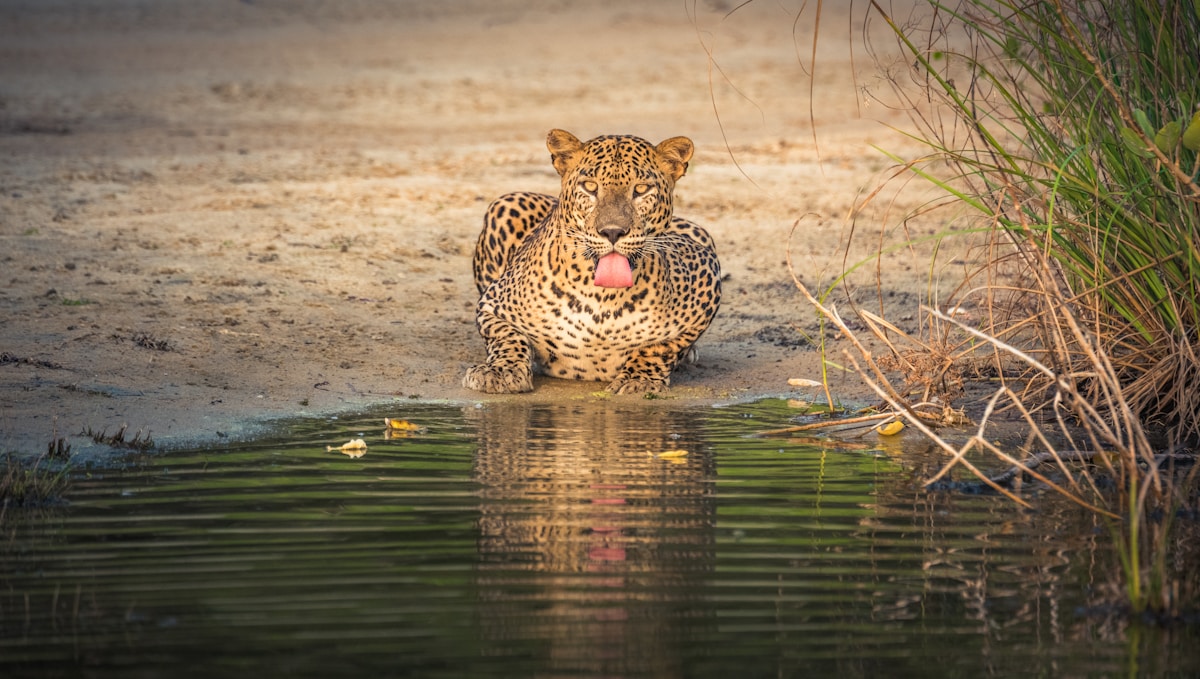
Sri Lanka has four national parks that draw significant safari interest: Yala, Udawalawe, Wilpattu, and Minneriya. They are distinct enough that the right choice depends entirely on what you want to see, when you’re travelling, and where else your itinerary takes you. This comparison is designed to help you decide - not to rank them.
The Four Parks at a Glance
| Park | Best For | Peak Season | Crowds | Distance from Colombo |
|---|---|---|---|---|
| Yala | Leopards | Jun–Oct | High | 295km (~5–6 hrs) |
| Udawalawe | Elephants year-round | Year-round | Moderate | 165km (~4 hrs) |
| Wilpattu | Wilderness, low crowds | Feb–Oct | Low | 185km (~4 hrs north) |
| Minneriya | Elephant gathering | Aug–Sep | High (seasonal) | 185km (~3.5 hrs) |
Yala National Park - The Leopard Choice
Yala Block 1 in the Southern Province is Sri Lanka’s most famous wildlife destination for one reason: it has one of the highest leopard densities per square kilometre in the world. In the dry season (June to October), experienced guides report sighting rates of 60–80% on morning drives. The leopards have grown accustomed to safari jeeps and are often seen in open ground or resting in trees.
Beyond leopards, Yala holds large elephant herds, sloth bears (sighted occasionally in early morning), mugger crocodiles at every water body, wild water buffalo, and 215 bird species including the Sri Lanka junglefowl.
The drawback: Yala is heavily visited. In peak season, popular leopard sightings draw a cluster of 10–20 jeeps. The experience can feel more like a wildlife spectacle than a genuine wilderness safari, particularly around the Block 1 entrance. Quality guides make a significant difference in navigating away from crowds.
Cost: Park entry approximately USD $23 per person (entry + service levy); jeep hire LKR 8,000–15,000 per vehicle. Total per person in a group of four: approximately $35–60 as of 2026. Full Yala guide.
Best for: Visitors prioritising a leopard sighting, travelling June–October, and routing through the south coast. Browse Yala safari tours if you want a packaged jeep safari with guide and park entry included.
Udawalawe National Park - The Elephant Choice
Udawalawe’s permanent Udawalawe Reservoir sustains 350–400 resident elephants year-round. Unlike seasonal parks where elephant concentrations depend on rainfall patterns, Udawalawe delivers near-certain elephant sightings in every month - an estimated 95%+ of safaris see at least one elephant herd.
The park’s open savannah and scrubland make for easy viewing. Large herds gather at the reservoir in late afternoon. The Elephant Transit Home at the park entrance runs feeding sessions (6am, 9am, 12pm, 3pm, 6pm) for orphaned elephants being rehabilitated for release - a legitimate conservation operation worth a brief visit before or after the safari.
The drawback: Udawalawe is not a big cat destination. Leopards are present but rarely seen. If your primary goal is leopards or overall wildlife variety, Yala outperforms it.
Cost: Entry approximately USD $15 per person; jeep hire LKR 8,000–12,000. Total per person in a group of four: approximately $25–40 as of 2026. Full Udawalawe guide.
Best for: Families, visitors outside the Yala dry season, and anyone for whom near-certain elephant sightings matter more than the leopard lottery. Udawalawe safari tours can be pre-booked with jeep and entry included.
Wilpattu National Park - The Wilderness Choice
Wilpattu, in the northwest near the ancient city of Mannar, is Sri Lanka’s largest national park by area - and one of the least visited by international tourists. The landscape is distinctive: dense dry-zone forest broken by natural lakes (villus) that are the park’s defining feature and main wildlife draw.
Leopards, sloth bears, water buffalo, crocodiles, and spotted deer are all present. Sighting rates for leopards are lower than Yala, partly because the forest is thicker and partly because the park sees far fewer jeeps (which means less accumulated tracking knowledge on daily movements). When sightings happen, they tend to feel more like genuine discovery.
Practical note: Wilpattu was closed for many years during and after the civil war; it has been fully open since 2010 but tourist infrastructure is less developed than Yala or Udawalawe. Accommodation near the park is limited - most visitors base themselves in Anuradhapura (about 30km east) or Puttalam.
Cost: Entry approximately USD $15–20 per person; jeep hire rates broadly similar to other parks. The drive from Colombo takes about 4 hours north, making it a natural extension of a Cultural Triangle itinerary.
Best for: Itineraries already including Anuradhapura or Mannar; travellers who prefer wilderness over wildlife spectacle; those who’ve already done Yala and want contrast.
Minneriya National Park - The Gathering
Minneriya’s claim to fame is the annual elephant gathering - one of the largest concentrations of wild Asian elephants anywhere in the world. As the Minneriya Tank recedes in the dry season (July–October), hundreds of elephants converge on the exposed grassland to graze and socialise. Documented herds in August and September regularly number 150–300 individuals.
Outside this window, Minneriya is a competent park with elephants, crocodiles, water buffalo, and birds, but nothing that distinguishes it from other options.
Proximity to the Cultural Triangle: Minneriya sits 35km from Sigiriya and 25km from Polonnaruwa - making it an easy half-day add-on to a Cultural Triangle itinerary, particularly in August–September when the gathering is active. Most visitors combine it with Dambulla Cave Temple and Sigiriya Rock Fortress on the same day.
Cost: Entry approximately USD $15 per person; jeep hire available at the gate. Total per person in a group of four: roughly $25–35 as of 2026.
Best for: Visitors in the Cultural Triangle in August–September who want the spectacular elephant gathering experience.
Udawalawe vs Minneriya: The Direct Comparison
These two parks draw the most head-to-head questions because both are primarily elephant destinations. The choice depends almost entirely on when you’re visiting.
| Udawalawe | Minneriya | |
|---|---|---|
| Best for | Elephants year-round | Annual elephant gathering |
| Elephant sighting rate | ~95% any visit | Very high in Aug–Sep, lower otherwise |
| Peak window | Year-round | July–October (gathering peaks Aug–Sep) |
| Distance from Colombo | 165km (~4 hrs south) | 185km (~3.5 hrs north) |
| Nearby landmarks | Ella, Tangalle, Tissamaharama | Sigiriya, Polonnaruwa, Dambulla |
| Crowd level | Moderate | High in peak season, low otherwise |
| Entry cost | ~USD $15/person | ~USD $15/person |
The practical answer: If you’re routing through the south (Ella, Galle, Mirissa), Udawalawe is the natural choice - it’s on the way and productive any day of the year. If you’re doing the Cultural Triangle (Sigiriya, Polonnaruwa) in August or September, add Minneriya as a half-day excursion for the Gathering. The two parks are not interchangeable by location: Udawalawe is in the south, Minneriya is in the north-central region.
Most two-week itineraries visit Udawalawe and skip Minneriya unless the timing aligns. Three-week trips with Cultural Triangle coverage in peak season often include both.
Which Parks to Combine
If your itinerary allows two parks, the most popular pairings are:
Yala + Udawalawe: Both are in the south, roughly 2.5 hours apart. The combination gives you the leopard experience (Yala) and guaranteed elephants (Udawalawe). Most south coast circuits include both.
Udawalawe + Minneriya (August–September): Udawalawe for reliable elephants, Minneriya for the gathering spectacle. Connects logically if your itinerary moves from the south to the Cultural Triangle.
Yala + Wilpattu: For wildlife enthusiasts wanting contrast - the crowds and intensity of Yala Block 1 alongside the wilderness of Wilpattu. Requires more driving.
Three parks in a two-week trip is achievable but leaves less time for everything else. Choose based on what matters most.
Plan Your Trip
Most safari visitors overnight near the park they’re visiting rather than driving from a distant city. For the Cultural Triangle parks, Hotels in Sigiriya and Hotels in Dambulla are the practical bases. For Yala, the gateway is Tissamaharama - see our Tissamaharama accommodation guide for the full range from town guesthouses ($25) to luxury tented camps (Wild Coast, Chena Huts) on the park boundary. For Udawalawe, Hotels in Ella keep you within easy striking distance of both parks.