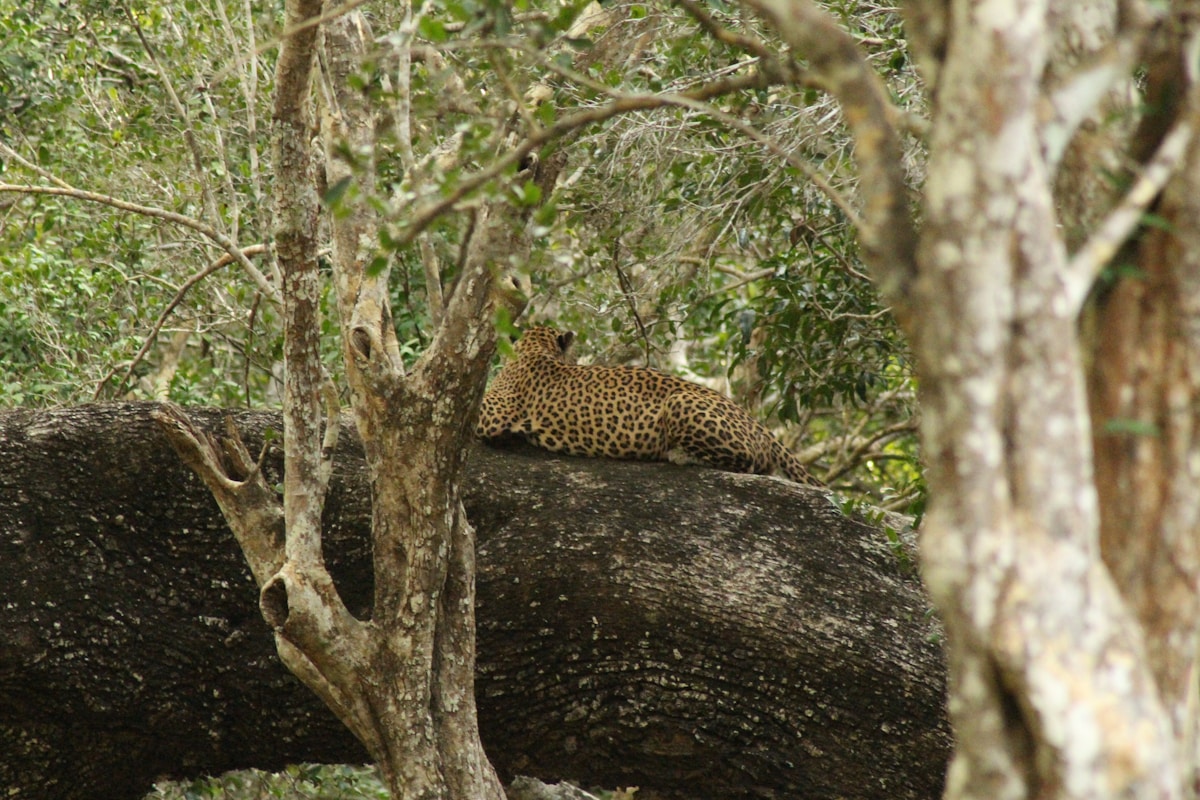
Wilpattu National Park, in Sri Lanka’s northwest, is the country’s largest national park by area and one of the oldest wildlife reserves in Asia - it was granted protection in 1905. Despite its size and ecological significance, Wilpattu receives a fraction of the visitor numbers that Yala attracts, making it the choice for travellers who want a genuine wilderness safari without the convoy of jeeps that can crowd popular game drives in the south.
The Landscape: What Makes Wilpattu Different
The defining feature of Wilpattu is its villus - natural saucer-shaped lake basins that fill with rainwater and create year-round water sources across the park. These shallow, white-sand-rimmed lakes (the name Wilpattu derives from the Sinhalese for “land of lakes”) support a distinctive ecosystem quite different from Yala’s more open scrubland.
The rest of the park is dense tropical dry-zone forest - thickets of palu, weera, and satinwood trees that create good leopard habitat but make spotting more challenging than in Yala’s open landscape. Leopards at Wilpattu tend to be seen crossing villu margins, resting in trees near water, or moving along sandy tracks in the early morning.
The park covers 1,317 sq km - significantly larger than Yala Block 1, which is about 141 sq km. This size means wildlife is more dispersed, which is both a challenge for sightings and part of what gives Wilpattu its wilderness character.
Leopards at Wilpattu
The Wilpattu leopard population is estimated at 50–80 individuals across the full park, though precise counts are difficult in dense forest. The density per square kilometre is lower than Yala’s famous Block 1 concentration, but encounters at Wilpattu feel qualitatively different.
In Yala during peak season, a leopard sighting might involve 8–15 safari jeeps within minutes. At Wilpattu, the same sighting might be shared with one or two other vehicles - or none at all. The experience is less crowded, the leopards appear less habituated to tourist traffic, and the surrounding habitat is more dramatic.
Best conditions for leopard sightings:
- Early morning drives departing before 6am - leopards are most active in the hour after dawn
- Dry season (February–April and July–September) when vegetation is lower and animals concentrate near villus
- Areas near permanent water sources where leopards come to drink and hunt
- An experienced guide with local knowledge of specific tree resting spots and territory ranges
Sighting rates are not published for Wilpattu in the way they’re sometimes claimed for Yala. Expect to invest in two or three game drives to give yourself a strong chance of a leopard encounter. Single-morning trips can produce sightings but don’t guarantee them.
Other Wildlife
Sloth bears: Wilpattu has a healthy sloth bear population and sightings are reportedly more reliable here than at Yala. Bears emerge around fruiting trees and near termite mounds - guides who know the current fruiting cycle significantly improve chances.
Sri Lankan elephants: Small to medium herds are common, particularly near villus during the dry season. Wilpattu’s elephants appear less accustomed to vehicles than Yala’s and may be more reactive - a guide who reads their body language is important.
Mugger crocodiles: Present at most villu sites. Large adults are common around Kali Villu and other major lake basins.
Spotted deer and sambar: Abundant throughout the park - frequently seen in large herds at villu margins.
Waterbirds: The villu ecosystems are outstanding for birds. Painted storks, Asian open-bill storks, herons, egrets, spoonbills, and multiple raptor species including crested serpent eagles and brown fish owls are all recorded. The park’s bird list exceeds 200 species.
Jackals: Commonly seen in the late afternoon and near water.
Best Time to Visit
February to April is the prime window. The northeast monsoon has ended, the park is fully open, and the dry conditions draw wildlife to villus and permanent water sources. Vegetation is lower, improving sightlines.
July to September is the second strong window - Wilpattu is in the northwest dry zone and receives relatively little rain from the southwest monsoon, keeping conditions good for safaris.
November to January: The northeast monsoon brings rain to the northwest. The park may close sections or the entire park temporarily depending on flooding. Check current conditions with operators in Nochchiyagama before planning travel in these months.
The park closes for approximately 2–3 weeks in April for an annual rest period - dates vary by year, so confirm with the Department of Wildlife Conservation or local operators before booking.
Wilpattu vs Yala: The Honest Comparison
These two parks are frequently compared and serve different travellers.
| Factor | Wilpattu | Yala Block 1 |
|---|---|---|
| Size | 1,317 sq km (Sri Lanka’s largest) | ~141 sq km for Block 1 |
| Leopard density | Lower per sq km | One of the highest in the world |
| Leopard sighting rate | Moderate | High (60–80% in dry season) |
| Crowd level | Low to very low | Can be very high in season |
| Habitat | Dense jungle + villu lakes | Open scrubland + scrub forest |
| Distance from Colombo | ~3.5 hours (180km) | ~5.5 hours (295km) |
| Sloth bear sightings | More common | Less common |
| Best experience for | Wilderness, exclusivity, birds | Leopard volume, open sightings |
Choose Yala if: leopard sightings are your primary goal and you want the highest probability. Yala Block 1 is genuinely exceptional for leopards.
Choose Wilpattu if: you want a quieter, less commercial safari experience, you’re combining with a visit to Anuradhapura (30km away), you want strong bird and sloth bear potential, or you simply prefer a more authentic wilderness feel.
Many visitors on longer trips do both - an itinerary that includes Anuradhapura and Wilpattu in the north, then moves south to the coast and Yala, covers two very different safari landscapes.
How Safaris Work
All visitors to Wilpattu must be in a licensed safari jeep. Foot access to the park is not permitted.
Half-day drives: The standard format is a 3–4 hour morning drive (departing around 5:30–6am) or an afternoon drive (departing around 2–3pm). Morning drives consistently outperform afternoon drives for sightings - most predator activity happens in the first 2 hours of daylight.
Full-day safaris: Available and worthwhile if you’re combining them with a picnic lunch at a villu. Midday activity slows but the full day gives more hours on the tracks.
Night drives: Not available at Wilpattu (prohibited at all Sri Lanka national parks).
Costs
Entry fees (foreign visitors, approximate as of 2026):
- Park entry: USD $15 per person
- Service levy: USD $8 per person
- Vehicle permit: approximately USD $8 per jeep
Jeep hire (from Nochchiyagama operators):
- LKR 8,000–15,000 per jeep for a half-day drive
- Guide included with licensed jeep hire
Split among 4–6 passengers, total per-person cost for a morning drive runs approximately $40–65.
Prices from resort-based safari tours (particularly from Anuradhapura hotels) are often higher - booking directly with operators in Nochchiyagama is usually cheaper.
Getting There and Base
From Colombo: Approximately 180km via the A1 north. The route passes through Puttalam - turn northeast from there. Total drive approximately 3.5 hours. The park entrance is at Hunuwilgama. Wilpattu safari day tours from Colombo include transport, park entry, and a guide - a practical option for visitors without their own vehicle.
From Anuradhapura: Approximately 30km south-west. An easy combination - visit the ancient city in the afternoon, stay overnight, and do a morning safari at Wilpattu.
Base town: Nochchiyagama is the closest town with accommodation, restaurants, and safari operators. A small strip of guesthouses and safari lodges has developed in recent years. Accommodation ranges from basic rooms at around LKR 3,000–5,000 to mid-range eco-lodges at $60–120 per night.
There is no reliable public transport to the park entrance - arrive with your own vehicle or as part of an organised tour.
Practical Notes
- Book safaris the afternoon before from your guesthouse or operator - early morning departures require pre-arrangement
- Bring water (the park has no facilities), sun protection, and binoculars for birdwatching at villus
- Wear neutral colours: khaki, olive, grey - not required but sensible for wildlife photography
- Sandy tracks make 4WD necessary - all licensed jeeps are appropriate vehicles
- Mobile signal is weak to nonexistent inside the park
- Carry cash for entry fees and guides - card facilities are not available at the gate
Plan Your Trip
Wilpattu is best approached from Anuradhapura, which is 40km east and the nearest significant town with hotels and ATMs - Hotels in Anuradhapura from around LKR 4,000 per night make it a practical overnight base for a dawn safari departure. Many travellers combine Wilpattu with a day or two at Anuradhapura’s ancient ruins before continuing south or north. Mannar is another option - 65km north of Wilpattu, on a self-drive northern circuit. For a full comparison of all Sri Lanka’s national parks and safari options, see the safari comparison guide. If leopards are the primary goal, Yala National Park in the south is more productive for sightings during the dry season. The 3-week Sri Lanka itinerary includes a route through the north that covers Wilpattu and Anuradhapura.