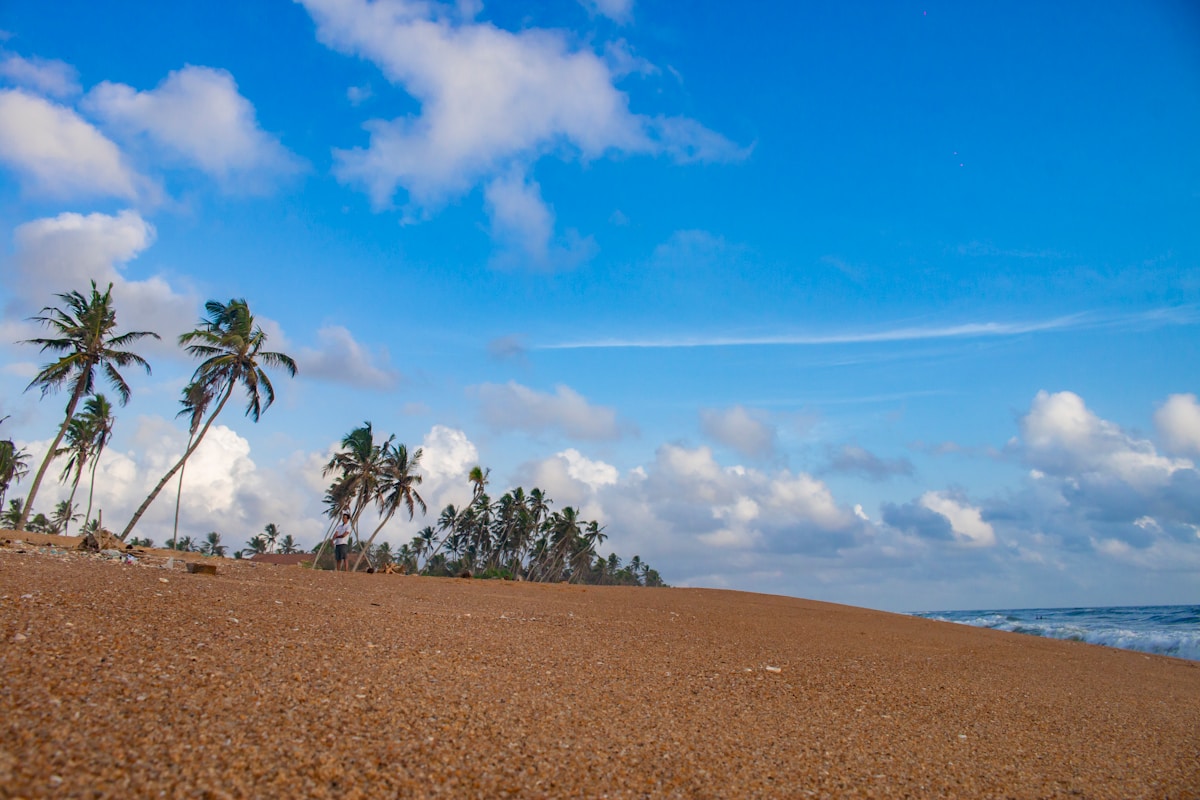
February is arguably Sri Lanka’s best all-round month. The January rush has eased, prices dip slightly from their December-January peak, and conditions across the west coast, south coast, Cultural Triangle, and Hill Country remain excellent. Whale watching at Mirissa hits its highest success rates.
Peak Dry Season Continues: South Coast Ideal, East Coast Still Shut
The west and south coasts enjoy consistent dry weather with temperatures of 28–32°C and 8–9 hours of daily sunshine. Colombo, Galle, Mirissa, Hikkaduwa, and Bentota are all in prime condition. Humidity is moderate at 70–75%.
The northeast monsoon is winding down on the east coast. Trincomalee and Arugam Bay are still receiving some rain, and seas remain rough. The east coast does not properly open until April. Stick to the west and south in February.
Nuwara Eliya and the Hill Country are cool and mostly clear. Expect 14–20°C during the day and as low as 8°C at night in Nuwara Eliya. The tea estates are green and accessible, and morning mist burns off by mid-morning most days.
Navam Perahera Around Colombo’s Beira Lake
February’s full moon Poya day is Navam Poya, celebrated with a major perahera at the Gangaramaya Temple in Colombo. The Navam Perahera is one of Colombo’s biggest annual events - dozens of decorated elephants, traditional Kandyan dancers, fire performers, and thousands of devotees process around Beira Lake. It is the most accessible perahera for visitors staying in Colombo, as the route passes through the city centre.
The Colombo Art Biennale and various cultural events often fall in February, though dates vary by year. Independence Day on February 4 is marked by a national ceremony in Colombo - government offices and banks close, but tourist sites remain open.
Best Blue Whale Month: Mirissa’s Peak Sighting Rates for Sperm and Blue
February is the single best month for whale watching at Mirissa. Blue whales - the largest animals on earth - pass through the waters south of Sri Lanka on their migration route. Sperm whales are resident year-round but sighting rates peak in February. Boats leave Mirissa harbour between 6:30 and 7:00am, returning by midday. Book with operators who follow responsible whale watching guidelines and maintain distance from the animals. See our best tours in Sri Lanka guide, then Browse Sri Lanka tours for February - cultural triangle tours, wildlife safaris, and coast day trips are all in peak operation this month.
Yala National Park is in excellent condition in February. Water sources are shrinking as the dry season progresses, concentrating elephants, deer, crocodiles, and leopards around the remaining tanks and waterholes. February is one of the best months for leopard sightings - the reduced vegetation cover makes them easier to spot. Book a jeep safari for the early morning slot (5:30am entry) for the best wildlife activity.
Bundala National Park, near Hambantota, is outstanding for birdwatching in February. Greater flamingos winter here from November to March, and February sees peak numbers. Over 200 bird species use the wetlands.
West Coast at Its Best: Weligama Beginners and Hikkaduwa Reef Breaks
The south coast surf spots are in full season. Weligama Bay offers the best conditions for beginners - long, gentle waves breaking over sand. Hikkaduwa’s reef breaks suit intermediate to advanced surfers. Water temperatures remain a warm 27–28°C. Board rental is widely available at all south coast surf towns.
Clearest Hill Country Views: Best Month for the Kandy-to-Ella Train Journey
The tea estates around Ella, Haputale, and Nuwara Eliya are between flush periods in February, but factories continue processing year-round. February’s dry, clear weather makes it the best month for the Kandy-to-Ella train journey - we recommend booking reserved seats in second class 2–4 weeks ahead. The views of terraced plantations, waterfalls, and valleys are at their most dramatic when skies are clear.
High Season but Slightly Easier: Fewer Christmas Crowds, Same Great Conditions
February rates are 10–20% lower than the December-January peak on the south coast, though still firmly in high-season territory. Galle Fort hotels and Mirissa beachfront properties remain popular - booking 4–6 weeks ahead is sensible. The Cultural Triangle and Hill Country offer better value, with rates 30–40% below south coast equivalents.
February is an excellent month for travellers who want peak-season conditions without peak-season crowds. The gap between the Christmas rush and the Easter break creates a window of strong weather and manageable visitor numbers.
Whale Watching in Detail
February is statistically the best single month for blue whale sightings off Mirissa. The blue whales here are pygmy blue whales (Balaenoptera musculus brevicauda), the largest subspecies. Groups of two to four individuals are commonly sighted together, and breach events, though unpredictable, occur most frequently in the calm conditions of late January and February. Boats leave Mirissa harbour between 6:30am and 7:00am - the early start is necessary to reach the whale feeding grounds 10–15km offshore before the mid-morning wind picks up. Most trips return by 12:30–1:00pm.
Choose operators carefully. The best operators use GPS tracking data and maintain a minimum distance of 50–100m from the whales; poor operators chase the animals which disrupts their feeding and increases accident risk. Expect to pay LKR 4,500–7,000 per person for a legitimate operator. Avoid the cheapest options on the beach - they often cut corners on safety equipment and whale approach etiquette.
Sperm whales are year-round residents in the deep-water trench south of Sri Lanka, and February sightings rates for sperm whales are among the highest of the year. Spinner dolphins join almost every trip; orca sightings are rare but documented in February.
Navam Perahera in Detail
The Navam Perahera at Gangaramaya Temple in Colombo is one of the most accessible of Sri Lanka’s major elephant processions for foreign visitors. Unlike the Kandy Esala Perahera (which requires arriving days ahead and buying grandstand seats), Navam is free to watch from the roadside around Beira Lake. The procession starts after dark - typically around 7:30–8:00pm - and lasts two to three hours. Decorated elephants (50–100 animals in peak years), torch-bearers, Kandyan dancers, and musicians process through the streets around the lake. Arrive by 6:30pm to claim a good spot on the lakeside road.
The date changes annually with the full moon. Check the Sri Lanka Tourism calendar for the precise 2025 date before booking around this event.
West Coast Beach Options in February
Beyond the well-known south coast strip, the west coast beaches from Colombo southward offer good February conditions. Bentota, 65km south of Colombo, combines beach with a river lagoon - good for water sports including windsurfing, jetskiing, and boat trips upstream to spot crocodiles and water monitors. Beruwala, just north of Bentota, is quieter and popular with German package-tour visitors. Hikkaduwa is more developed, with snorkelling over a shallow coral reef directly offshore.
All three are quieter and cheaper than Mirissa or Unawatuna, and within 90 minutes of Colombo by bus (LKR 100–150) or express train (around LKR 200). For visitors combining Colombo with a beach stop before heading south, these west coast options are logical and underrated.
Where to Focus in February
A two-week circuit covering Colombo, Sigiriya, Kandy, the train to Ella, Yala, Mirissa, and Galle captures all of February’s strengths. Add Bundala for birdwatching or Nuwara Eliya for tea country if time allows.
See the best time to visit Sri Lanka for a full seasonal comparison.
Plan Your Trip
February is the single best month for blue whale sightings off Mirissa - book your 6:30am whale-watching departure through a licensed operator at least a week ahead. If you are in Colombo around the full moon, the Navam Perahera at Gangaramaya Temple is free to watch from the roadside around Beira Lake - arrive by 6:30pm for a good spot. For the Hill Country leg, book your Kandy-to-Ella train reserved seats 2–4 weeks ahead; clear February skies make it the best month for the tea-country views. Bundala National Park near Hambantota is outstanding for greater flamingos wintering on the lagoons - a worthwhile addition if you are based in Galle or Hikkaduwa.
Flights to Sri Lanka, travel insurance before you book, and an eSIM for arrival. Compare hotels on Booking.com - February rates dip slightly from January but south coast properties still fill fast.