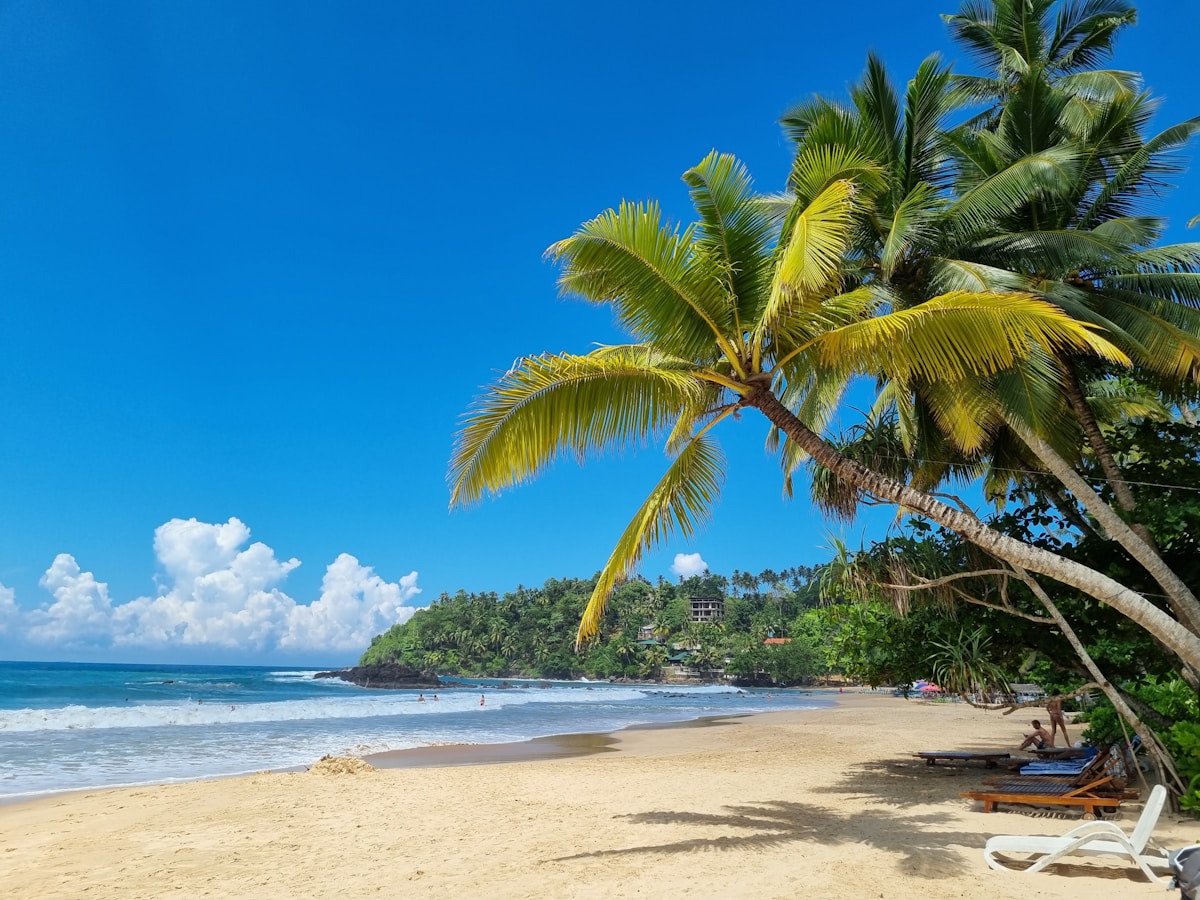
January is the heart of Sri Lanka’s high season. The west and south coasts are dry and warm, the Cultural Triangle is at its best, and whale watching off Mirissa reaches peak reliability. If you only have one month to choose, January is one of the strongest options for a first visit.
Dry and Sunny South Coast, East Coast Still in Monsoon Shutdown
The west and south coasts - Colombo, Bentota, Hikkaduwa, Unawatuna, Galle, and Mirissa - see daytime temperatures of 28–32°C with minimal rainfall. Humidity sits around 70–75%, lower than the monsoon months. Expect 8–9 hours of sunshine daily along the southern coast.
The east coast is a different story. The northeast monsoon runs October through February, bringing rain and rough seas to Trincomalee and Arugam Bay. Most east coast accommodation closes for the season. Avoid this side of the island in January.
The Hill Country around Ella and Nuwara Eliya is cool and generally clear, with daytime temperatures of 15–22°C. January is one of the driest months for the tea plantations, making it excellent for the Kandy-to-Ella train journey and plantation walks.
Duruthu Poya at Kelaniya and Tamil Thai Pongal
January’s full moon Poya day is Duruthu Poya, one of Sri Lanka’s most significant Buddhist celebrations. It commemorates the Buddha’s first visit to Sri Lanka and is marked by a large perahera (procession) at the Kelaniya Raja Maha Viharaya temple near Colombo. The procession features elephants, drummers, dancers, and fire-breathers - worth attending if you are in the Colombo area.
Thai Pongal falls on January 14–15. This Tamil harvest festival is celebrated across the north and east, and by the Tamil community island-wide. Families boil rice in new clay pots until it overflows - symbolising abundance. In Jaffna and the northern Tamil regions, Pongal is the most important day of the year.
Blue Whales Peak at Mirissa: 80–90% Sighting Rate in January
January is one of the two peak months (alongside February) for blue whale and sperm whale watching from Mirissa harbour. Boats depart early morning and head roughly 10–15 km offshore. Success rates are high - operators report sightings on 80–90% of trips during January. Spinner dolphins are seen on nearly every outing. See our best tours in Sri Lanka guide, then Book a January tour in Sri Lanka well in advance - this is the busiest month and all guided activities from safaris to whale watching fill up quickly.
At Yala National Park, January falls within the dry season, and reduced water sources concentrate wildlife around remaining waterholes. Leopard sighting probability is moderate to good - Yala has the highest density of leopards per square kilometre of any park in the world, and January’s drier conditions improve visibility compared to the wetter months.
Sea turtle nesting occurs year-round on Sri Lanka’s southwest beaches, but January sees active nesting around Kosgoda and Rekawa. Turtle hatcheries along the coast offer nighttime viewing of nesting olive ridley and green turtles.
West Coast Surf in Season: Hikkaduwa Reefs and Weligama for Beginners
The south and west coasts are in season. Hikkaduwa produces consistent reef breaks suitable for intermediate surfers, while Unawatuna and Weligama offer gentler waves for beginners. Water temperature is a warm 27–28°C - no wetsuit needed. Arugam Bay on the east coast is closed for surfing in January due to the northeast monsoon.
Hill Country at Its Clearest: Ella Train Views and Cool Nuwara Eliya
January is one of the best months for visiting the Hill Country. Nuwara Eliya temperatures drop to 10–15°C at night, sometimes lower. The tea estates around Haputale, Ella, and Nuwara Eliya are in a quieter harvesting period, but the factories still operate and welcome visitors. Clear skies mean the views from Lipton’s Seat and Little Adam’s Peak are at their most rewarding.
Most Expensive Month: Peak Season Premium Across the South Coast
January is the most expensive month. Hotel rates along the south coast are at their annual peak, often 50–100% above low-season prices. Galle Fort boutique hotels and Mirissa beach properties book out weeks in advance. The Christmas-New Year surge carries into the first week of January, tapering slightly mid-month.
Budget travellers can find better value in the Cultural Triangle (Sigiriya, Dambulla, Polonnaruwa) or the Hill Country, where prices are lower and crowds thinner than on the coast. For the south coast, booking 2–3 months ahead is essential for popular properties.
The Ella Train in January
The Kandy-to-Ella train is one of the world’s great rail journeys - six hours through tea plantations, waterfalls, tunnels, and valleys. January is one of the clearest months, making it excellent for the iconic Nine Arch Bridge views and the open-sided carriages. Book second-class reserved seats (LKR 400–600) via Exporail or at Kandy station up to 10 days in advance. The unreserved third-class carriages involve standing or sitting in the doorway - uncomfortable for the full route but popular with young backpackers who enjoy the experience. The most scenic stretch is between Nanu Oya (for Nuwara Eliya) and Ella - three hours of consistent highland beauty.
Ella itself is worth at least two nights in January: Little Adam’s Peak is an easy two-hour walk with panoramic views, and Nine Arch Bridge is a 20-minute walk from town. Sunrise from Little Adam’s Peak on a clear January morning is exceptional.
Galle Fort in January
Galle Fort is at its busiest in January, with the streets of the Dutch colonial quarter filling with visitors from mid-morning. The fort is worth a full day: the ramparts walk takes 30–40 minutes with views over the Indian Ocean, the Dutch Reformed Church dates to 1755, and the Main Street strip of boutique shops, jewellers, and cafes is a pleasant afternoon. The lighthouse at the eastern bastion offers the best views and is least crowded in early morning or at sunset. Stay inside the fort if budget allows - the boutique hotels within the walls are expensive by Sri Lankan standards (from LKR 25,000–60,000 per night) but the setting is unique.
Cultural Triangle in January
The Cultural Triangle - Sigiriya, Dambulla, Polonnaruwa, Anuradhapura - is at its most accessible in January. Sigiriya’s famous frescoes and summit views are at their best with clear skies; start the climb before 8:00am to beat both the heat and tour groups. The full Sigiriya admission is USD 35 for foreign visitors, making it one of Sri Lanka’s more expensive sites - budget accordingly.
Dambulla’s cave temples contain five cave shrines with around 150 Buddha statues and significant Buddhist art; entrance is USD 10. Polonnaruwa, the best-preserved ancient royal city in Sri Lanka, is best explored by bicycle (LKR 500–600/day rental). Allow four to five hours for the main ruins circuit.
The standard Cultural Triangle visit is two to three nights based in Sigiriya or Habarana, taking day trips to Dambulla, Polonnaruwa, and Sigiriya. From there, most visitors head to Kandy (the Temple of the Tooth, the sacred tooth relic of the Buddha, is the most visited religious site in Sri Lanka) before joining the train south to Ella.
Where to Focus in January
The classic January itinerary runs Colombo to Sigiriya, Kandy, Ella (by train), then south to Mirissa and Galle. This covers the Cultural Triangle, Hill Country, whale watching, and the south coast beaches in a natural loop. Two weeks is comfortable; 10 days is tight but workable.
See the best time to visit Sri Lanka for a full seasonal comparison.
Plan Your Trip
January’s classic circuit runs Colombo to Sigiriya (book timed entry ahead - it fills in peak season), then Kandy, the train south to Ella, and down to Mirissa for whale watching before finishing in Galle. If whale watching is a priority, mid-January operators report the highest blue whale sighting rates - book through a Mirissa guesthouse at least a week ahead. Galle Fort boutique hotels and Hikkaduwa beachfront properties sell out in January; reserve 2–3 months in advance. Budget for Nuwara Eliya as a cooler contrast to the coast, and if you are in Colombo around the full moon, the Duruthu Poya perahera at Kelaniya temple is a genuine spectacle.
Flights to Sri Lanka are at their annual peak - book early. Travel insurance is strongly recommended. Get an eSIM for immediate arrival connectivity. Search hotels on Booking.com - south coast properties move fast in January.