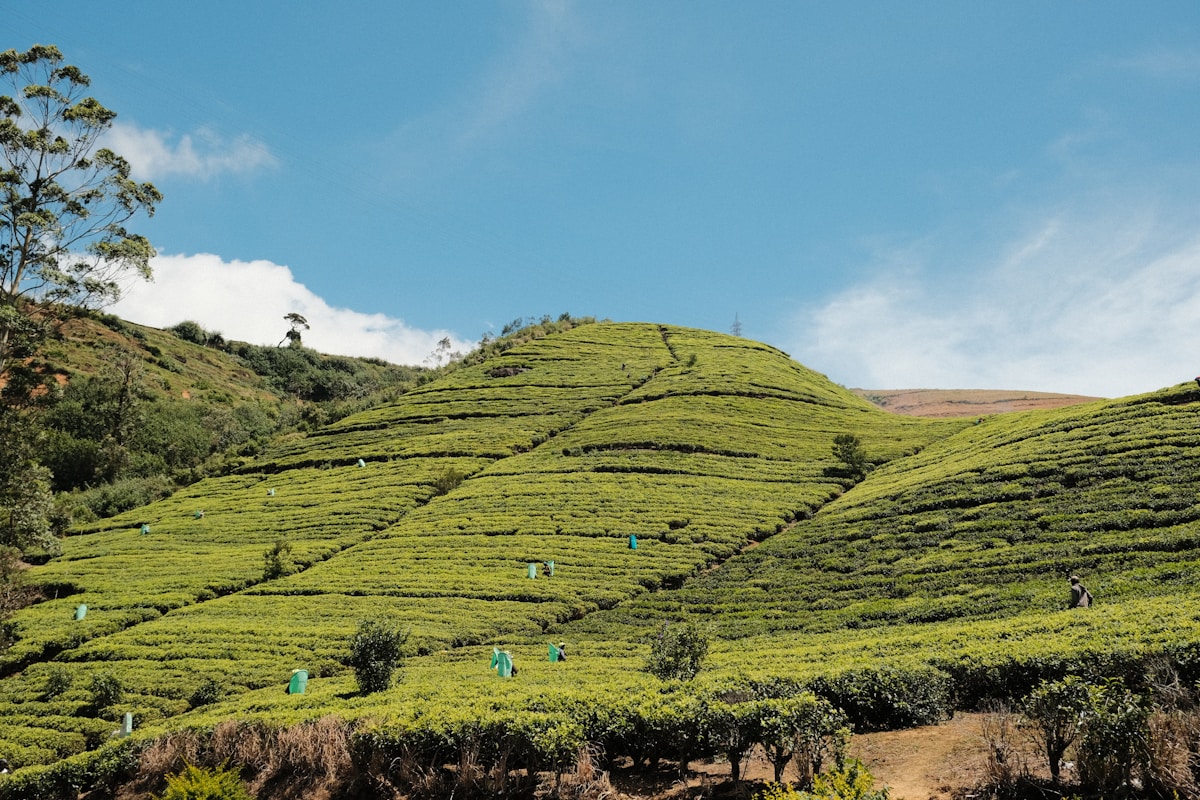
Three weeks gives you enough time to experience Sri Lanka in full - the ancient cities of the Cultural Triangle, the train through the tea estates, the south coast beaches, a safari, and at least one of the less-visited destinations that make the trip feel complete. For the activities-heavy sections of this route, browse Sri Lanka tours to find guided options for safaris, cultural sites, and day trips that suit your pace. The route below covers the country’s highlights in a logical clockwise direction to minimise backtracking.
Total distance: approximately 1,200km by road and rail. Recommended season: December–March (south coast + hill country focus) or July–August (peak season, Perahera festival in August).
Days 1–2: Colombo
Fly into Bandaranaike International Airport (CMB), 15 minutes north of Negombo and 45 minutes north of Colombo. Arriving late? Stay in Negombo overnight - it avoids Colombo traffic and has decent guesthouses. Arriving in the morning or afternoon with a full day ahead? Transfer directly to Colombo.
What to do in Colombo:
- Gangaramaya Temple in Slave Island: a remarkable jumble of Buddha images, antiques, ivory, and lacquer accumulated over decades of donations from devotees across Asia. Free entry; puja at 5:30am and 6:30pm.
- Galle Face Green: the colonial esplanade along the seafront, best at sunset. Street food vendors sell isso vadai (shrimp fritters) and wade through the early evening crowd.
- Pettah Market district: the city’s old commercial quarter, a dense grid of streets specialising in electronics, fabrics, spices, and hardware. A good 90-minute walk.
- National Museum of Sri Lanka (Colombo 7): permanent collection covering 2,500 years of history. Entry approximately LKR 1,000 for foreigners.
Where to stay in Colombo:
Budget ($30-60): Hostels and guesthouses around Fort and Colombo 3 (dorms from about $10, private rooms $35-50).
Mid-range ($80-150): Boutique guesthouses and colonial-era villas in Colombo 3, 5 and 7 ($95-150), compare Colombo hotels.
Splurge ($200+): Galle Face Hotel (historic ocean-front grand hotel, from $200), Shangri-La Colombo (from $220).
Transport: Take the Colombo–Kandy train from Colombo Fort station. The 8:30am Udarata Menike service is popular. Book second class reserved seats (LKR 200–500) at Colombo Fort station or through ExpoRail (exporail.lk) - advance booking is strongly recommended for the scenic Kandy–Ella leg. You can also check Omio for bookable services - coverage on Sri Lanka routes varies. Journey: 2.5–3 hours.
Days 3–4: Kandy
Sri Lanka’s last royal capital sits on a plateau in the hills, ringed by mountains and built around an artificial lake. It’s the cultural heart of the country - the Temple of the Sacred Tooth Relic is the country’s most important Buddhist site.
Day 3 - Kandy highlights:
- Temple of the Sacred Tooth Relic (Sri Dalada Maligawa): Entry LKR 1,500 for foreigners. The puja ceremonies at 6:30am, 9:30am, and 6:30pm are the main events - arrive 20 minutes early. Drums begin, the inner shrine opens, and the crowd pushes forward for darshan (viewing of the casket). The outer courtyard and museum are open throughout the day.
- Kandy Lake: walk the perimeter path (about 40 minutes). Good views across the water to the surrounding hills and the cloud temple on the ridge.
- Kandyan Arts Association Hall: cultural dance performance nightly at 5:30pm. Tickets around LKR 1,000. Features Kandyan, low-country, and sabaragamuwa dance styles plus fire-walking.
Day 4 - day trips from Kandy:
- Royal Botanical Gardens, Peradeniya: 6km from Kandy, one of the best botanical gardens in Asia with a notable collection of orchids, palms, and a famous avenue of royal palms. Entry approximately USD $15 for foreigners.
- Bahiravokanda Vihara: the large white hilltop Buddha visible from across Kandy - short steep walk, good views over the city.
- Pinnawala Elephant Orphanage: 35km west of Kandy (45–60 min). See the elephant bathing at Maha Oya River morning (around 10am) and afternoon (around 2pm). Entry approx USD $15 (see full guide at /things-to-do/pinnawala-elephants/).
Where to stay in Kandy:
Budget ($25-60): Guesthouses within walking distance of the Temple of the Tooth ($25-50).
Mid-range ($80-150): Kandy House (restored colonial manor, 9 rooms, $110-160), plus lake-view hotels ($80-110).
Splurge ($200+): Earl’s Regency (resort-style, Tennekumbura, from $180) and other hillside resorts.
To book Kandy day tours - including Temple of the Tooth entrance with a guide, Peradeniya Gardens, and Cultural Show tickets - browse Kandy tours and excursions.
Transport to Sigiriya: Private transfer from Kandy to Sigiriya via Dambulla: approximately $50–70 (1.5–2 hours). Alternatively, bus from Kandy to Dambulla then Dambulla to Sigiriya.
Days 5–6: Sigiriya and the Cultural Triangle
The ancient cities of Anuradhapura and Polonnaruwa, plus Sigiriya Rock Fortress and Dambulla Cave Temple, cluster within a few hours of each other in the north-central dry zone. Two full days covers the main sites; three days allows a more relaxed pace.
Day 5 - Sigiriya and Dambulla:
- Sigiriya Rock Fortress: A 5th-century palace complex on top of a 200-metre sheer volcanic rock. The climb takes 30–40 minutes and passes the famous frescoes (remnants of a larger gallery of paintings on the rock face) and the Mirror Wall. Entry USD $35 for foreigners. Go early - 7am arrival avoids crowds and the mid-morning heat. The view from the top across the jungle plain to Pidurangala Rock and Dambulla in the distance is excellent.
- Dambulla Cave Temple: 20km south of Sigiriya. Five cave shrines cut into a large granite outcrop hold 157 Buddha statues and some of the finest rock frescoes in South Asia. Entry LKR 1,500. Shoes off from the ticket office (stone steps get hot - socks help). Allow 1–1.5 hours.
- Pidurangala Rock: The alternative viewpoint facing Sigiriya - less famous, better for photographs (Sigiriya Rock fills the frame perfectly from Pidurangala’s summit). A moderately challenging climb through forest and up bare rock. Entry LKR 500; sunrise is the prime time.
Day 6 - Polonnaruwa or Anuradhapura: Both are UNESCO World Heritage Sites. Polonnaruwa is the more compact and manageable in a single day; Anuradhapura is larger with more active pilgrimage sites.
Polonnaruwa (a 45-minute drive from Sigiriya): The medieval royal capital (11th–13th century) has excellent preserved ruins including the Gal Vihara (four rock-cut Buddha statues of remarkable scale), Polonnaruwa Vatadage (circular relic house), and the Royal Palace complex. Entry USD $25 for foreigners. Rent a bicycle inside the complex (LKR 200–300/hr) to cover the large site efficiently.
Anuradhapura (1.5 hours north of Sigiriya): Sri Lanka’s first ancient capital (250 BCE–1000 CE). The Sri Maha Bodhi - a sacred fig tree grown from a cutting of the original Bodhi tree under which the Buddha achieved enlightenment - is the oldest historically documented tree on Earth. The Ruwanwelisaya stupa (2nd century BCE) and Jetavanarama (one of the tallest structures in the ancient world) are nearby. Entry USD $25 for foreigners. This is an active pilgrimage city - dress respectfully and expect significant crowds on poya days.
Where to stay (Sigiriya area):
Budget ($30-60): Simple guesthouses around Sigiriya village, compare Sigiriya stays.
Mid-range ($80-150): Pool hotels and boutique lodges around Sigiriya and Dambulla ($80-130).
Splurge ($200+): Jetwing Vil Uyana (water gardens eco-resort, from $250) and other eco-resorts ($200+).
Days 7–8: Nuwara Eliya
Drop back through Kandy or across via Matale to reach the hill country’s highest town - Nuwara Eliya at 1,868 metres, colonial-era hill station and centre of Sri Lanka’s tea industry. The train from Kandy to Nuwara Eliya (Nanu Oya station, 8km from town) takes about 3 hours.
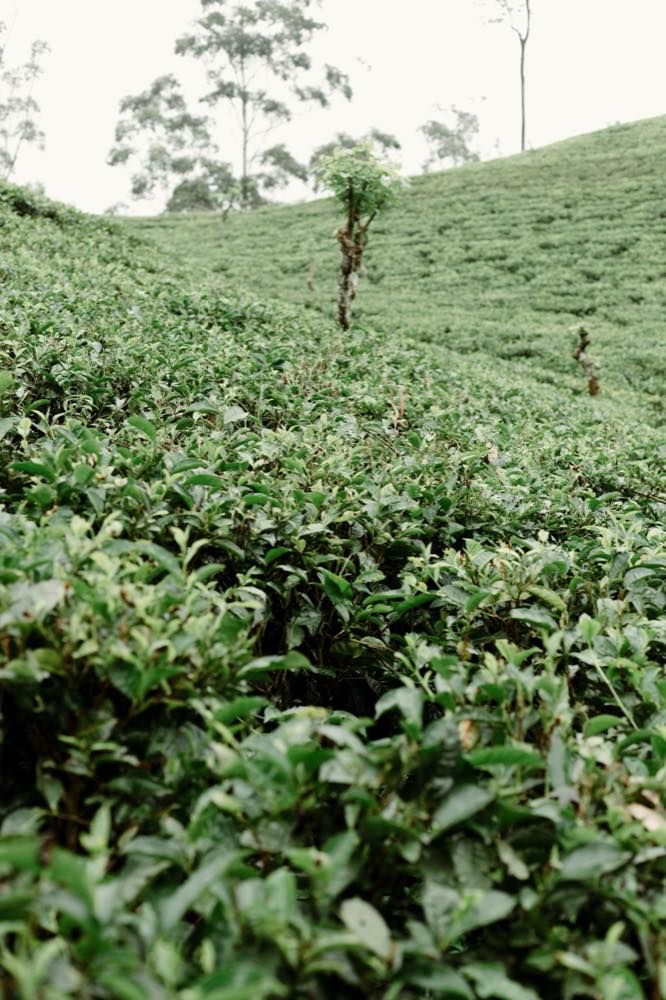 Tea country in the central highlands.
What to do:
- Tea plantation tours: Pedro Tea Estate and Damro Labookellie are the easiest to visit - both on the main road, offer free factory tours with tea tasting. Pedro Estate is the more atmospheric. Tours run roughly 8am–5pm daily.
- Victoria Park: Small English-style park in the centre of town. Good for a morning stroll.
- Hakgala Botanical Gardens: 6km from Nuwara Eliya, a highland garden with impressive orchid section and views to Hakgala Rock. Entry approximately LKR 1,000 for foreigners.
- Horton Plains National Park and World’s End: A high-plateau grassland with a stunning 870-metre cliff drop at World’s End viewpoint. Drive or hire a tuk-tuk from Nuwara Eliya (45 minutes). Enter before 8am for clear views - clouds typically roll in by 9–10am. Entry USD $25 for foreigners. Baker’s Falls is a short detour from the main circuit.
Weather note: Nuwara Eliya is cool by Sri Lanka standards - pack a layer. It can get genuinely cold at night in the December–January period (8–12°C).
Where to stay:
Budget ($30-70): Tea Bush Hotel ($35-60) and colonial-style guesthouses ($45-70).
Mid-range ($100–180): Grand Hotel (colonial grande dame from 1891, $100–150), Heritance Tea Factory (converted tea factory, from $160).
Splurge ($200+): Heritance Tea Factory top-tier suites (from $200), Ceylon Tea Trails (plantation bungalows, from $500/night all-inclusive).
Days 9–10: Ella
The train from Nanu Oya (Nuwara Eliya) to Ella is the most scenic section of the Kandy–Ella route - approximately 3 hours through tea estates, mountain tunnels, and the famous Nine Arches Bridge section. Book a window seat in second class reserved (LKR 300–500 on this section).
Ella highlights:
- Nine Arches Bridge: The colonial-era viaduct 10 minutes walk from Ella station. Trains cross in the morning and early afternoon - locals will tell you the schedule (roughly 9am and 2pm on most days, but times vary). The bridge is best photographed from the side path through tea bushes.
- Little Adam’s Peak: A 45-minute hike from Ella town through tea estates to a 1,141-metre peak with panoramic views across the valley. Leave before 8am to beat the heat and crowds. The path is clear and signposted; easy to moderate difficulty.
- Ella Rock: A more challenging 3–4 hour hike (return) to a summit at 1,041 metres. Excellent views but the trail is less maintained and involves crossing railway tracks - take a guide or detailed instructions from your guesthouse.
- Ravana Falls: 6km from Ella, a tiered waterfall on the main road to Wellawaya. Popular stop - accessible by tuk-tuk in 10 minutes.
Where to stay in Ella:
Budget ($25-60): Zion View Ella Green Retreat ($40-60) and simple guesthouses ($25-45).
Mid-range ($80-160): Hilltop and jungle-view hotels with valley views ($100-160), compare Ella hotels.
Splurge ($200+): Amba Estate (working farm, $200–280 all-inclusive).
Days 11–12: Yala National Park
A private transfer from Ella to Tissamaharama (the base town for Yala) takes approximately 3–3.5 hours and costs $60–90. This section does not have a practical public transport option.
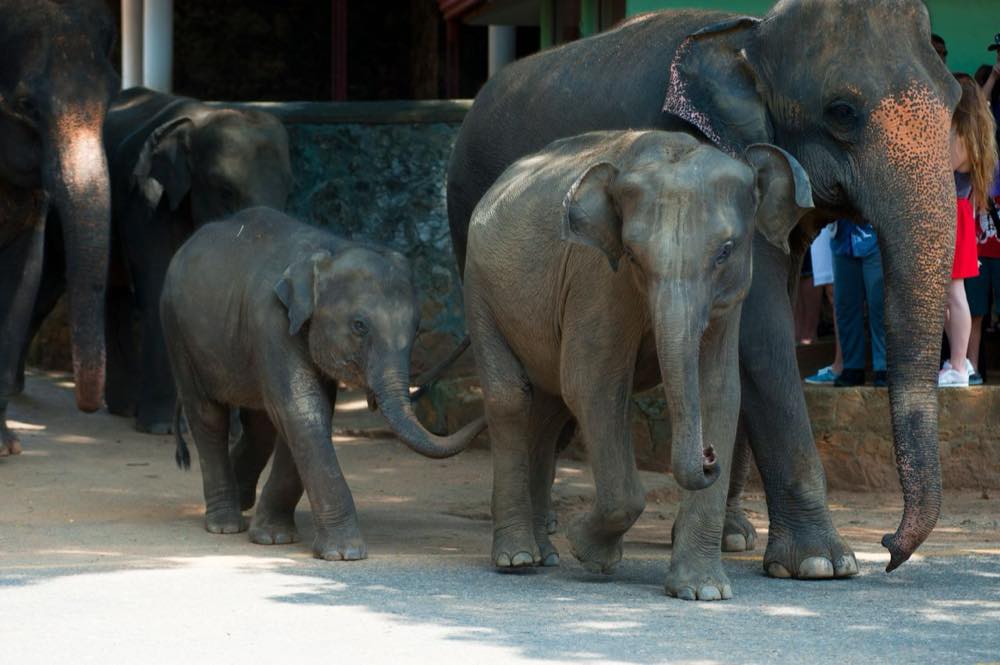 Asian elephants, one of the animals visitors hope to see.
Do a morning safari on Day 11 and an afternoon or second morning safari on Day 12. Yala Block 1 is Sri Lanka’s top wildlife destination - one of the world’s highest leopard densities. Sighting rates in dry season (June–October) run at 60–80% on morning drives. See the full guide at /things-to-do/yala-national-park-safari/. To book a jeep and guide in advance rather than arranging at the gate, browse Yala safari tours.
Safari costs: Park entry approximately USD $23 per person; jeep hire LKR 8,000–15,000 per jeep. Total per person (group of 4): approximately $40–60 per drive.
Where to stay (Tissamaharama):
Budget ($30-60): Simple guesthouses around Tissamaharama and the lake, compare stays.
Mid-range ($80-150): Cinnamon Wild Yala (on the park boundary, from $180) and safari lodges ($120+).
Splurge ($250+): Wild Coast Tented Lodge (luxury eco tents on the beach adjacent to the park, from $500/night).
Days 13–15: South Coast (Mirissa and Galle)
From Tissamaharama, drive west along the coastal highway - 2.5–3 hours to Mirissa, 3.5–4 hours to Galle.
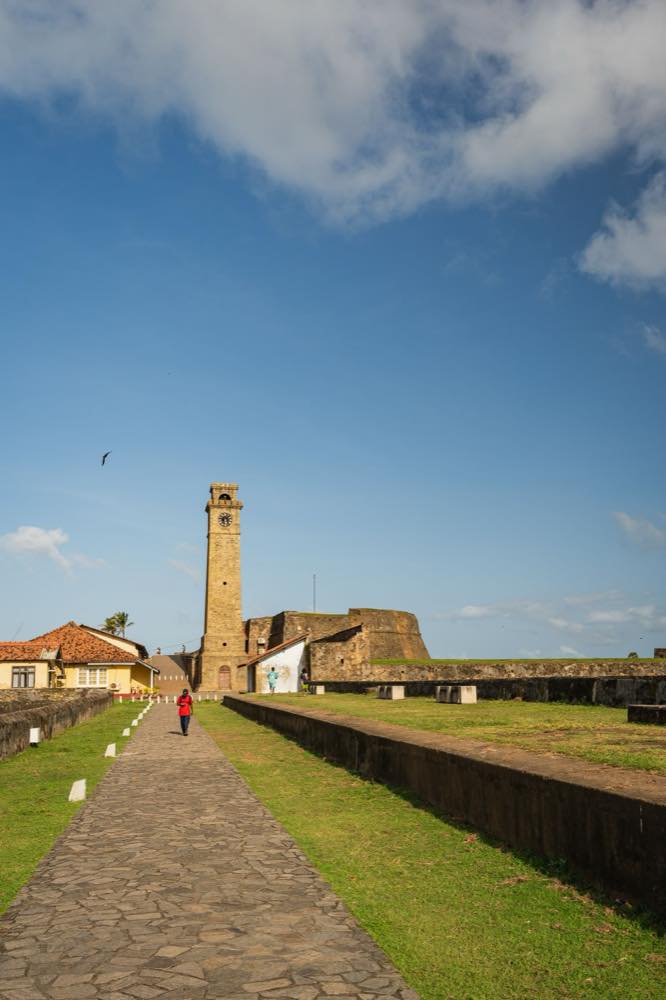 The clock tower and ramparts of Galle Fort.
Mirissa (Days 13–14):
- Whale watching: Departs Mirissa Harbour at 6am, returns by midday. November–April is the season for blue whales and sperm whales. Book the evening before; reputable operators charge LKR 3,500–5,000 per person. Go with a licensed vessel. The experience of seeing a blue whale (the largest animal on Earth) at close range is worth the early start.
- Beach: Mirissa’s main beach for afternoon relaxing; the cove is most atmospheric late afternoon. Parrot Rock viewpoint at the east end gives a good elevated view across the bay.
Galle (Days 14–15): The 17th-century Dutch fort at Galle is a UNESCO World Heritage Site - 36 hectares of colonial architecture surrounded by ocean on three sides. Two hours is enough to walk the ramparts and the interior streets. A full day lets you visit the National Maritime Museum, browse the art galleries and boutiques inside the fort, and eat well.
Where to stay (Galle Fort area):
Budget ($35-70): Guesthouses inside the fort ($35-70), compare Galle stays.
Mid-range ($100-200): Boutique villas and converted heritage houses inside the fort ($120-160+).
Splurge ($250+): Amangalla (the former New Oriental Hotel, from $600), Jetwing Lighthouse ($200-280).
Days 16–17: Hikkaduwa and West Coast
Move north from Galle to Hikkaduwa (25km, 30 minutes) for the Marine National Park reef and sea turtle snorkelling, then continue north toward Colombo via the coastal rail or road.
Hikkaduwa: Reef snorkelling, sea turtle encounters, stilt fishermen. Rent mask and fins from beach operators for LKR 300–500. Glass-bottom boat tours for LKR 500–1,000 per person if you prefer to stay dry. The beach strip has the most lively accommodation and restaurant options on this stretch of coast.
Bentota (optional stop): 40km north of Hikkaduwa, a quieter beach town with a wider, less crowded beach and some of Sri Lanka’s best water sports - waterskiing, jet skiing, and boat trips through the Bentota River lagoon.
Days 18–19: Jaffna (Optional Northern Extension)
If you have 3 weeks and want to see somewhere genuinely different, Jaffna in the north is worth the journey. Sri Lanka’s Tamil capital was isolated during the civil conflict and only became consistently accessible to tourists after 2009.
Getting there: Overnight train from Colombo Fort (Yal Devi Express, departure around 10pm, arrives Jaffna around 6am - book well ahead). Or domestic flight (FitsAir, approximately $60–80 each way, 1 hour).
What to do:
- Nallur Kandaswamy Kovil: The major Hindu temple in Jaffna, active pilgrimage site with distinctive South Indian Dravidian architecture
- Jaffna Fort: Dutch-era fort on the lagoon, partially ruined but historically significant
- Northern islands by bicycle: Causeway to Nainativu Island and Nagadeepa Buddhist temple by boat; Casuarina Beach on Karainagar; Dambakole Pattuwa salt flats
- Jaffna cuisine: Tamil cuisine in the north is distinct from Sinhalese food in the south - crab curry, dried fish, murungai leaf sambal, and steamed rice dishes that you won’t find as well done in Colombo
Where to stay:
Budget ($30-60): Guesthouses in central Jaffna and around Nallur ($30-60), compare Jaffna stays.
Mid-range ($80-160): The Thinnai (Palaly Road, pool, $90-130), Jetwing Jaffna ($150-200).
Days 20–21: Return to Colombo - Depart
Allow a day for Colombo on return - there are some genuinely good museums, the Pettah market if not yet visited, and a final dinner at one of the city’s excellent restaurants (Ministry of Crab in the Dutch Hospital Complex is worth booking ahead; Nuga Gama at Cinnamon Grand for traditional Sri Lankan cuisine in a garden setting).
Final transport: Airport to Colombo is 45 minutes by taxi or Uber (approximately LKR 1,500–2,500). If your flight is early morning, stay near the airport in Negombo the night before (15 minutes from the terminal).
3-Week Budget Summary
| Item | Budget tier | Mid-range |
|---|---|---|
| Accommodation (21 nights) | $25–50/night ($525–1,050) | $80–150/night ($1,680–3,150) |
| Internal transport | $200–350 | $400–600 |
| Entry fees | $100–150 | $150–200 |
| Food | $15–25/day ($315–525) | $30–60/day ($630–1,260) |
| Safaris | $40–60/person | $60–100/person |
| Total | $1,180–2,135 | $2,920–5,310 |
Prices are approximate as of 2026 and exclude international flights.
Cities in This Itinerary
- Anuradhapura Travel Guide
- Colombo Travel Guide
- Dambulla Travel Guide
- Ella Travel Guide
- Galle Travel Guide
- Hikkaduwa Travel Guide
- Jaffna Travel Guide
- Kandy Travel Guide
- Mirissa Travel Guide
- Negombo Travel Guide
- Nuwara Eliya Travel Guide
- Polonnaruwa Travel Guide
- Sigiriya Travel Guide
Book Your Trip
Flights - search and compare on Aviasales · flights guide eSIM - stay connected with Airalo · eSIM guide Travel insurance - get covered with VisitorsCoverage · insurance guide Airport transfers - book with Kiwitaxi · airport guide Car rental - compare with GetRentaCar Tours and activities - browse GetYourGuide