Sri Lanka Photography Guide: Best Spots & When to Shoot
Sri Lanka is one of the most photogenic countries in Asia. Ancient temples, colonial forts, tea-green hillsides, elephant-filled national parks, and a dramatic rocky interior all sit within a few hours of each other. The challenges are not finding photographs - they are everywhere - but managing timing, crowds, and the frequent gap between the postcard image and what you actually find.
This guide covers the main photographic destinations, what to shoot, when to show up, and the practical reality of each location.
Nine Arches Bridge, Ella
The Nine Arches Bridge (also called the Bridge in the Sky) is the most photographed location in Sri Lanka and one of the most recognised railway images in the world. The colonial-era viaduct of stone and brick spans a forested gorge 2.5km from Ella town, still in daily use on the Colombo–Badulla line.
What makes it work: The combination of arched stone spans, tropical green vegetation, and the old-fashioned diesel locomotive creates an image that does not look like anywhere else.
Timing: The bridge alone in the morning light is worth photographing, but the iconic shot is the train crossing. A northbound train passes around 8:45am; a southbound service comes through around 3:15pm. These are approximate - confirm the day before with your guesthouse or at Ella station. Arrive 20–30 minutes early.
Where to stand: The main viewing area is a flat platform to the left of the main path, around 150 metres from the bridge. It gives a clean side-on view. A secondary spot - a short scramble up through the vegetation to a slightly higher vantage - gives a more angled perspective showing the full curve of the track. Both spots get crowded on the morning train; arrive early.
Access: Walk from Ella town (about 30 minutes on a well-marked path) or take a three-wheeler for LKR 150–200.
Sigiriya Rock Fortress
Sigiriya is the world’s most intact example of 5th-century urban planning, rising 200 metres above the surrounding plain. As a photography subject, it is extraordinary.
Sunrise from the gardens: Entry fee is approximately USD 30 as of 2026. Gates open at 7:00am. Walk directly to the water gardens at the base - the symmetrical pools at the entrance reflect the rock face in still early morning air. Best captured before 8am when ripples from visitors disturb the surface.
Midmorning on the rock: The climb through the Lion Gate (below the lion’s paws) and up the final spiral staircase to the summit plateau takes 45 to 60 minutes. The views from the top - over the surrounding jungle and to Pidurangala Rock, Dambulla, and the distant hills - are best when not obscured by midday haze, i.e., before 10am.
Pidurangala at sunset: The single most useful photography tip for Sigiriya is to visit Pidurangala Rock (entry approximately LKR 500) on the opposite side at sunset. From Pidurangala’s summit - a 30-minute hike - you get the full profile of Sigiriya backlit by evening sky. It is far less crowded than Sigiriya and produces images that most tourists from inside Sigiriya cannot get.
Tea Plantations: Nuwara Eliya and Haputale
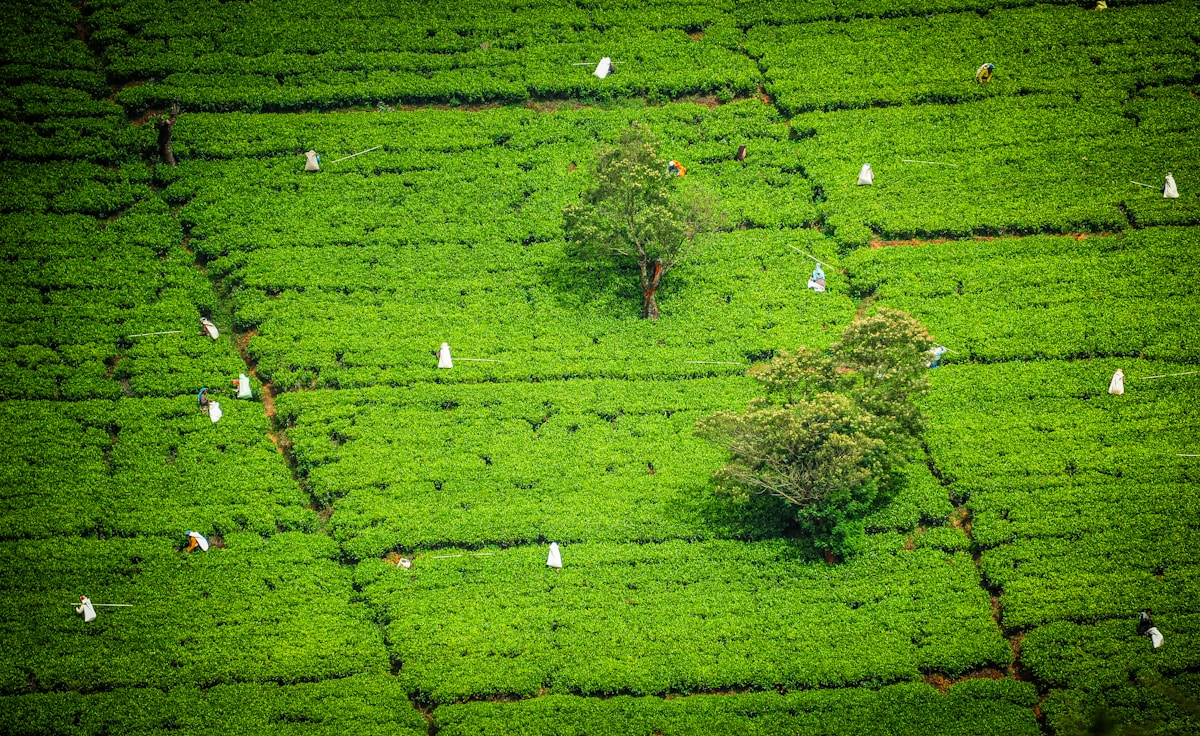
The hill country between Nuwara Eliya and Haputale is a continuous carpet of green tea estates, punctuated by colonial-era bungalows, factory rooftops, and Tamil pickers in bright sarees. It is one of the most visually distinctive landscapes in Asia.
Nuwara Eliya area: The Mackwoods Labookellie Tea Estate on the A5 Kandy–Nuwara Eliya highway welcomes visitors. Free entry; factory tours cost approximately LKR 300. The estate’s tea rows on sloped hillside make a classic foreground for portraits.
Haputale: The town itself sits on a ridge giving views north over the misty plateau and south towards the plains. From the train tracks above Haputale, the perspective looking down over the tea valley is among the best in the hill country - and largely undiscovered compared to Ella’s crowds.
Lipton’s Seat: A viewpoint 8km from Haputale above the Dambetenne Tea Estate, accessible by three-wheeler or a long uphill walk. Best in the morning before cloud rolls in (usually by 9:30am). The view from the seat takes in the Uva plains, the Bandarawela valley, and the surrounding estate. Named for Sir Thomas Lipton, who would survey his estates from this point.
Best light: Early morning and late afternoon create long shadows in the tea rows and pick out the individual texture of the bushes. Midday light flattens the scene.
Wildlife Photography: Udawalawe and Yala
Sri Lanka’s national parks are among the most accessible wildlife destinations in South Asia for photographers.
Udawalawe National Park is the most reliable for elephants. The park is home to around 700 Sri Lankan elephants and herds of 30 to 80 move through the grassland around the reservoir throughout the day. A 4-hour safari in the morning or late afternoon costs approximately LKR 4,000–6,000 for a jeep (up to 6 people) plus the entry fee of approximately USD 15. A 200–400mm telephoto lens is standard; herds are often close enough that 70–200mm is sufficient.
Yala National Park offers leopards, elephants, crocodiles, and over 200 bird species. Sri Lanka has one of the highest leopard densities in the world, and Yala Block 1 is one of the best places globally to photograph them. However, Block 1 attracts large numbers of jeeps - early morning and late afternoon safaris before the main jeep crowd arrives give the best photography conditions. Morning safari entry from approximately 6:00am. Costs: approximately USD 15 entry plus LKR 5,000–8,000 per jeep.
South Coast: Galle Fort and the Beaches
Galle Fort at sunset: The fort ramparts, with the lighthouse at the corner, face west. The classic image is the lighthouse silhouetted against the evening sky with the ocean behind. The inner streets of the fort - colonial-era Dutch architecture, carved doorways, vines over whitewashed walls - are photogenic at any time of day but at their quietest before 8am.
Mirissa Beach: The headland at the southern end of Mirissa gives a view over the bay and the coconut palms lining the beach. Best at sunrise or late afternoon. During whale watching season (November to April), a blue whale breach photographed from a whale watching boat at 30–40km offshore is a challenging but iconic Sri Lanka image.
Unawatuna and Weligama Bay: Both bays face south-southwest and are lit by long evening sun. Weligama is known for stilt fishermen - photographers traditionally photograph them from the road shoulder at the western end of the bay around LKR 200 per photo is the going rate for posing.
Temples and Archaeological Sites
Dambulla Cave Temple: Five cave temples cut into a granite massif, with 2,100m² of murals painted over 22 centuries. Photography of the murals is permitted without flash. The entrance light from cave mouths creates strong contrast - shoot in RAW to manage the dynamic range between bright entrances and dark interiors.
Anuradhapura: The ancient capital’s reclining Buddha at Isurumuniya and the Ruwanwelisaya stupa give classic architectural images. Early morning visits give raking light on the stupa’s white surface. The moonstone carved friezes at Mahasena’s Palace are among the finest examples of ancient Sinhalese decorative stonework.
Polonnaruwa: The Gal Vihara rock sculptures - four figures carved from a single granite face - are best photographed in the morning with the light coming from the east. Midday sun makes photography difficult.
Practical Tips
Light: Sri Lanka is tropical. Usable light is broadly 6:30–9:30am and 3:30–5:30pm. Midday produces harsh, bleached images in open locations.
Rain: The wet zone (western and central Sri Lanka) receives heavy rain from May to October. A rain sleeve for your camera and a dry bag for your bag are worth packing.
Crowds: Sigiriya, Nine Arches Bridge, and the southern beaches are heavily visited. Arrive early, stay late, or plan to incorporate people into your compositions rather than working around them.
Permissions: Always ask before photographing individuals, particularly women, at temples or in markets. A smile and a gesture works across language barriers. Offer to show them the screen - it usually breaks any tension. For access to lesser-known photographic locations and early-morning timed visits, book a guided Sri Lanka photography tour - local guides know which viewpoints are uncrowded and at what time the light is best.
Plan Your Trip
Book an experience
Popular experiences
While you research, browse the most-booked experiences: all with instant confirmation.
Frequently Asked Questions
- What is the best time to photograph the Nine Arches Bridge in Ella?
- The bridge itself looks best in the early morning (7:00–9:30am) when the light is soft and the forest is alive with mist. The most photographed moment is when the train crosses. Northbound trains typically pass around 8:45am; a southbound service comes through around 3:15pm. These times shift seasonally - confirm the evening before with your guesthouse. Arrive at the viewing area 20 minutes early to claim a spot. The upper viewing point, a short scramble from the main path, gives the most unobstructed view of the full bridge arc.
- When is Sigiriya best for photography?
- Sunrise is the iconic shot - the fortress glows amber above the surrounding jungle before the tourist crowds arrive. Gates open at 7:00am. You need to be at the mirror wall or the lion staircase by 7:15am for the best colour. The reflection of the rock in the water garden at the base is best captured in the early morning light. Midday sun bleaches the rock face and produces harsh shadows. Sunset from the Pidurangala Rock opposite Sigiriya gives a distant profile shot of the rock with warm backlighting - the short hike takes about 30 minutes.
- What camera equipment is needed for Sri Lanka?
- Sri Lanka rewards versatility. A 24–70mm or 16–35mm wide-angle covers landscapes, temples, and interiors; a 70–200mm telephoto handles wildlife (elephants at Udawalawe, birds at Sinharaja) and compressed distance shots of Sigiriya from Pidurangala. A polarising filter cuts through haze and improves colour saturation in tea plantation shots. For the train at Nine Arches Bridge, a 50mm or 70–100mm focal length works well from the main viewing area. Weather protection for your gear is advisable in the wet zone and during monsoon travel.
- Is drone photography allowed in Sri Lanka?
- Drones require prior approval from the Civil Aviation Authority of Sri Lanka and the Board of Investment. Flying without approval near national parks, archaeological sites (Sigiriya, Dambulla, Polonnaruwa), airports, or military areas is prohibited and can result in equipment confiscation. Some operators offer permitted drone filming services with advance licence approval. For most visitors, the logistics are impractical - budget on ground-level photography only.
- Can I photograph inside Sri Lankan temples?
- Photography rules vary by temple. At most Buddhist temples you can photograph the exterior and grounds freely. Some inner sanctuaries prohibit photography or require an additional fee (approximately LKR 200–500). At the Temple of the Tooth in Kandy, photography of the tooth relic chamber is restricted. At Dambulla Cave Temple, photography of the cave murals is permitted but flashless - slow ISO and a wide aperture are needed. Always check the posted rules at the entrance and follow the instructions of temple staff.