Renting a car in Sri Lanka is possible, and it can be a rewarding way to link the hill country, the south coast and the Cultural Triangle on your own timetable. It is also the transport choice that comes with the most paperwork and the most stress. This guide explains the licence rules that catch visitors out, what self-drive costs, how insurance and deposits work, and when we would suggest a different option.
The Licence Rule: What You Actually Need
This is the part most travellers get wrong. Driving in Sri Lanka on your national licence by itself is not legal for tourists. As of 2026 there are two recognised routes:
- An International Driving Permit (IDP) with local recognition. You obtain a Geneva Convention 1949 IDP in your home country before you travel, and it must be endorsed or recognised by the Automobile Association of Ceylon (the Sri Lanka Automobile Association). The recognition is stamped in Colombo, usually for a fee in the region of LKR 7,000-8,000 according to traveller reports, so confirm the current amount with the association.
- A temporary Sri Lankan driving licence from the Department of Motor Traffic (DMT). This is a local licence for foreign visitors, usually valid for a short period tied to your stay. Since August 2025 the DMT has run a counter at Bandaranaike International Airport that issues temporary licences on arrival for light vehicles and motorcycles (Ada Derana report{target=“_blank”}). Three-wheelers are excluded, so a tuk-tuk needs a separate process (see our tuk-tuk rental guide). Reported fees have been around LKR 2,000, but the fee was under review, so check before you travel.
What to bring for either route: your passport with the visa or ETA, your valid home licence, and, for the recognition route, the IDP and passport photos. Our ETA application guide covers the entry paperwork.
What happens if you skip it: police checks do occur, particularly on the south coast and around Colombo. Driving without a valid permit can mean a fine, and your travel insurance may refuse to pay out after an accident. Rental companies also tend to insist on seeing the permit, and some, including international brands, will direct you to the DMT in Weerahera if you do not hold an IDP.
Rules change, and the fee and validity details above come from news reports and operator information rather than a single published schedule. Treat them as a guide, and confirm with the DMT or your rental company before you book flights around them.
How Much Does Self-Drive Cost?
Approximate costs as of 2026:
| Item | Approximate cost |
|---|---|
| Small hatchback (Perodua/Suzuki class) | From LKR 6,000 per day |
| Mid-range sedan or hybrid (Toyota Axio class) | LKR 7,000-9,000 per day |
| SUV or larger vehicle | LKR 10,000 and above per day |
| Security deposit | Often around USD 165 with local operators; some international brands ask for more |
| Mileage allowance | Commonly 80-100 km per day, excess charged per km |
| Peak-season surcharge | About 10% in July, August, December and January with some operators |
| Fuel | Paid by you; budget for it on top |
Deposits are usually taken on a credit card in the driver’s name, and debit cards are often refused. The minimum driver age is commonly 21, and some firms cap it around 65, so check the terms if either applies to you.
Compare this with the alternatives: a car with a driver typically adds a daily fee but removes the licence and deposit hassle (see hiring a driver in Sri Lanka), while trains and buses cost far less for single routes (getting around Sri Lanka). Use our budget and costs guide to see where a rental fits in your daily spend.
Where to Book
Local operators often quote lower headline rates and include delivery to the airport or your hotel, but quality varies, so read recent reviews and ask exactly what the insurance covers. International brands and comparison platforms cost more but give clearer terms. You can compare car hire options in Sri Lanka in one place and filter by pick-up point, transmission and deposit. Book early for December to March, when the fleet tightens.
When you collect the car:
- Photograph every panel, the tyres and the windscreen, and record existing scratches on the rental form.
- Check the spare wheel, jack and the air conditioning before leaving the car park.
- Confirm in writing what the insurance covers and what your excess is.
- Ask for a breakdown number that is answered in English.
Insurance
Rental prices normally include basic cover, often described as comprehensive for the vehicle and third-party liability, with your liability capped at the deposit or an excess. Read the exclusions: tyres, glass, undercarriage damage and driving on unpaved roads are common carve-outs. A separate travel insurance policy covers medical costs after a crash, which rental insurance does not, and you should check that it accepts your licence status.
Driving Conditions
- Left-hand traffic, right-hand-drive cars, and a very mixed flow of buses, trucks, tuk-tuks, scooters and pedestrians.
- Slow averages. Plan roughly 30-40 km/h on ordinary roads. Colombo to Kandy or Colombo to Galle takes far longer on the older roads than the distance suggests; the expressways, such as the Southern Expressway towards Galle and Matara, are faster and carry tolls.
- Buses overtake aggressively. Give way early and keep right of the white line where you can.
- Hill-country roads between Kandy, Nuwara Eliya and Ella are narrow, winding and often foggy or wet. Allow extra time and avoid them at night.
- Navigation. Google Maps works well, but download offline maps and carry a local SIM card or eSIM for data.
- Parking. Finding a space in Colombo and Kandy is hard. Check that your guesthouse has parking before you book; we list options on our Kandy where to stay page.
- Police and fines. Carry the licence, permit and rental papers in the car at all times.
Routes That Suit Self-Drive
South coast (Galle, Mirissa, Tangalle). The easiest drive, with the expressway for much of it and plenty of places to stop. See Galle and Mirissa to plan stops.
Cultural Triangle (Dambulla, Sigiriya, Anuradhapura). Flat, straightforward roads with low traffic once past Kurunegala. Our 10 days in the Cultural Triangle itinerary lays out a loop.
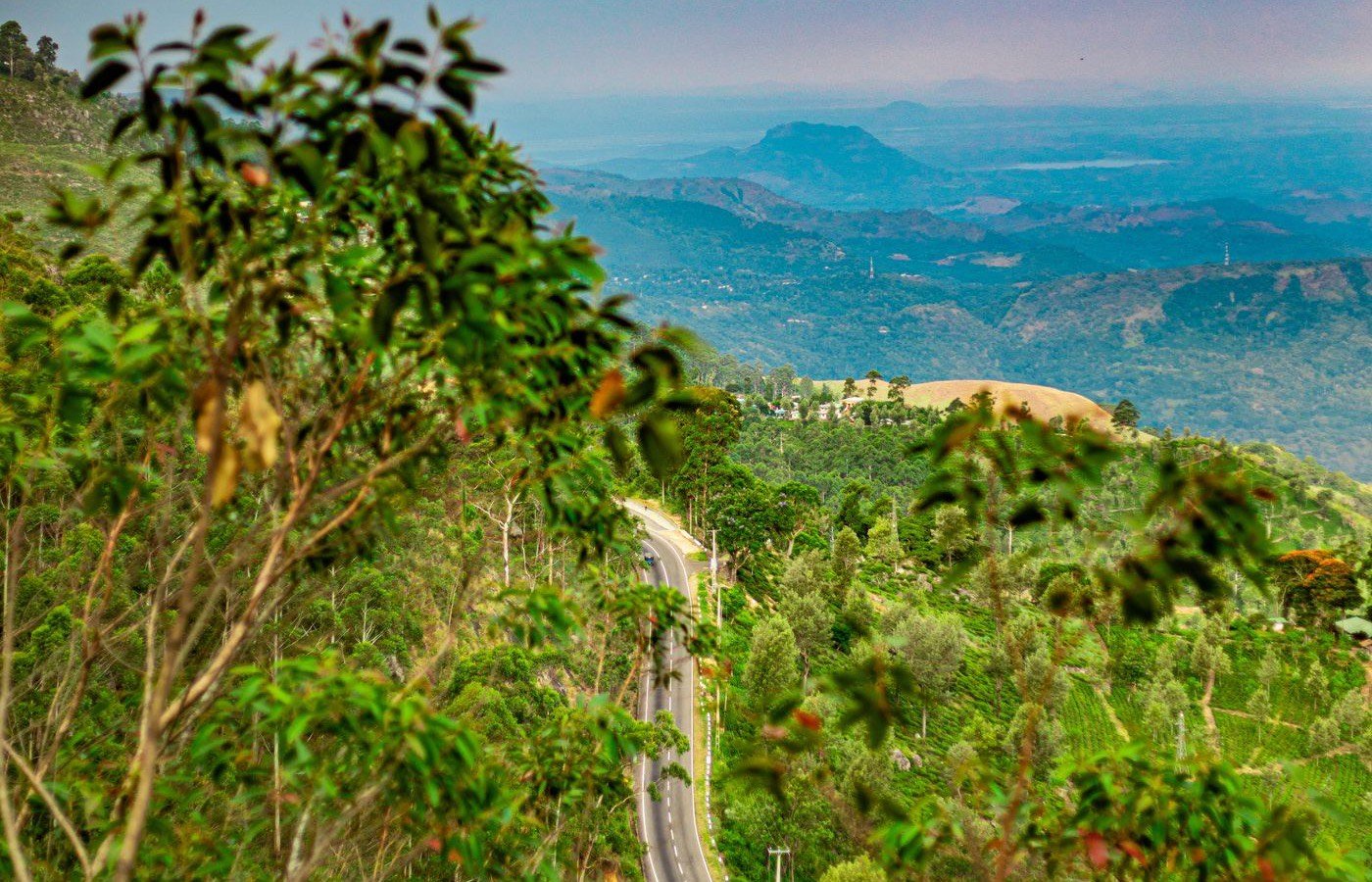
Hill country (Kandy, Nuwara Eliya, Ella). The most scenic and the hardest. Gradients are steep and visibility can be poor. Many visitors take the train on this section instead, which is among the island’s best-known rail journeys.
Where a car is a poor choice: central Colombo and Kandy, and the national parks. Safaris at places like Yala or Udawalawe require a licensed park jeep with a guide, so leave your rental outside. See our national parks directory.
Is Self-Drive Right for You?
Choose self-drive if you have driven in busy, left-hand-traffic countries, can handle chaotic roads, and have at least a week. Choose a driver if you are new to Asian roads, travelling in a short window, or you want to arrive at temples and viewpoints without worrying about parking. Many travellers split it: a driver for the hill country and the Cultural Triangle, then a short self-drive on the south coast. If you do not want to drive from the airport after a long flight, a pre-booked airport transfer removes that first hurdle, and you can pick up the rental car in town the next day.
For a wider look at what to budget for the trip, see our two-week trip cost breakdown.
Not sure a rental is worth it for your dates? Browse Sri Lanka tours to compare day tours against renting a car for a day.