Sri Lanka and Kerala share more than a coastline across the Arabian Sea. Both are tropical, both are historically shaped by maritime spice trade, and both have built tourism industries around beach relaxation, cultural immersion, and wellness. But the experience on the ground diverges considerably - and the right choice depends on what you actually want from your time.
This guide focuses specifically on the Kerala–Sri Lanka comparison. For a broader overview that includes Tamil Nadu, temple culture, and logistics across South India as a whole, see Sri Lanka vs South India.
Cost of Travel
Sri Lanka daily budget: USD 35–55 for comfortable mid-range travel. A guesthouse room in Ella, Mirissa, or Kandy runs approximately USD 25–45 per night. A tuk-tuk ride covering 15 km costs USD 4–7. A sit-down meal at a local restaurant is USD 4–8; a full rice and curry lunch from a roadside kade starts at around USD 1.50. National park fees are the main budget spike - Yala entry is USD 15 plus USD 30 for a mandatory jeep safari.
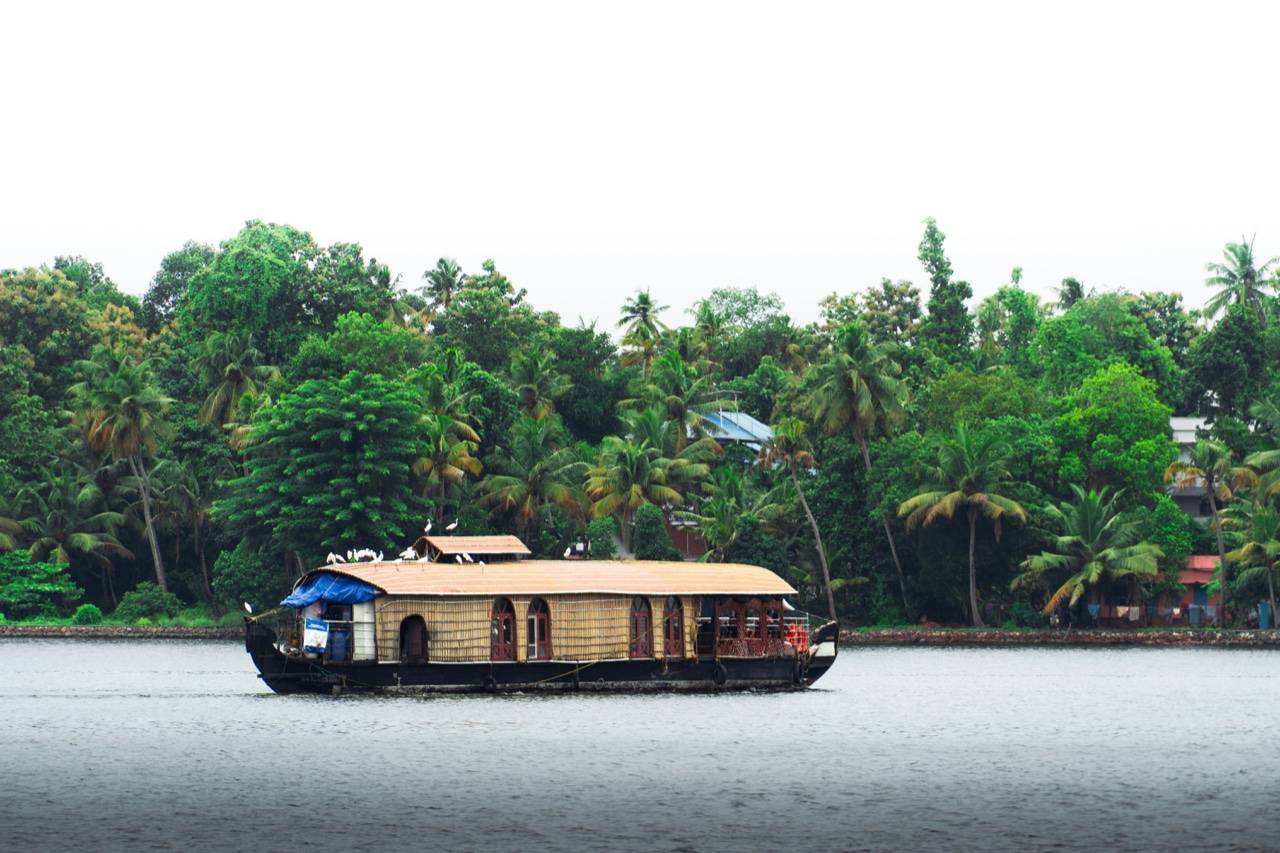
Kerala daily budget: USD 25–45 for similar comfort. Guesthouses in Kochi’s Fort area or Varkala clifftop run USD 20–35 per night. Food is cheaper - a full thali at a local restaurant costs USD 2–4. Houseboat hire on the Alleppey backwaters starts at around USD 80–120 per boat per night (split between travelling companions, this is good value). Government buses between cities are remarkably cheap: Kochi to Thiruvananthapuram (220 km) by AC bus costs around USD 3–5.
Verdict: Kerala has the edge for budget travellers. Food and ground transport are cheaper, and the backwater houseboat experience divides well among groups. Sri Lanka transport costs more per kilometre, though the shorter distances partially offset this. For two weeks of travel, expect to spend roughly 10–20% more in Sri Lanka.
Weather and Best Time to Visit
Sri Lanka’s monsoon split is the single most important factor when planning. The south-west coast and hill country are best from December to March - this is when Mirissa, Galle, and the train to Ella are at their peak. The east coast (Arugam Bay, Trincomalee) flips to May through September. The cultural triangle in the north-central interior is broadly year-round.
Kerala’s monsoon runs June to September and hits the coast hard. For beaches and backwaters, October to March is the prime window. However, Kerala’s monsoon has a devoted following among Ayurveda practitioners - classical Panchakarma treatments are traditionally considered most effective during the monsoon (karkidaka) season, and the rain-drenched landscape has its own drama. Munnar’s tea hills are lush year-round but particularly spectacular from July to September.
Verdict: For most travellers the overlap window is October to March - excellent in both destinations. Those combining the two should consider Kerala in October–November before crossing to Sri Lanka’s south-west coast for December through February.
Beaches
Sri Lanka’s south coast - Mirissa, Tangalle, Hiriketiya - and the surf town of Arugam Bay on the east coast cover the range from whale watching to beginner surf breaks in a single circuit. None of Kerala’s beaches comes close in variety or scale.
Kerala’s best beach is Varkala - a small town perched above red laterite cliffs, with a decent stretch of sand below and a clifftop strip of cafes and shops above. It has genuine charm and a slower pace than Goa or the Thai islands. Kovalam, once considered Kerala’s headline beach, is now fairly over-developed. The beaches of northern Kerala (Bekal, Kasaragod) are quieter but underdeveloped for tourism.
Verdict: Sri Lanka wins on beaches. Varkala is pleasant but modest; Sri Lanka’s south coast is a genuine beach destination in its own right. Travellers for whom beach time is the centrepiece of a trip should base in Sri Lanka - Kerala’s strength lies elsewhere.
Backwaters and Waterways
This is where Kerala has no competition anywhere in the region. The Alleppey (Alappuzha) backwater network - approximately 900 km of canals, rivers, and lakes behind the coast - is unlike anywhere else in Asia. A houseboat overnight through the paddy fields, toddy shops, and Chinese fishing nets of Kottayam and Kumarakom is one of the most memorable travel experiences in southern India. Kumarakom Bird Sanctuary sits on the eastern shore of Vembanad Lake and is excellent for early morning birding.
Sri Lanka has its own waterways - Negombo Lagoon, the Madu River in the south, and the coastal wetlands around Kalametiya. These are beautiful and worth a boat trip. But they are not in the same league as the Kerala backwaters for scale, infrastructure, or the distinctiveness of the landscape.
Verdict: Kerala wins decisively. If backwaters are on your must-do list, it is worth visiting Kerala specifically for them. Sri Lanka’s waterways are a pleasant add-on but not a headline destination.
Ayurveda and Wellness
Kerala is the recognised home of authentic Panchakarma Ayurveda - the classical eight-branch detoxification and rejuvenation system. The state has a robust regulatory framework for Ayurveda practitioners, and reputable treatment centres in Thrissur, Thrippunithura, and around Thiruvananthapuram have been operating for generations. A serious Panchakarma programme runs 7–21 days and costs USD 80–200 per day at a reputable centre, including treatments, consultations, and diet.
Sri Lanka has a growing Ayurveda industry, concentrated in the hill country around Kandy and in a few beach resort towns. Most Sri Lankan Ayurveda properties offer massage-focused wellness retreats rather than full clinical treatment programmes. Standards vary considerably, and the regulatory framework is less established than Kerala’s. For a genuine Panchakarma course, Kerala remains the more reliable destination.
Verdict: Kerala wins for serious Ayurveda. Sri Lanka is adequate for general wellness and yoga retreats, particularly at properties like Santani near Kandy or Ulpotha in the North Central Province.
Wildlife and Nature
Sri Lanka is exceptional for wildlife in a small footprint. Yala National Park has one of the world’s highest densities of leopards. Udawalawe is reliable for elephants at close range - better sightings than many African parks for those on a budget. Blue whales off Mirissa, sloth bears at Wilpattu, and endemic birds throughout the rain forests make wildlife a genuine strength.
Kerala’s wildlife highlight is Periyar Tiger Reserve in the Cardamom Hills - a boat safari on Periyar Lake is atmospheric, though tiger sightings are rare. The nearby Parambikulam Tiger Reserve has better sighting records. The Nilgiri Biosphere Reserve (shared with Tamil Nadu) is exceptional for endemic species including Nilgiri tahr and elephant herds. Munnar’s tea estates harbour a surprising range of birds.
Verdict: Sri Lanka wins for reliability and species diversity within a small area. You can combine leopards, elephants, and whale watching in a single one-week circuit - something no region of Kerala can match.
Food and Eating Out
Sri Lanka’s food is built around rice and curry - multiple curries (dhal, jackfruit, potato, chicken, fish) served with rice, papadam, and sambols at lunch. Hoppers (bowl-shaped fermented rice pancakes) with egg are a breakfast staple. Kottu roti - chopped flatbread stir-fried with vegetables, egg, and spice - is the street food of choice after dark. Seafood along the coast is excellent and cheap.
Kerala food is among the most varied and sophisticated in India. A Keralan sadya - a traditional banana-leaf feast with rice, sambar, aviyal, payasam, and a dozen small preparations - is one of the great eating experiences in Asia. Seafood (Kerala’s Malabar coast has exceptional prawn, squid, and fish curries), parotta with beef fry, puttu and kadala curry, and the distinct coconut-forward flavour profile of most dishes make Kerala a serious food destination.
Verdict: A genuine draw. Sri Lanka’s rice and curry is deeply satisfying, and hoppers are uniquely its own. Kerala’s sadya and Malabar seafood represent something harder to replicate elsewhere. Food enthusiasts gain from visiting both.
Which Should You Choose?
Choose Sri Lanka if you want: beaches as the centrepiece of your trip, reliable large-mammal wildlife in a compact footprint, whale watching, surfing at Arugam Bay, or the hill country railway route between Kandy and Ella.
Choose Kerala if you want: a backwater houseboat night, a serious multi-week Ayurveda programme, the food culture of a Keralan sadya and Malabar seafood, or the cultural immersion of Kochi’s Fort area.
Choose both if you have four weeks or more - they complement each other well. Neither is a substitute for the other, and the cultural and geographic contrast makes the combination genuinely rewarding rather than repetitive.
More Comparisons
- Sri Lanka vs India
- Sri Lanka vs Bali
- Sri Lanka vs Maldives
- Sri Lanka vs Mauritius
- Sri Lanka vs Singapore
- Sri Lanka vs South India
- Sri Lanka vs Tamil Nadu
- Sri Lanka vs Thailand
- Sri Lanka vs Vietnam
Plan Your Trip
Book before you go:
Suggested itineraries: