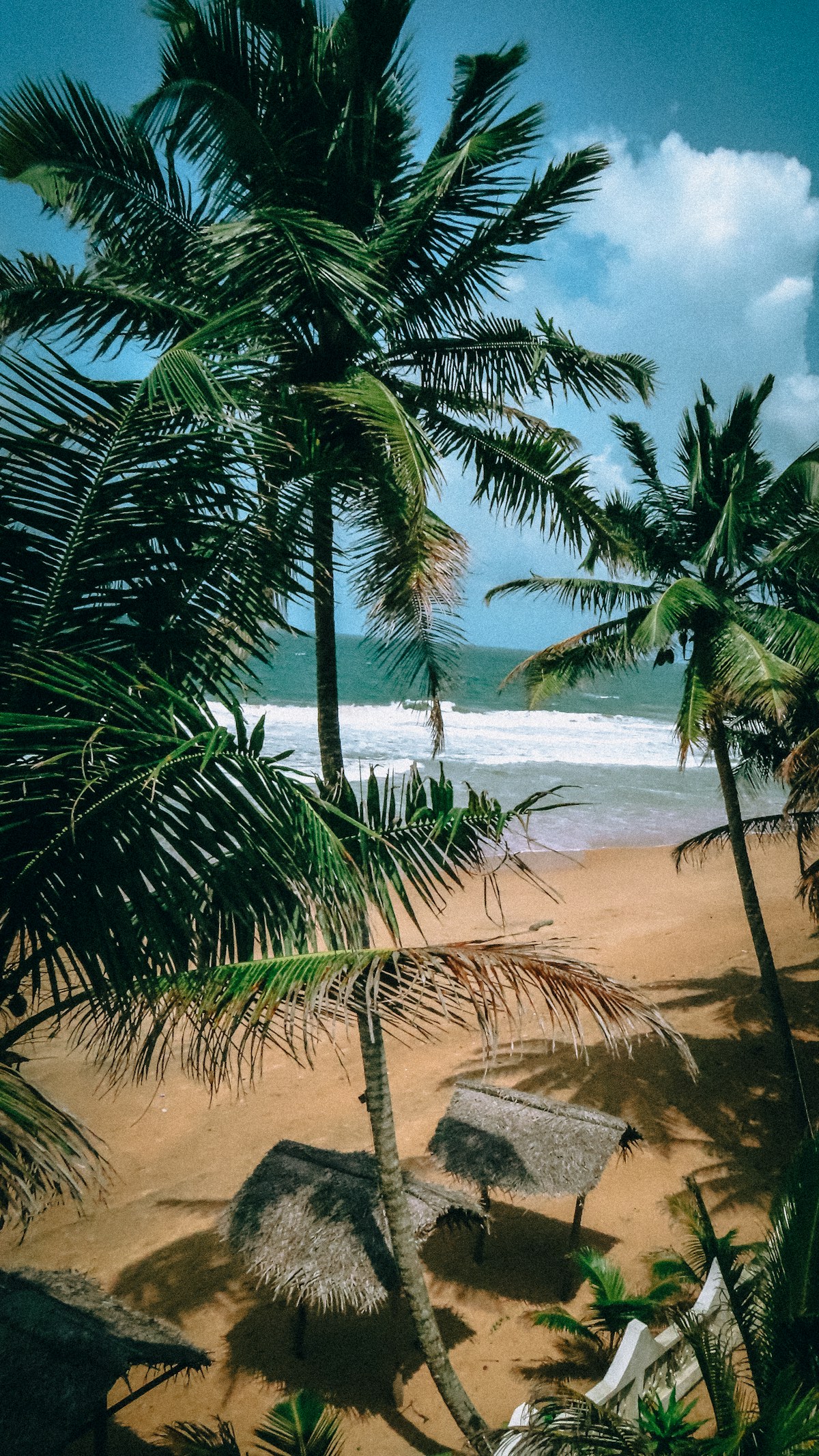
Sri Lanka or Thailand? Choose Sri Lanka for wildlife, tea country train rides, ancient sites and fewer crowds; choose Thailand for island variety, nightlife and polished resorts. Mid-range daily costs are similar, about USD 35-55 in both, though Sri Lanka is cheaper for national parks and local transport.
Sri Lanka and Thailand are two of South and Southeast Asia’s most popular travel destinations, and they appeal to overlapping audiences - beach lovers, wildlife watchers, culture seekers, and independent travellers on mid-range budgets. But the experience on the ground is distinct in important ways. Thailand is bigger, louder, better connected, and has had three decades more development as a tourism destination. Sri Lanka is smaller, quieter, more compact, and packed with cultural and wildlife assets relative to its size.
The right choice depends on what you want most from a trip.
Cost Comparison
Sri Lanka daily budget: USD 35–55 for comfortable mid-range travel. Guesthouses in Ella, Galle, or Kandy run USD 25–50 per night. A tuk-tuk covering 10 km costs USD 2–4. A rice and curry lunch at a local restaurant is USD 2–6. National park entry fees are the main spike - Yala runs approximately USD 15 entry plus USD 50–70 for a mandatory shared jeep safari. The hill country train from Kandy to Ella is approximately USD 5–10 per person in observation class.
Thailand daily budget: USD 30–55 for similar comfort. A guesthouse in Chiang Mai or Pai costs USD 15–35 per night; Koh Samui or Phuket’s beach accommodation starts USD 30–60. Street food is Thailand’s great equaliser - a bowl of khao soi or pad see ew from a market stall costs USD 1–2. Island ferries between the Gulf of Thailand or Andaman islands run USD 10–25 per crossing. Night trains from Bangkok north to Chiang Mai cost approximately USD 15–30 and are an experience in themselves.
Verdict: Broadly similar. Sri Lanka wins slightly on wildlife activity value (leopard and elephant sightings for lower entry cost) and on beach accommodation in the mid-range. Thailand wins on street food and budget island hopping. Both are good-value destinations by Asian standards.
Wildlife
Sri Lanka’s wildlife offering is exceptional relative to the country’s size. Yala National Park has one of the highest densities of leopards of any national park in the world - sightings are reliable rather than merely possible. Udawalawe National Park is arguably Asia’s best destination for close-range elephant encounters, with herds frequently visible at water’s edge for extended periods. The Minneriya and Kaudulla reservoir circuit hosts the Gathering - hundreds of wild elephants converging on ancient tanks from July to October - one of Asia’s most dramatic wildlife events. Blue whale sightings off Mirissa from November to April are among the world’s most reliable deep-water whale encounters. Wilpattu adds sloth bears and a wilder, less trafficked safari experience.
Thailand’s flagship wildlife destination is Khao Yai National Park - a UNESCO site north of Bangkok with good bird lists, gibbons, Asian elephants, and occasional leopard tracks, though sightings are considerably less reliable than Yala. Doi Inthanon near Chiang Mai has good endemic highland birds. The Andaman coast has excellent diving (Richelieu Rock, Similan Islands) and seasonal whale shark encounters. Marine National Parks around Koh Tao offer good dive school infrastructure.
Verdict: Sri Lanka wins for land-based wildlife, and it is not particularly close. The reliability of Yala’s leopard sightings and Udawalawe’s elephant encounters puts Sri Lanka in a different league from Thailand for anyone prioritising safari-style wildlife. Thailand wins for dive site infrastructure and marine diversity.
Beaches and Islands
Thailand’s island circuit is one of Southeast Asia’s most developed. The Gulf of Thailand offers Koh Samui (developed beach resort), Koh Phangan (Full Moon Party, budget bungalows), and Koh Tao (dive training, snorkelling). The Andaman Coast offers Koh Phi Phi (dramatic limestone karst, turquoise water), Koh Lanta (relaxed, family-friendly), and the Krabi coast with its rock climbing. Phuket is Thailand’s largest island - commercialised in parts but with genuinely beautiful beaches (Kata Noi, Surin Beach) away from the Patong strip. Island hopping by ferry and speedboat is easy and well-organised.
Sri Lanka’s south coast has excellent beaches - Hiriketiya for a sheltered bay with consistent surf, Mirissa for whale watching and a social atmosphere, Tangalle for emptiness and lagoon landscapes, and Weligama for long-board surfing. The east coast at Trincomalee and Pasikuda flips the season (best May–September) and offers some of Sri Lanka’s clearest water. Arugam Bay is one of Asia’s top surf breaks.
Sri Lanka does not have an island-hopping circuit in the Thailand sense - there are no separate inhabited islands with their own tourism infrastructure. The beaches are on the mainland coast.
Verdict: Thailand wins for island variety, island-hopping logistics, and the breadth of beach options. Sri Lanka’s beaches are excellent but are not competing with the density and variety of Thailand’s island circuit.
Culture and History
Sri Lanka’s cultural heritage is extraordinary and largely overlooked by travellers who compare it to Thai Buddhist culture. The Cultural Triangle contains some of Asia’s most significant early Buddhist monuments: Anuradhapura (a 2,000-year-old city with monolithic dagobas visible for miles), Polonnaruwa (a medieval capital with superb carved stone Buddhas), and Sigiriya - a 5th-century rock fortress with ancient frescoes and sophisticated hydraulic gardens. All are UNESCO World Heritage Sites. The Temple of the Tooth Relic in Kandy is among Buddhism’s most important pilgrimage sites globally, and the Esala Perahera - a ten-day procession of elephants, drummers, and dancers in July or August - is one of Asia’s great festivals. Jaffna in the north offers Tamil cultural heritage distinct from the Sinhalese Buddhist south.
Thailand has deep Buddhist culture expressed through an extraordinary density of temples. Bangkok’s Wat Pho (reclining Buddha), Wat Arun (Temple of Dawn), and the Grand Palace complex are genuinely impressive. Chiang Mai’s old city contains 300+ temples within the moat. Sukhothai Historical Park and Ayutthaya are UNESCO sites with extensive temple ruins. Thai cultural heritage is widely accessible, well-signed, and easy to engage with.
Verdict: A genuine draw on depth. Sri Lanka wins on archaeological site scale and UNESCO site density relative to country size. Thailand wins on cultural accessibility and the sheer number of temples integrated into everyday urban life. Both are exceptional cultural travel destinations.
Infrastructure and Getting Around
Thailand’s transport infrastructure is significantly more developed for independent travellers. Bangkok has a functional metro (BTS and MRT), an extensive bus network, long-distance trains connecting the country north to south, and budget domestic flights that cost as little as USD 20–40 on AirAsia. Island ferries run on reliable schedules between most Gulf and Andaman destinations. International flight connections from Bangkok’s Suvarnabhumi are among Southeast Asia’s best - Bangkok is a hub for dozens of regional and intercontinental carriers.
Sri Lanka relies primarily on tuk-tuks, private drivers, and a limited but scenic rail network. The hill country train from Kandy to Ella is genuinely world-class, but rail coverage elsewhere on the island is patchy. No domestic commercial flights operate. Tuk-tuks for short journeys are ubiquitous and cheap; private drivers for full-day excursions cost approximately USD 50–80. Intercity buses cover most routes but are slow by comparison to Thailand’s air-conditioned bus network.
Verdict: Thailand wins on infrastructure by a significant margin. For independent travellers who want to cover a lot of ground quickly, Thailand’s transport links make itinerary flexibility much easier.
Crowds and Authenticity
This is where Sri Lanka has a clear and growing advantage. Thailand - particularly in peak season (November–February on the Gulf, December–April on the Andaman) - is extremely busy. Phi Phi Don, Railay Beach, and the Khao San Road scene can feel overwhelmed with tourism. Even outside peak season, Phuket and Samui have reached levels of development where authentic local culture is hard to find in the tourist zones.
Sri Lanka sees approximately 1.5 million international visitors per year (pre-pandemic; recovering post-2019 crisis). By comparison, Thailand receives over 30 million. The practical difference is visible throughout Sri Lanka: guesthouses in Ella and Kandy are busy in peak season, but Yala has fewer jeeps than Masai Mara, Sigiriya has manageable queues, and even popular south coast beaches feel spacious relative to Thai equivalents.
Verdict: Sri Lanka wins on avoiding the mass-tourism atmosphere. Travellers who find Koh Phi Phi in December overwhelming, or who want wildlife safaris without 20 jeeps competing for the same leopard sighting, will find Sri Lanka more manageable.
Nightlife and Social Scene
Thailand has one of Southeast Asia’s best nightlife and social scenes. Bangkok’s rooftop bars, Sukhumvit’s international restaurant district, Koh Phangan’s Full Moon Party, and Chiang Mai’s Night Bazaar and bar scene collectively offer something for nearly every taste and budget. The full-moon and half-moon party circuit on the Gulf islands is specifically designed for travellers who want to meet people and party.
Sri Lanka’s nightlife is quieter and more dispersed. Colombo has a growing bar and restaurant scene (particularly around Colombo 3 and Colombo 7), but it is not a major nightlife capital. Beach towns like Mirissa and Hikkaduwa have evening bars and live music, but they operate at a fraction of Thailand’s intensity. The hill country towns of Ella and Nuwara Eliya are essentially quiet by 10 pm.
Verdict: Thailand wins for nightlife, social traveller infrastructure, and the ease of meeting other travellers in party settings. Sri Lanka is better suited to travellers who want a more local, lower-key evening atmosphere.
Which Should You Choose?
Choose Sri Lanka if you want: reliable leopard and elephant wildlife in a compact footprint, UNESCO World Heritage sites at genuine scale, fewer crowds on beaches and at attractions, the hill country train journey, or whale watching that ranks among the world’s best.
Choose Thailand if you want: island-hopping between distinct beaches and party destinations, a strong backpacker and solo traveller social scene, budget food culture that is arguably Southeast Asia’s finest, extensive nightlife, or easy regional connections that allow you to extend into Laos, Cambodia, or Vietnam.
Choose both if you have four or more weeks - Sri Lanka first for the cultural circuit and wildlife, then north or south Thailand, works well as a longer South-to-Southeast Asia sequence.
Sri Lanka wins on wildlife reliability, cultural heritage density per square kilometre, and crowd levels. Thailand wins on island variety, transport infrastructure, nightlife, and the sheer ease of backpacking without a plan.
More Comparisons
- Sri Lanka vs Bali
- Sri Lanka vs India
- Sri Lanka vs Kerala
- Sri Lanka vs Maldives
- Sri Lanka vs Mauritius
- Sri Lanka vs Singapore
- Sri Lanka vs South India
- Sri Lanka vs Tamil Nadu
- Sri Lanka vs Vietnam
Plan Your Trip
Book before you go:
- Flights to Sri Lanka
- Travel insurance
- Hotels in Sri Lanka
- Hotels in Thailand
- Tours and day trips
- Planning Thailand? See our sister site, The Thailand Guides
Suggested itineraries: