Sri Lanka and Singapore occasionally appear in the same travel conversation — both are accessible from the same long-haul flight hubs, connected by direct routes, and frequently combined on broader Asia itineraries. But comparing them as travel destinations is a bit like comparing a national park to a city museum: they are not competing for the same type of trip.
Singapore is a city-state of 720 km² with 5.9 million people, extraordinary infrastructure, and a compressed but genuinely excellent food and culture offering. Sri Lanka is an island nation of 65,000 km² with 22 million people, ancient ruins, leopards, tea plantations, whale watching, and a long Indian Ocean coastline.
Here is how to think about the choice — and how they work together.
What Each Destination Delivers
Sri Lanka is a two-to-three-week destination by nature. The compact geography means a return visitor can cover the south coast beaches, the Cultural Triangle (Sigiriya, Anuradhapura, Polonnaruwa), the hill country (Ella, Kandy, Nuwara Eliya), wildlife at Yala or Udawalawe, and the Tamil north at Jaffna — all without internal flights and without excessive backtracking. Two weeks is enough for a strong overview; three weeks allows depth.
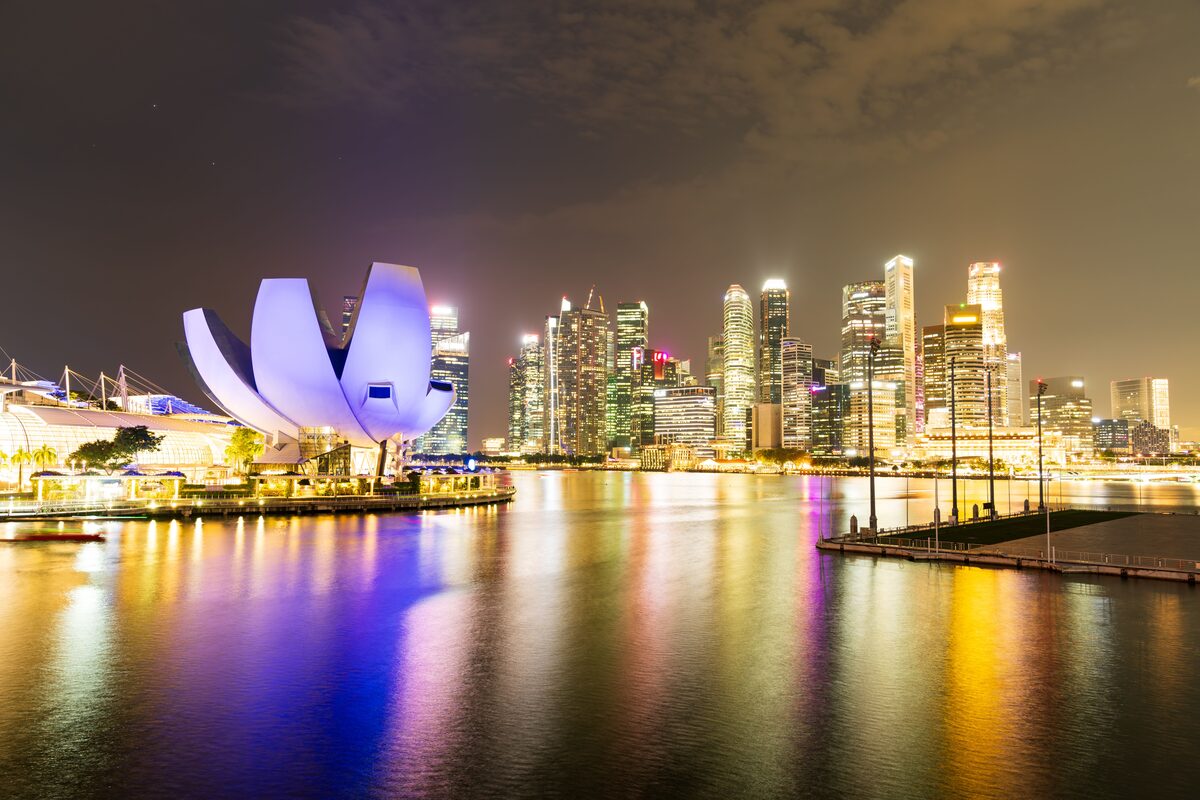
Singapore is a two-to-four-day destination for most first-time visitors. The main draws — Gardens by the Bay, Marina Bay Sands rooftop, Chinatown, Little India, the Colonial District, Sentosa, the Botanic Gardens, and a thorough hawker centre circuit — are achievable in three days without rushing. Repeat visitors extend the itinerary into neighbourhoods like Tiong Bahru, Katong, or the Pulau Ubin island. Singapore has excellent museums (National Museum of Singapore, Asian Civilisations Museum, Peranakan Museum) and one of Asia’s best botanic gardens. But it is not a destination that opens up across three weeks the way Sri Lanka does.
Cost
Sri Lanka’s mid-range daily budget runs USD 35–55 all-in. Guesthouses in Galle, Ella, or Kandy cost USD 25–55 per night. A tuk-tuk for 10 km costs USD 2–4. A rice and curry lunch at a local restaurant runs USD 2–6. National park entry at Yala is approximately USD 15 plus USD 50–70 for a mandatory shared jeep safari — the main daily spike.
Singapore operates at a fundamentally different price level. A mid-range hotel in the Central Business District or Orchard Road runs SGD 180–350 (approximately USD 135–260) per night. A one-bedroom apartment in an Airbnb near Bugis costs SGD 100–180. A hawker centre meal — Singapore’s most famous value proposition — costs SGD 5–12 (USD 4–9); a restaurant meal runs SGD 25–60 per person. The MRT is efficient and clean at SGD 1.20–2.50 per journey. Gardens by the Bay’s Cloud Forest and Flower Dome cost SGD 53 combined (approximately USD 40). A two-day itinerary in Singapore can cost USD 300–500 per person including accommodation.
Cost verdict: Sri Lanka wins decisively. For the cost of two nights in Singapore, most travellers can cover four to five days in Sri Lanka including a national park safari.
Culture and Heritage
Sri Lanka’s cultural depth is underappreciated internationally. The Cultural Triangle alone — Anuradhapura (one of the world’s oldest inhabited cities), Polonnaruwa (a medieval Buddhist capital with exceptional carved stone Buddhas), and Sigiriya (a 5th-century rock fortress with ancient frescoes and an engineered water garden) — constitutes three UNESCO World Heritage Sites within a few hours of each other. The Temple of the Tooth Relic in Kandy is one of Buddhism’s most important pilgrimage sites. Galle Fort is a 17th-century Dutch colonial walled city still inhabited and functioning as a boutique hotel and restaurant district. Jaffna in the north adds Tamil Hindu heritage and a culture distinct from the Sinhalese Buddhist south.
Singapore’s heritage is newer and compressed. The Colonial District around Raffles Hotel, the Padang, and the National Gallery (housed in two restored colonial court buildings) gives a strong sense of the 19th-century British port city. Chinatown’s shophouses and temples, Little India’s mustard-yellow streetscape, and Kampong Gelam’s Arab Quarter each represent waves of immigration that built the modern city-state. The Peranakan Museum — covering the hybrid Straits Chinese culture — is one of Southeast Asia’s best specialist museums. Singapore’s heritage is best understood as a layer compressed into a few neighbourhoods rather than spread across a landscape.
Culture verdict: Sri Lanka wins on historical depth and archaeological significance. Singapore wins for accessibility of heritage interpretation — everything is excellently signed, translated, and contextualised, and the cultural compression means you can cover multiple distinct cultural layers in a single day.
Food
Singapore’s hawker centre system is one of the world’s great food cultures, and this is not hyperbole. A single hawker centre like Maxwell Food Centre in Chinatown or Lau Pa Sat in the CBD can cover 50–100 stalls serving Hainanese chicken rice, laksa, char kway teow, roti prata, nasi lemak, fish head curry, popiah, and rojak. Two hawker stalls have been awarded Michelin stars. The food is simultaneously cheap (SGD 5–12 per dish), excellent, and multi-ethnic in a way that is unique to Singapore’s immigrant city history. Restaurant dining extends to extraordinary depth — Singapore has more Michelin stars per capita than almost any city outside France.
Sri Lanka’s food is satisfying and genuinely regional. Rice and curry done well — a banana-leaf spread with multiple vegetable and meat curries, dal, coconut sambol, and fried papadum — is a great meal. Hoppers (fermented rice-flour bowl pancakes with egg), kottu roti (chopped flatbread stir-fried with vegetables and meat), string hoppers, and lamprais (Dutch-influenced baked rice parcel) all have their own devoted followings. The Tamil north’s cuisine — particularly short eats from Jaffna’s bakeries and the dry-style vegetable curries — is distinct from the coastal south. Negombo and the west coast bring excellent fresh seafood. But the sheer variety and ease of access does not match Singapore.
Food verdict: Singapore wins. It is one of Asia’s top two or three food cities, and the hawker centre value proposition — world-class flavour for USD 4–8 — is a travel experience in itself.
Beaches and Nature
Sri Lanka’s coastline is its main draw for leisure travellers. The south coast runs from Negombo and Colombo down to Hiriketiya, Mirissa, Tangalle, and Weligama — each with a distinct character. The east coast at Trincomalee, Pasikuda, and Arugam Bay offers a different seasonal window (best May–September) and some of Sri Lanka’s clearest water. Wildlife — leopards at Yala, elephants at Udawalawe, blue whales off Mirissa — adds a dimension that few island destinations match.
Singapore has no beaches in the comparable sense. Sentosa Island has Palawan Beach and Siloso Beach — clean, accessible, and pleasant for a few hours — but they are city amenity beaches rather than destination beaches. The water is Port of Singapore shipping lane-adjacent. East Coast Park has a longer beach strip popular with locals for cycling and barbecues. For actual beach time, Singaporeans fly to Bali, Bintan Island (45 minutes by ferry), or Tioman.
Beaches and nature verdict: Sri Lanka wins entirely. Singapore is not a beach or wildlife destination.
Who Should Choose Which
Choose Sri Lanka if: you want a standalone two-to-three-week trip with beaches, wildlife, and UNESCO heritage; you are combining with India, the Maldives, or the broader South Asia circuit; or you want to go deep into one destination.
Choose Singapore if: you are transiting Asia and want a city stopover that punches far above its geographic size; food is your primary travel motivation; or you want a short-break weekend destination from anywhere in Southeast Asia.
Use both: Singapore works exceptionally well as a 48-hour gateway to Sri Lanka — arrive, eat well in the hawker centres, transit, and fly Colombo the next morning. Alternatively, end a Sri Lanka trip with a Singapore stopover before flying home. The routing is natural and the contrast is striking.
For the broader South Asia comparison cluster, see also Sri Lanka vs South India, Sri Lanka vs Kerala, and Sri Lanka vs Tamil Nadu.
More Comparisons
- Sri Lanka vs India
- Sri Lanka vs Bali
- Sri Lanka vs Kerala
- Sri Lanka vs Maldives
- Sri Lanka vs Mauritius
- Sri Lanka vs South India
- Sri Lanka vs Tamil Nadu
- Sri Lanka vs Thailand
- Sri Lanka vs Vietnam
Plan Your Trip
Book before you go:
Suggested itineraries: