Sri Lanka and Mauritius occupy the same ocean and attract broadly similar long-haul travellers — both are island destinations that combine beaches with cultural experiences, and both require a substantial flight from Europe, Australia, or North America. But the on-the-ground experience is fundamentally different. Sri Lanka is a large island of 22 million people with over 2,500 years of documented civilisation, a diverse range of landscapes from rainforest to highland tea country to ancient ruins, and a wildlife offering that ranks among Asia’s best. Mauritius is a small volcanic island of 1.3 million people with a French-British colonial heritage, an exceptionally well-developed luxury resort infrastructure, and beaches that consistently rank among the Indian Ocean’s finest. Here is how they compare.
Cost
Sri Lanka daily budget: USD 35–60 for comfortable mid-range travel. A guesthouse in Ella, Galle, or Kandy costs USD 25–55 per night. Rice and curry at a local restaurant costs USD 2–5. A tuk-tuk for 10 km costs USD 2–4. National park safaris are the main spending spike — Yala runs approximately USD 15 entry plus USD 50–70 for a shared jeep safari. The Kandy-to-Ella observation class train, one of Asia’s most scenic rail journeys, costs approximately USD 5–10.
Mauritius daily budget: USD 150–350+ per person. Mauritius operates on a luxury-first model. Mid-range guesthouses in Flic en Flac or Grand Baie cost USD 80–150 per night, and the gap to full resort pricing is not always large enough to justify independent travel logistics. Tourist-facing restaurants charge USD 20–50 per main course. The island has a strong all-inclusive culture — a five-night stay in a decent four-star resort with meals runs approximately USD 1,500–2,500 per couple, not including flights.
Cost verdict: Sri Lanka wins clearly. For the same total budget, Sri Lanka offers two to three weeks of varied, substantive travel. Mauritius is a genuine luxury destination and is priced accordingly — it is excellent value for what it delivers, but the absolute spend is in a different bracket entirely.
Culture and Historical Sites
Sri Lanka’s cultural depth is exceptional relative to its size. The Cultural Triangle in the north-centre of the island concentrates some of Asia’s most important early Buddhist heritage. Anuradhapura is a 2,000-year-old capital with towering dagobas that predate most European cathedrals. Polonnaruwa is a medieval royal city with carved stone Buddhas regarded as among the finest classical sculptures in South Asia. Sigiriya — a 5th-century rock fortress with surviving ancient frescoes, precision-engineered water gardens, and panoramic views — is the most technically impressive archaeological site in the Indian Ocean region and arguably the finest in all of South Asia. Galle Fort, a 17th-century Dutch colonial walled city still fully inhabited, is a UNESCO World Heritage Site with genuine living character. Kandy holds the Temple of the Tooth Relic, Buddhism’s most politically significant pilgrimage site globally, and hosts the Esala Perahera procession — one of Asia’s great festivals.
Mauritius has a much shorter recorded history — the island was uninhabited until the 16th century and colonised successively by the Dutch, French, and British before independence in 1968. The cultural legacy is Creole: a genuinely distinctive fusion of African, Indian, French, and Chinese influences visible in food, music, architecture, and the festival calendar. Aapravasi Ghat in Port Louis, where Indian indentured labourers first arrived, is a UNESCO World Heritage Site. The Le Morne Cultural Landscape, a basalt mountain that served as a refuge for escaped enslaved people, holds the island’s most significant historical resonance. Port Louis’s colonial architecture and the Caudan Waterfront are attractive but modest in scale compared with Sri Lanka’s heritage inventory.
Culture verdict: Sri Lanka wins by a significant margin. If historical depth and UNESCO heritage density matter, there is no comparison. Mauritius has a vivid living Creole culture that is genuinely worth experiencing, but it does not have cities that were old when Rome was young.
Beaches
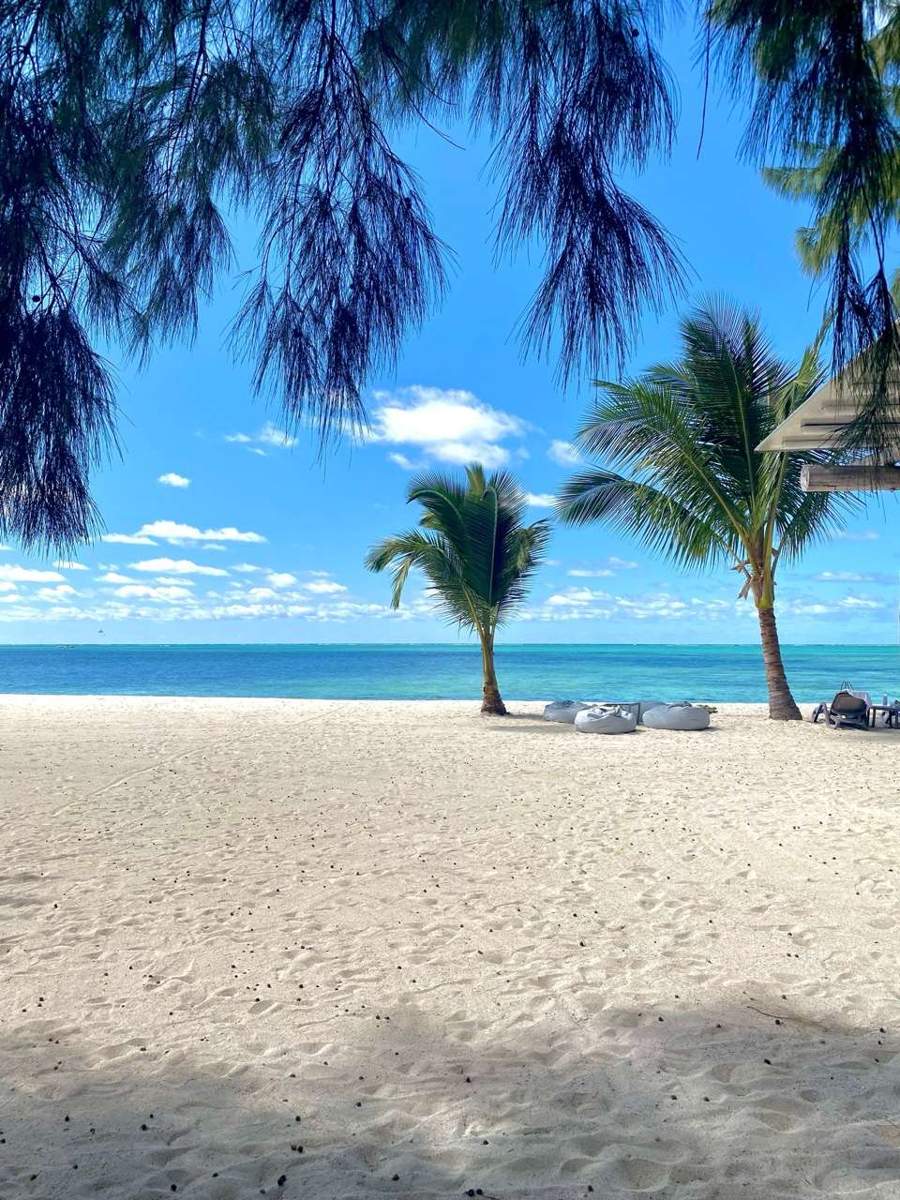
Mauritius has a structural advantage most tropical islands cannot replicate: a coral reef encircles much of the island, creating calm, clear lagoon water that is swimmable year-round on the western and northern coasts regardless of season. Le Morne Brabant, on the southwest peninsula, is among the Indian Ocean’s most iconic beach settings — a volcanic basalt mountain rising from a lagoon graded through multiple shades of turquoise. Trou-aux-Biches and Mont Choisy on the north coast offer shallow, family-safe water and long sandy stretches. Flic en Flac on the west provides reliable conditions for swimming, snorkelling, and glass-bottom boat trips. The consistency of Mauritius’s beaches — calm water, high sand quality, warm year-round temperatures — is genuinely hard to match in the wider Indian Ocean.
Sri Lanka’s beaches are excellent but more seasonal and variable. The south coast (Hiriketiya, Mirissa, Weligama, Tangalle) is at its best from November to April; the east coast (Trincomalee, Pasikuda, Arugam Bay) comes into its own from May to September when the southwest monsoon has passed. Both coasts have high-quality sand and warm water. The beaches are often wilder and less manicured than Mauritius, with local fishing boats and the kind of unhurried atmosphere that disappears from heavily resort-developed coastlines.
Beaches verdict: Mauritius wins for consistency, coral lagoon clarity, and the visual drama of Le Morne. Sri Lanka’s beaches are competitive and far more affordable, but Mauritius sets a genuinely high standard for Indian Ocean beach quality.
Wildlife
Sri Lanka’s wildlife offering is outstanding relative to its size. Yala National Park has one of the highest wild leopard densities of any national park in the world — morning game drives routinely produce sightings rather than occasional glimpses. Udawalawe National Park delivers close-range elephant herds at water’s edge daily, with viewing quality that exceeds most East African parks for sheer proximity. The Minneriya–Kaudulla circuit hosts the Gathering from July to October — hundreds of wild elephants converging on ancient reservoirs in one of Asia’s most spectacular wildlife events. Mirissa from November to April offers blue whale sightings among the most reliable available anywhere; spinner dolphins, sperm whales, and blue whales are all regular. Sri Lanka packs more accessible wildlife highlights per square kilometre than almost anywhere else in Asia.
Mauritius has limited land wildlife. The island’s original fauna was devastated by successive waves of colonisation — the dodo, now extinct, is the most famous example. The Black River Gorges National Park in the southwest protects native forest and bird species including the echo parakeet and the Mauritius kestrel, both rescued from near-extinction through conservation programmes. Île aux Aigrettes is a small coral island reserve with restored giant tortoises and endemic lizard species. Dolphin watching off the western coast is popular at dawn, with spinner dolphins reliably present in season. The offshore waters provide some of the Indian Ocean’s better diving — the Cathedral sea cavern, Coin de Mire, and Flat Island are established sites with turtles, rays, and diverse reef fish communities.
Wildlife verdict: Sri Lanka wins comfortably on land. For marine wildlife, Mauritius’s reef diving is excellent. If land-based wildlife is a core travel priority, Sri Lanka is the stronger choice by a wide margin; if underwater life matters more, Mauritius holds its own.
Ease of Travel
Mauritius is straightforward. The island spans 1,865 km² and can be driven around in a single day. Most resorts provide airport transfers, organised excursions, and meals under one roof, removing the need for independent planning. English and French are both widely understood. Public buses run frequently and cheaply. The tourism infrastructure is mature, well-signposted, and designed to minimise friction. For travellers who want a dependable, predictable holiday — particularly a short break, honeymoon, or anniversary trip — Mauritius removes almost all logistical uncertainty.
Sri Lanka involves more active travel management. Road conditions between regions vary; tuk-tuks require negotiating a price; national park logistics demand advance booking in peak season (December–February, July–August on the east coast); and train bookings for the hill country observation carriages sell out weeks ahead. The island is much larger — 65,610 km² — and distances take longer than first-time visitors typically expect. The main south coast route from Colombo to Ella takes most of a day by road. That said, Sri Lanka’s tourism infrastructure has improved significantly in recent years, and the planning effort is proportionate to the reward.
Ease of travel verdict: Mauritius wins. For a seamless, low-effort experience on a short trip, the contrast is significant. Sri Lanka’s complexity is part of what produces a more interesting journey, but it requires engagement.
Who Should Choose Which
Choose Sri Lanka if: UNESCO heritage density and land wildlife are priorities; you want the Indian Ocean’s strongest value proposition; you have ten days to three weeks; or you are combining it with South India or the Maldives as part of a broader Indian Ocean circuit.
Choose Mauritius if: you are planning a honeymoon, anniversary trip, or luxury beach holiday where consistency and polish matter above all; you have five to ten days and want a seamless, high-quality resort experience; or you prioritise reef snorkelling and diving over land wildlife.
For the broader Indian Ocean comparison cluster, see also Sri Lanka vs Maldives, Sri Lanka vs Thailand, and Sri Lanka vs Bali.
More Comparisons
- Sri Lanka vs India
- Sri Lanka vs Bali
- Sri Lanka vs Kerala
- Sri Lanka vs Maldives
- Sri Lanka vs Singapore
- Sri Lanka vs South India
- Sri Lanka vs Tamil Nadu
- Sri Lanka vs Thailand
- Sri Lanka vs Vietnam
Plan Your Trip
Book before you go:
Suggested itineraries: