Search hotels in Sri Lanka on Booking.com
Sri Lanka and Bali are both Indian Ocean island destinations that attract similar types of travellers - but they deliver very different experiences. Sri Lanka is a country of extraordinary wildlife, ancient Buddhist civilisation, and hill country tea estates. Bali is a Hindu island of rice terraces, beach clubs, and one of Asia’s strongest wellness and digital nomad cultures. Choosing between them is largely a question of what you want from a trip.
Quick Verdict
| Category | Sri Lanka | Bali |
|---|---|---|
| Cost | Winner - notably cheaper | USD 35–50/day budget |
| Wildlife | Winner - leopards, elephants, blue whales | Limited wildlife tourism |
| Beaches | Wilder, less developed | Better beach club infrastructure |
| Culture | Ancient Buddhist civilisation | Living Hindu culture |
| Train journeys | Winner - hill country train (world-famous) | No train network |
| Resorts and spas | Good, improving | Winner - extensive and established |
| Digital nomads | Growing | Winner - Canggu, Ubud |
| Diving | Good | Good - Manta Point, wrecks |
Climate and Best Time to Visit
Sri Lanka’s climate is shaped by two monsoons that divide the island into two halves with opposite weather patterns - a useful feature for travellers.
The southwest (Colombo, Galle, Mirissa, Ella, Kandy) is best from December to March. The northeast (Arugam Bay, Trincomalee, Jaffna) is best from May to September, when the southwest is wet. This means Sri Lanka always has a dry region somewhere, and experienced travellers plan their itinerary to follow the good weather around the island.
Whale watching in Mirissa runs from November to April, peaking January to March. Elephant sightings at Minneriya’s Gathering are best July to October. Yala National Park for leopard sightings is best from February to July when water levels drop and animals concentrate around remaining waterholes. Browse Sri Lanka tours to compare what’s available in the season you’re considering - the range from wildlife safaris to Cultural Triangle day trips gives a clear picture of what the island offers versus Bali’s more beach-and-wellness-focused activity menu.
Bali has a simple split: dry season from May to September, wet season from October to April. July and August are peak season - beautiful weather but higher prices and more tourists. The wet season brings lush scenery and can be a good time to visit Ubud and inland Bali, where afternoon showers clear quickly.
Cost Comparison
Sri Lanka is meaningfully cheaper than Bali - a significant factor for travellers on a tight budget or planning a long trip.
Sri Lanka budget travellers spend approximately USD 25–35 per day. A clean guesthouse costs USD 15–30 per night; a full meal at a local rice and curry restaurant costs USD 2–5; a three-wheeler (tuk-tuk) for a 10-minute journey runs around LKR 200–300. Safari entrance fees at Yala National Park cost approximately USD 30–50 per person as of 2026. The famous Colombo–Ella train journey (9 hours, scenically stunning through the hill country tea estates) costs approximately USD 4–10 per person depending on class.
Bali budget travellers spend approximately USD 35–50 per day. Guesthouses start from around USD 20; warungs (local eateries) serve meals from USD 2–5; scooter rental costs USD 4–5 per day. Bali’s headline value proposition - private pool villas - can be found for USD 50–100 per night outside peak season, which represents exceptional value compared to equivalent facilities elsewhere. Beach clubs and restaurant bills for tourist-oriented dining can push daily spending significantly higher.
Entry fees across Sri Lanka’s Cultural Triangle sites - Sigiriya Rock Fortress, Dambulla Cave Temple, Polonnaruwa, Anuradhapura - run approximately USD 30–35 per site for international visitors as of 2026.
Top Experiences
Sri Lanka:
Ella is the most popular hill country base - a small town surrounded by tea estates, accessed via one of the world’s most scenic train journeys. Nine Arch Bridge, Little Adam’s Peak, and Ella Rock are the main draws. The vibe is relaxed, the guesthouses are good value, and the surrounding landscape is extraordinary.
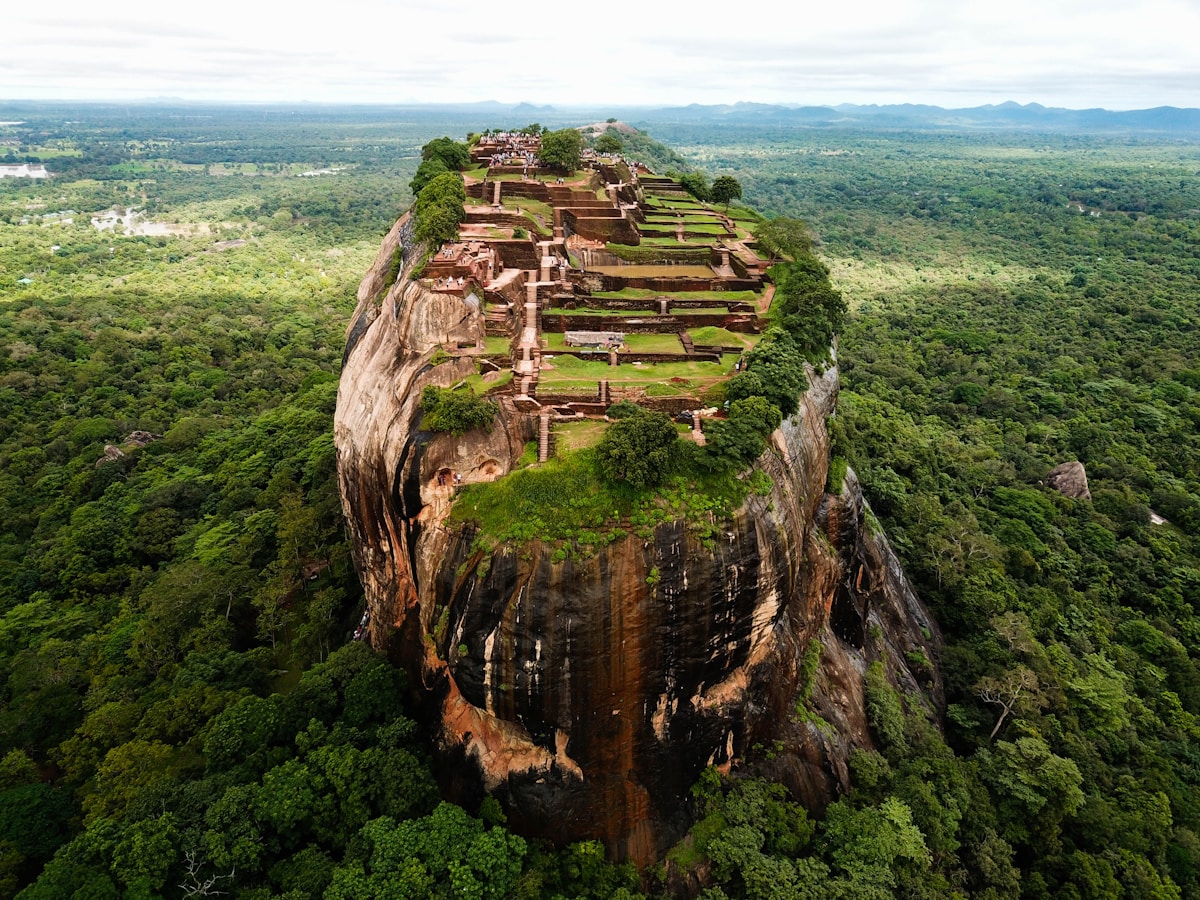
Sigiriya is the centrepiece of the Cultural Triangle - a 5th-century rock fortress rising 200 metres above the jungle, with ancient frescoes and sophisticated water gardens at its base. Entry costs approximately USD 35 as of 2026. Combined with Dambulla’s cave temples (10km south, approximately USD 12 entry), it makes a strong two-site day.
Mirissa on the south coast is where blue whale watching happens - and these are not the modest sightings of many whale-watching operations. Blue whales (the largest animals on Earth) surface regularly within a few kilometres of the beach here. Boat tours cost approximately USD 30–50 per person. The beach is also one of Sri Lanka’s finest, with good surfing from October to April.
Yala National Park is the flagship wildlife destination - Sri Lanka’s most biodiverse park and the place with the highest density of leopards relative to habitat of any national park in the world. Half-day jeep safaris cost approximately USD 60–100 per vehicle including park entry.
Bali:
Ubud is the cultural and wellness hub - rice terraces, the Sacred Monkey Forest, traditional dance performances, and a café and restaurant scene that has become internationally renowned. Tegalalang Rice Terraces (free to walk, with a small fee for terraced viewing platforms) and Campuhan Ridge Walk are the classic draws.
Seminyak and Canggu have Bali’s best beach clubs and surf - Seminyak Beach has excellent swimming, Canggu has Batu Bolong Beach and Echo Beach for intermediate surfers. The café and coworking density here is remarkable; it is genuinely one of the most practical places in the world to work remotely.
Uluwatu, on the southern Bukit Peninsula, offers some of Southeast Asia’s most dramatic coastal scenery - clifftop Hindu temples, consistent surf breaks for advanced surfers, and the Kecak fire dance performance at sunset (approximately IDR 100,000 / USD 6 entry).
Culture and History
Sri Lanka has one of the world’s oldest continuous Buddhist civilisations. The Cultural Triangle cities of Anuradhapura (8th century BC) and Polonnaruwa contain some of Asia’s most important early Buddhist monuments. The Temple of the Tooth Relic in Kandy is the holiest Buddhist site in Sri Lanka and draws pilgrims year-round. The culture is visible throughout the country in daily temple rituals, festivals (Esala Perahera in Kandy is one of Asia’s great processions), and the unmistakable architecture of dagobas and ancient reservoirs.
Bali offers something equally compelling but very different - a living Hindu culture embedded in every aspect of daily life. Canang sari offerings appear on every doorstep and threshold every morning. Temple ceremonies happen constantly. The island’s estimated 20,000 temples mean that almost everywhere you walk, there is an active place of worship. For travellers interested in a genuinely immersive cultural experience, Bali’s Hindu tradition is one of Southeast Asia’s most accessible and distinctive.
Getting Around
Sri Lanka’s hill country train - particularly the Kandy to Ella section - is one of the world’s most celebrated rail journeys. Travelling through tea estates, across viaducts, and through mist at altitude, it takes approximately 7 hours from Kandy to Ella (book observation car tickets in advance through Sri Lanka Railways; approximately USD 10–15 per person). Trains are the recommended way to travel through the hill country.
For the rest of the country, tuk-tuks are ubiquitous and inexpensive, while private drivers for full-day excursions cost approximately USD 40–70. Buses cover most routes cheaply. The south coast is best explored with a scooter or private car.
Bali is navigated almost entirely by scooter (IDR 60,000–80,000 / USD 4–5 per day) or private driver (USD 35–60 for a full day). The road network is straightforward but traffic in southern Bali is heavy. Gojek and Grab both operate here for point-to-point rides.
Who Should Choose Each?
Choose Sri Lanka if:
- Wildlife is a priority - particularly leopards, elephants, and blue whale watching
- You want to experience the hill country train journey
- Budget is a consideration - Sri Lanka stretches money further
- Ancient Buddhist history and UNESCO World Heritage Sites interest you
- Surfing at Arugam Bay is on your radar
Choose Bali if:
- Beach clubs, resort infrastructure, and private pool villas appeal
- Yoga, wellness retreats, or digital nomad infrastructure matter
- You want immersive Hindu culture with daily visible ceremony
- You are combining with another Indonesian island (Lombok, Komodo, Flores)
Final Verdict
Sri Lanka punches above its weight on almost every metric for travellers who prioritise wildlife, culture, and value. The wildlife - particularly at Yala and Mirissa - is exceptional by any global standard, and the hill country train journey is genuinely world-class. It costs less than Bali for comparable accommodation and activities.
Bali wins for travellers who want a more polished resort experience, a strong digital nomad or wellness infrastructure, and an island culture that wraps around you from the moment you arrive. Its beach club and villa scene has no real equivalent in Sri Lanka.
For a combined Indian Ocean trip with 3–4 weeks available, doing both makes excellent sense - Sri Lanka for wildlife and history, Bali to decompress. They complement each other better than most pairing of destinations in the region.
More Comparisons
- Sri Lanka vs India
- Sri Lanka vs Kerala
- Sri Lanka vs Maldives
- Sri Lanka vs Mauritius
- Sri Lanka vs Singapore
- Sri Lanka vs South India
- Sri Lanka vs Tamil Nadu
- Sri Lanka vs Thailand
- Sri Lanka vs Vietnam
Plan Your Trip
Book before you go:
- Flights to Sri Lanka
- Travel insurance
- Hotels in Sri Lanka
- Tours and day trips
- Planning Bali? See our sister site, The Indonesia Guide
Suggested itineraries:
Key destinations:
- Anuradhapura · Arugam Bay · Colombo · Ella · Kandy · Mirissa · Sigiriya