Search hotels in Sri Lanka on Booking.com
Sri Lanka and India sit close together on the map - separated by the 30 km Palk Strait - and they share ancient cultural connections, a tropical climate, and a long tradition of receiving travellers. But as travel destinations they could not be more different in scale. India is a subcontinent of 1.4 billion people, thirty-odd states, a dozen mountain ranges, four major coastlines, and wildlife reserves from the Himalayan foothills to the Andaman Islands. Sri Lanka is a compact teardrop island roughly the size of Ireland, with a population of 22 million and a tourism circuit you can cover meaningfully in two weeks.
Choosing between them depends largely on what you want from South Asia, how much time you have, and whether the intensity of India’s biggest destinations is something you are looking for or hoping to avoid.
Quick Verdict
| Category | Sri Lanka | India |
|---|---|---|
| Scale | Compact - ideal for 2-week trips | Vast - rewards 1–3+ months |
| Ease of travel | Winner - straightforward logistics | Complex, highly varied by region |
| Wildlife | Leopards, elephants, blue whales | Tigers, rhinos, Asiatic lions, greater range |
| Beaches | Good south coast and east coast | Winner - Goa, Kerala, Andamans |
| Cultural heritage | UNESCO sites, Buddhist civilisation | Winner - Rajasthan, Agra, temple circuits |
| Cost | USD 25–40/day budget | USD 20–35/day budget; variable |
| Crowds | Lower tourist density | Extremely variable - some sites overwhelming |
| Hill country | Excellent tea estates, scenic train | Winner - Himalaya, Darjeeling, Munnar |
Scale and Ease of Travel
This is the most important practical difference between the two destinations.
Sri Lanka is approximately 65,600 km² - comparable to Ireland or Tasmania. The entire cultural triangle (Sigiriya, Dambulla, Anuradhapura, Polonnaruwa) fits into a roughly 100 km radius. The hill country train from Kandy to Ella is 7 hours through tea estates. The south coast beaches are 2–3 hours from Colombo by road. Covering the main highlights - Cultural Triangle, hill country, south coast - takes approximately 10–14 days without rushing. A compact itinerary covering Sigiriya, Kandy, Ella, Mirissa, and Galle is manageable in 10 days.
India spans 3.3 million km² and contains regional cultures so distinct they effectively constitute separate countries. The classic northern circuit (Delhi, Agra, Jaipur - the Golden Triangle) takes 7–10 days minimum for surface-level coverage. Rajasthan alone warrants two weeks. Goa is a separate proposition entirely, as are Kerala, Tamil Nadu, Ladakh, and the northeast. Flying between regions is cheap (budget airlines: IndiGo, Air India Express, SpiceJet), but even with domestic flights, India rewards visits of a month or more to do justice to a single region.
Verdict: Sri Lanka wins decisively on ease and compactness for travellers with two to three weeks.
Cost Comparison
Sri Lanka budget travellers spend approximately USD 25–40 per day. Guesthouses in Ella or Galle run USD 20–50 per night. A rice and curry lunch at a local restaurant costs USD 2–5. Tuk-tuks cover most short distances for USD 1–3. National park entry and jeep safaris are the main cost spike - Yala costs approximately USD 15–20 entry plus USD 50–70 for a mandatory shared jeep (approximately USD 20–25 per person in a group of four). The Kandy–Ella train costs approximately USD 5–10 in observation class.
India has a wider range. Budget travellers on the backpacker circuit (Rajasthan, Goa, Hampi, Rishikesh) typically spend USD 20–35 per day. A dorm bed in a hostel in Jaipur costs USD 5–10; a basic double room USD 15–25. Meals at dhabas (roadside restaurants) cost USD 1–3. Where India’s costs spike is at major tourist sites - the Taj Mahal charges INR 1,100 (approximately USD 13) for foreigners, Amer Fort charges INR 700 (approximately USD 9), and some Rajasthan fort complexes charge per attraction rather than per day. Luxury hotel prices in prime locations (Udaipur lake palaces, Ranthambore safari lodges) are significantly higher than Sri Lanka equivalents.
Verdict: India has a lower floor price. Sri Lanka is more consistent and easier to budget. Both represent good value by global standards.
Wildlife
Both countries are outstanding wildlife destinations, but with different specialities.
Sri Lanka’s wildlife is exceptional relative to its size. Yala National Park has the highest confirmed density of leopards relative to habitat of any national park in the world - sightings are reliable. Udawalawe is arguably Asia’s best destination for extended elephant encounters: herds frequently visible at water’s edge for 30–60 minutes at a time, often including calves, close enough for detailed photography without telephoto lenses. The Minneriya and Kaudulla reservoir circuit hosts the Gathering - hundreds of wild Asian elephants converging on ancient irrigation tanks from July to October. Blue whale watching off Mirissa from November to April produces regular sightings of the largest animals on Earth, often within 3–5 km of shore.
India has the Bengal tiger - the single most sought-after land predator sighting in Asia, and one of the world’s most coveted wildlife encounters. Ranthambore National Park in Rajasthan, Bandhavgarh in Madhya Pradesh, and Jim Corbett in Uttarakhand all offer legitimate tiger sightings (success rates of 40–70% on a multi-day visit to good parks). Kaziranga National Park in Assam has one of the world’s largest populations of Indian one-horned rhinos. Gir National Forest in Gujarat is the only place to see Asiatic lions. India’s total biodiversity is substantially greater than Sri Lanka’s given the range of habitats - tropical jungle, highland grassland, Himalayan montane, mangrove coast.
Verdict: Sri Lanka wins on reliability of specific encounters (leopards, elephants, blue whales) for short visits. India wins on total wildlife variety and the unmatched draw of Bengal tiger sightings.
Beaches and Coastline
Sri Lanka’s south coast is excellent - sheltered bays at Mirissa, Hiriketiya, and Dickwella for swimming and relaxed beach time; Weligama for longboard surfing; Tangalle for emptiness and lagoon landscapes. The east coast (Trincomalee, Pasikuda, Kalkudah) has some of Sri Lanka’s clearest water and best snorkelling, accessible from May to September when the southwest is wet. Arugam Bay is one of Asia’s top surf breaks, rated in the world’s top 10 by multiple surf publications. Beach infrastructure is generally lower-key than Goa or Bali - fewer beach clubs, more guesthouses and fishing boats.
India’s beaches span a wider range. Goa remains South Asia’s most developed beach destination - from the crowded party scene of North Goa (Baga, Calangute) to the quieter south (Palolem, Agonda). Kerala’s Varkala is a clifftop beach town with a distinct personality. The Andaman Islands offer some of Asia’s best snorkelling and diving, with coral reefs largely intact and far fewer visitors than Thailand or the Maldives. Tamil Nadu’s Pondicherry and Mahabalipuram add cultural weight to east coast beach options.
Verdict: India wins on beach variety and range. Sri Lanka’s beaches are very good, but India’s combination of Goa, Kerala coast, and the Andamans offers a wider spectrum of beach experiences.
Culture and History
Sri Lanka has one of the world’s oldest continuous Buddhist civilisations. The Cultural Triangle contains ancient monuments on a scale that surprises most first-time visitors: the stupa at Jetavanaramaya in Anuradhapura was once the third-tallest structure on Earth. Sigiriya - a 5th-century rock fortress with ancient frescoes and hydraulic gardens - is UNESCO-listed and one of Asia’s most dramatic archaeological sites. Polonnaruwa preserves medieval Buddhist stone carvings of exceptional quality. The Temple of the Tooth Relic in Kandy is one of Buddhism’s most important pilgrimage sites globally. The Esala Perahera festival - a ten-day procession of elephants, drummers, and fire dancers held in July or August - is one of Asia’s great public celebrations.
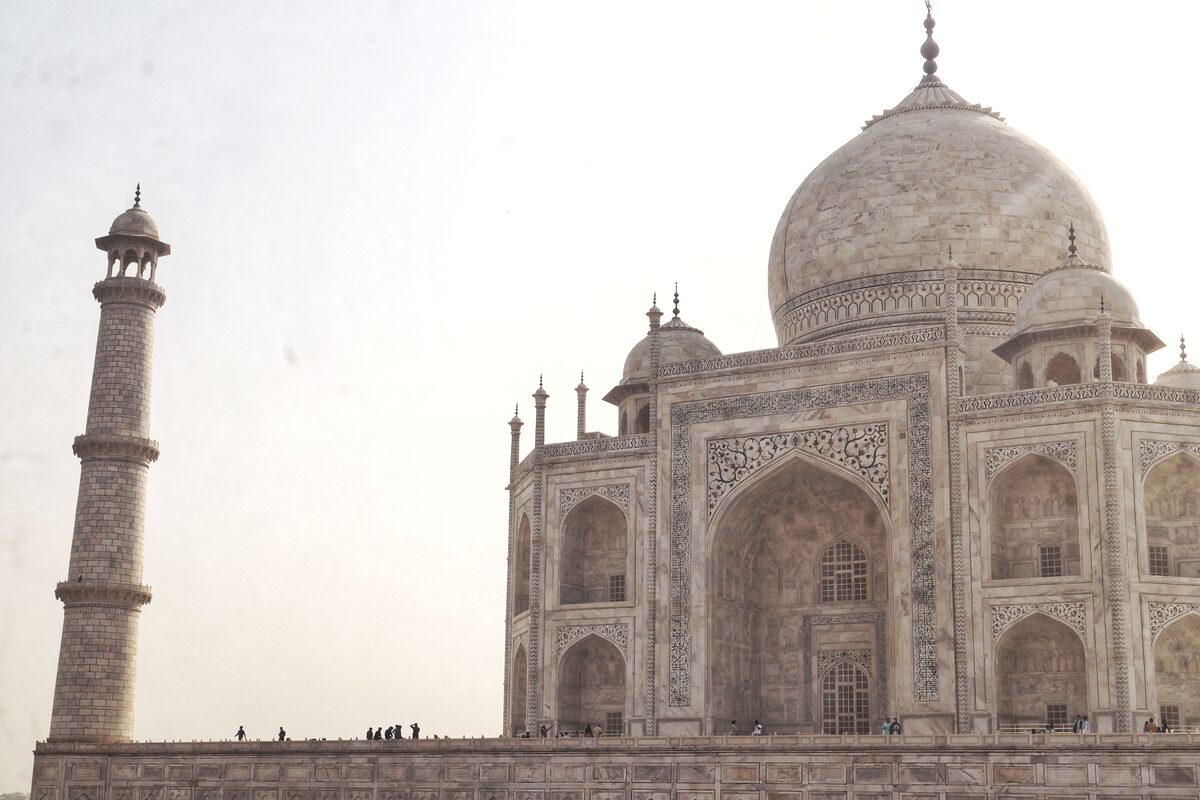
India’s cultural heritage is overwhelming in the most literal sense - it is one of the most culturally dense countries on Earth. Rajasthan alone contains dozens of UNESCO-worthy forts, palaces, and step-wells. The Taj Mahal remains one of humanity’s great buildings despite the crowds. The temple circuits of Tamil Nadu (Madurai’s Meenakshi Amman, Thanjavur’s Brihadeeswarar) are extraordinary living monuments. Varanasi on the Ganges is one of the world’s oldest continuously inhabited cities. India’s cultural depth and variety exceeds virtually any single-country comparison.
Verdict: India wins on cultural scale and range. Sri Lanka punches well above its weight for a small island but cannot compete with a subcontinent.
Getting Around
Sri Lanka is straightforward to navigate by tuk-tuk, train, and private driver. The hill country train - particularly the Kandy to Ella section through tea estates - is world-class for scenic travel. Private drivers for full-day excursions typically cost USD 50–80. The island is compact enough that no destination is more than 5–7 hours from Colombo by road.
India’s transport range is vast: metro systems in Delhi, Mumbai, Bangalore, and Chennai; a dense rail network covering the entire subcontinent (book in advance via IRCTC - popular sleeper services sell out weeks ahead); cheap domestic flights between regions; and autorickshaws and local buses at street level. The rail network in particular is one of the world’s great travel infrastructure assets - overnight trains connect Rajasthan to Tamil Nadu, and the Darjeeling Himalayan Railway is a UNESCO heritage experience. Transport in India is also one of the most variable experiences - comfortable for experienced travellers who plan ahead, disorienting and exhausting for those who arrive without preparation.
Who Should Choose Each?
Choose Sri Lanka if:
- You have two to three weeks and want a complete, high-quality experience
- Wildlife reliability matters - particularly leopards, elephants, and blue whales
- Simpler logistics with no domestic flight juggling required
- Lower tourist density and a quieter atmosphere than India’s major circuits
- The hill country train journey is on your list
- You are new to South Asia and want a gentler introduction
Choose India if:
- You have a month or more to explore properly
- Bengal tigers are a priority wildlife experience
- Rajasthan’s fort and palace culture appeals
- You want the Himalaya - Ladakh, Spiti, Darjeeling, or trekking in the Uttarakhand hills
- The cultural overwhelming-ness is part of what you’re looking for
- You want the widest possible range of beaches, climates, and experiences
Final Verdict
Sri Lanka is the better choice for a first South Asia trip with limited time. Its compact geography, reliable wildlife encounters, and excellent cultural sites deliver a genuinely high-quality experience in 10–14 days without the logistical complexity of navigating a subcontinent. The Yala leopard safaris, Udawalawe elephants, hill country train, and Cultural Triangle form one of Asia’s best two-week itineraries.
India is the better choice for travellers with time, appetite for complexity, and specific priorities that Sri Lanka cannot fulfil - Bengal tiger sightings, Rajasthan’s architectural inheritance, the Himalaya, or the sheer breadth of a continent-spanning journey. India rewards patience and planning in a way that Sri Lanka, as a compact island, simply does not need to demand.
The two complement each other well as a combined South Asia trip - Sri Lanka for focused, efficient exploration, India for the destinations and experiences that nothing else in the region can replicate.
More Comparisons
- Sri Lanka vs Bali
- Sri Lanka vs Kerala
- Sri Lanka vs Maldives
- Sri Lanka vs Mauritius
- Sri Lanka vs Singapore
- Sri Lanka vs South India
- Sri Lanka vs Tamil Nadu
- Sri Lanka vs Thailand
- Sri Lanka vs Vietnam
Plan Your Trip
Book before you go:
Suggested itineraries:
Key destinations:
- Anuradhapura · Arugam Bay · Colombo · Ella · Galle · Kandy · Mirissa · Sigiriya