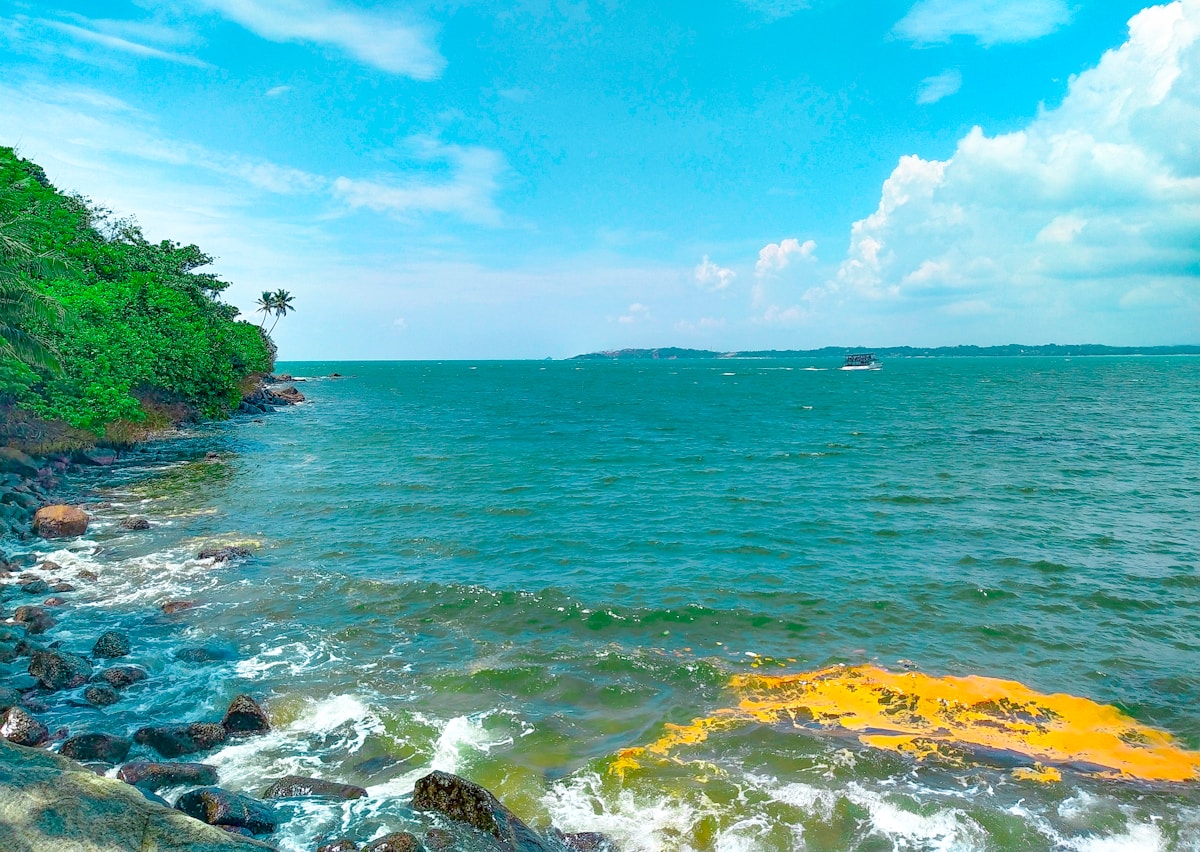
Sri Lanka’s east coast is less visited than the south and west - which is most of its appeal. The beaches are longer and less crowded, the sea is calm and flat from May to September when the rest of the island gets its main monsoon, and the towns retain a rawness that the tourist infrastructure of Galle and Mirissa has largely polished away.
This 10-day route runs the east coast from top to bottom: Trincomalee in the north to Arugam Bay in the south. It can be extended to 14 days or trimmed to 7 depending on pace. Surf season peaks June–August; whale sharks appear off Trincomalee May–September.
Route Overview
| Day | Location | Key Activity |
|---|---|---|
| 1–3 | Trincomalee | Fort, Koneswaram Temple, Pigeon Island, whale shark diving |
| 4 | Transit + Batticaloa | Batticaloa Fort, Kallady Bridge, lagoon |
| 5–6 | Batticaloa / Pasikudah | Pasikudah and Kalkudah beaches |
| 7 | Transit to Arugam Bay | via Ampara, Lahugala Elephant Park |
| 8–10 | Arugam Bay | Surfing, Main Point, Pottuvil Lagoon |
Season note: This itinerary runs May–September (east coast season). Outside this window, check weather for each location before booking. For month-specific conditions, see Sri Lanka in May, July, or September.
Days 1–3: Trincomalee
Trincomalee (locals call it Trinco) is a natural harbour city with one of the deepest natural harbours in the world. Its history involves Portuguese, Dutch, and British fortifications built around this strategic anchorage, and a Tamil cultural tradition that runs deep in the region.
Koneswaram Temple sits on Swami Rock - a promontory that drops 130 metres to the sea. The Hindu temple is one of the ancient Panchaishwarams (five major Shiva temples of Sri Lanka) and an active place of worship visited by Tamil Hindus from across the island. Entry is free; dress respectfully. Opening hours approximately 6am–12pm and 3pm–7pm daily.
Fort Frederick was originally a Portuguese fort, taken by the Dutch and then the British. It still functions as a military installation - entry requires signing a register, but visitors can walk through the grounds and see the historical remains. Immediately beside the fort is Swami Rock and Koneswaram Temple.
Pigeon Island National Park is the main marine attraction: two small islands about 1km offshore with coral reef snorkelling and scuba diving. Blacktip reef sharks are regularly sighted around the larger island. Entry fee approximately USD $12 per person; boat hire approximately LKR 2,000–3,000 per boat (shared). Snorkelling gear can be rented locally.
Whale sharks: Trincomalee Bay hosts whale sharks from approximately April to October. Day dive trips from Trincomalee town specifically target whale shark encounters; operators charge approximately $50–80 per person for a two-dive trip. Book a Trincomalee tour to cover the fort, temple, and Pigeon Island with a guide.
Accommodation in Trincomalee:
- Budget: Sunils Beach Hotel and Guesthouse (Central Road area) from approximately LKR 3,500–5,000 per night as of 2026
- Mid-range: Welcombe Hotel Trincomalee from approximately $40–60 per night
- Upmarket: Maalu Maalu Resort (Passikudah, 90km south) from approximately $150 per night - better placed for the beach route south
Food: Fresh seafood is the obvious choice. The beach strip along Uppuveli and Nilaveli (north of Trinco town, 5–12km) has a cluster of guesthouses and restaurants. Ibrahim’s Seafood Restaurant on the Nilaveli road is consistently recommended for grilled fish.
Day 4: Batticaloa
Batticaloa is a lagoon city roughly 100km south of Trincomalee (3.5–4 hours by car). It has a colonial-era Dutch fort, a fascinating history as a Tamil-majority city in the post-war reconciliation process, and the famous “singing fish” - a phenomenon of low musical humming from the lagoon bottom on full-moon nights, attributed variously to shellfish, current, or geological features.
Batticaloa Fort (the Dutch fort, built 1638) sits on a small island at the lagoon’s edge. Partially restored, partially occupied by military. Entry is informal - walk in during daylight hours.
Kallady Bridge connects the town to the eastern shoreline over the lagoon. The views back toward the town at sunset are the best views in Batticaloa.
Accommodation: The town has functional mid-range hotels (Riviera Resort from approximately LKR 6,000–10,000) and budget guesthouses. Batticaloa is a transit day for most travellers on this route - one night is enough. For where to eat while you are here, see the Batticaloa food guide.
Days 5–6: Pasikudah and Kalkudah
Pasikudah is widely considered the most beautiful beach on the east coast - a wide arc of white sand with shallow, calm, turquoise water extending far from shore. The shallow gradient makes it safe for children and non-swimmers.
The beach was heavily developed with upmarket resorts from 2015 onward, which means accommodation quality is high but prices are elevated versus the rest of the east coast.
Accommodation at Pasikudah:
- Budget: The closest budget options are 8–10km south at Kalkudah. Guesthouses from approximately LKR 3,000–5,000 per night
- Mid-range: Amaya Beach Pasikudah from approximately $80–120 per night as of 2026
- Upmarket: Club Hotel Dolphin or Maalu Maalu Resort from approximately $130–200 per night
Two days here is comfortable: one day on the beach at Pasikudah, one day to rent a bicycle (approximately LKR 500–800/day) and explore the lagoon edge toward Kalkudah and Valaichchenai.
Day 7: Transit to Arugam Bay via Lahugala
The drive from Batticaloa/Pasikudah to Arugam Bay takes 2.5–3.5 hours (approximately 100km). The A4 road runs south and inland before turning toward the coast.
Lahugala Ktaragama National Park sits approximately 15km west of Pottuvil (the town adjacent to Arugam Bay). It is a small park known for large elephant herds that congregate at the Mahawewa Tank, particularly in September. Entrance fees apply; jeep hire approximately LKR 5,000–7,000. Worth a stop if you’re passing in late dry season.
Days 8–10: Arugam Bay
Arugam Bay is Sri Lanka’s surf capital. The main break - Main Point - is a right-hand point break that produces long, consistent waves from June to September, when the swell wraps around the southern tip of the island. The surf community is international, the vibe is relaxed, and the town (a single road running parallel to the bay) is small enough to walk end-to-end in ten minutes.
Main Point: The primary surf break. Consistent right-handers peeling for 200–300 metres in good swell. Best June–August. Lessons available from local operators at approximately $20–30 for a two-hour session as of 2026. Boards can be rented from the main surf shops on the beach road. For guided surf lessons and boat tours out of Arugam Bay, browse Arugam Bay tours.
Pottuvil Lagoon: Behind the town, the lagoon is a wildlife corridor. Early morning boat trips (approximately LKR 2,000–3,000 per boat, 2–3 hours) cover crocodiles, water buffalo, and significant bird populations including large stork colonies. Boats leave from near the lagoon entry - ask at your guesthouse.
Pottuvil Point and Elephant Rock: North of the main bay, these breaks suit intermediate and experienced surfers. Less crowded than Main Point, longer paddle out.
Accommodation in Arugam Bay:
- Budget: Sooriya Guest House and Stardust Beach Hotel both run approximately LKR 3,000–5,000 per night for simple rooms close to the beach
- Mid-range: Gecko’s Hideout and Samantha’s Folly from approximately $25–50 per night
- Upmarket: Arugam Bay Beach Resort from approximately $60–90 per night
Food: Veranda Restaurant and Aariya’s (on the main road) are consistently good for fresh fish and rice and curry. The beach road has multiple small cafes serving Western breakfast and smoothie bowls alongside local food - the concentration of surfers drives a well-developed cafe scene for the town’s size.
Budget Estimates (Per Person, Per Day - as of 2026)
| Budget Level | Accommodation | Food | Activities | Total/day |
|---|---|---|---|---|
| Budget | LKR 3,000–5,000 | LKR 1,500–2,500 | LKR 1,000–2,000 | $18–30 |
| Mid-range | $30–60 | $15–25 | $20–40 | $65–125 |
| Upmarket | $100–200+ | $30–50 | $50–100+ | $180–350+ |
Transport Between Stops
- Trincomalee → Batticaloa: 3.5–4 hours by car. Public bus LKR 400–600 (slow, infrequent). Private car approximately LKR 8,000–12,000.
- Batticaloa → Pasikudah: 45 minutes south by car or tuk-tuk (approximately LKR 1,500–2,500).
- Pasikudah/Batticaloa → Arugam Bay: 2.5–3.5 hours south. Private car approximately LKR 8,000–12,000. No direct bus - change at Ampara.
A hired driver for the full Trincomalee–Arugam Bay leg (covering all stops over 4–5 days) is the most efficient approach. Full-day driver rates run approximately $50–70 per day including fuel as of 2026.
Cities in This Itinerary
Connect the East Coast to the Rest of Sri Lanka
The east coast pairs naturally with the Cultural Triangle - Sigiriya, Polonnaruwa, and Dambulla are all 2–3 hours inland from Trincomalee. Many travellers arrive from the north or inland and add the east coast before heading south. The 10-day Cultural Triangle itinerary and this east coast route can be combined into a 2-3 week circuit. After Arugam Bay, the south coast continues through Tangalle, Mirissa, and Galle - see the southern coast itinerary for that leg. For surfing context on Arugam Bay’s breaks and season, read the Arugam Bay surfing guide.
For a guide to visiting the east coast in the best weather window, see when to visit Sri Lanka - the east coast season (May–September) is the inverse of the west.
Book Your Trip
Flights — search and compare on Aviasales eSIM — stay connected with Airalo Travel insurance — get covered with EKTA Airport transfers — book with Kiwitaxi Car rental — compare with GetRentaCar Tours and activities — browse GetYourGuide